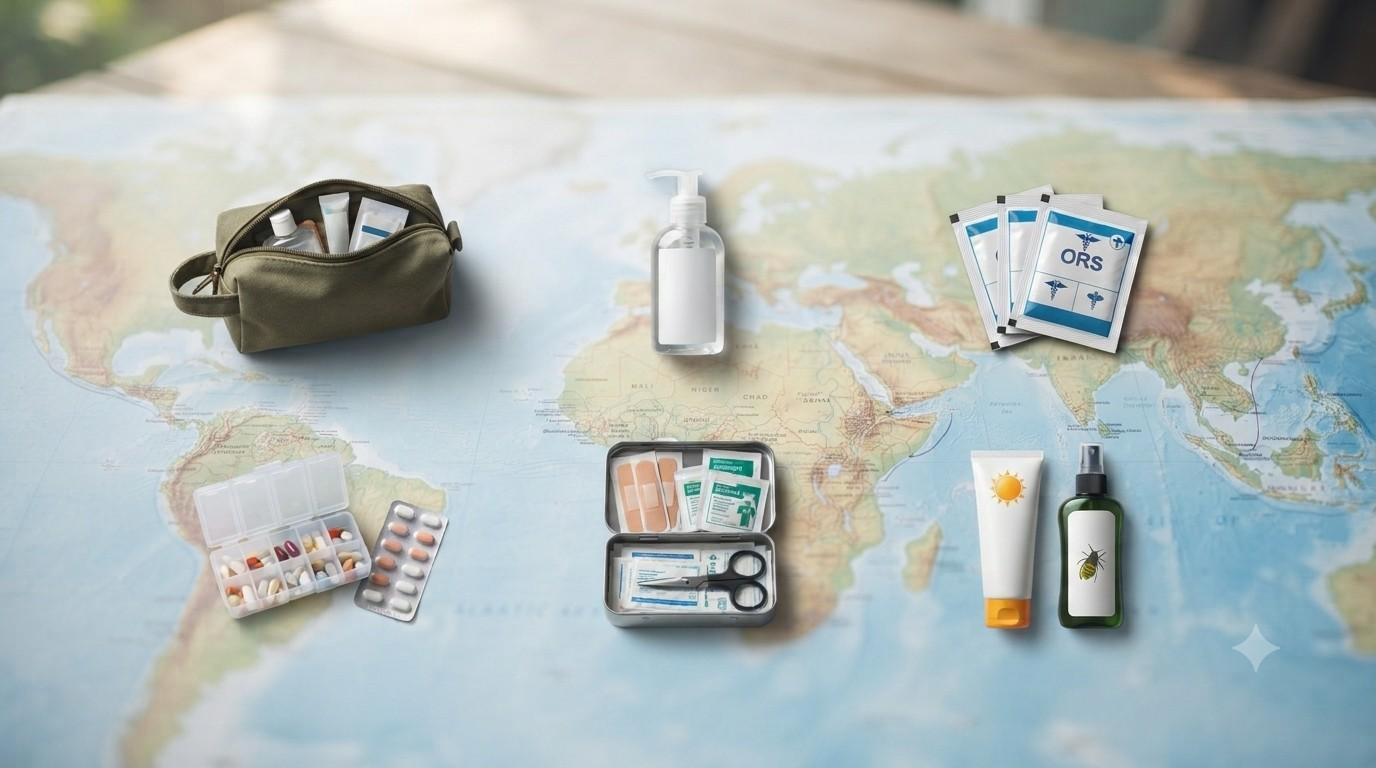
Travel plans can be disrupted by headaches, nausea, stomach problems, dehydration or minor injuries. Carrying a compact health kit with essential supplies can help manage common problems during a holiday, particularly when medical shops are not easily accessible.
1. Keep a small health pouch ready
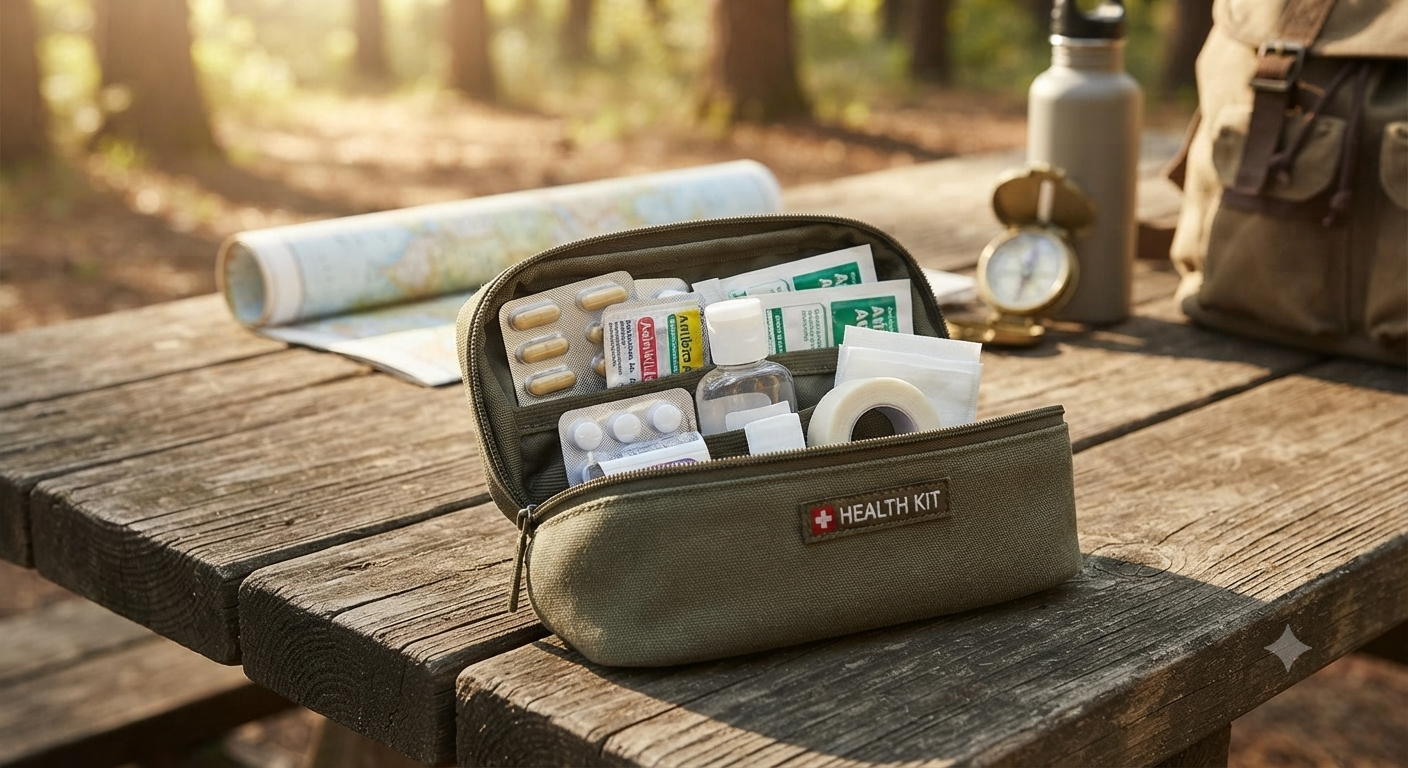
Set aside a separate pouch for health-related items before leaving. Changes in food, sleep patterns and daily routines may cause discomfort, so having basic supplies within reach can make it easier to deal with minor health issues while travelling.
2. Hand sanitiser for hygiene
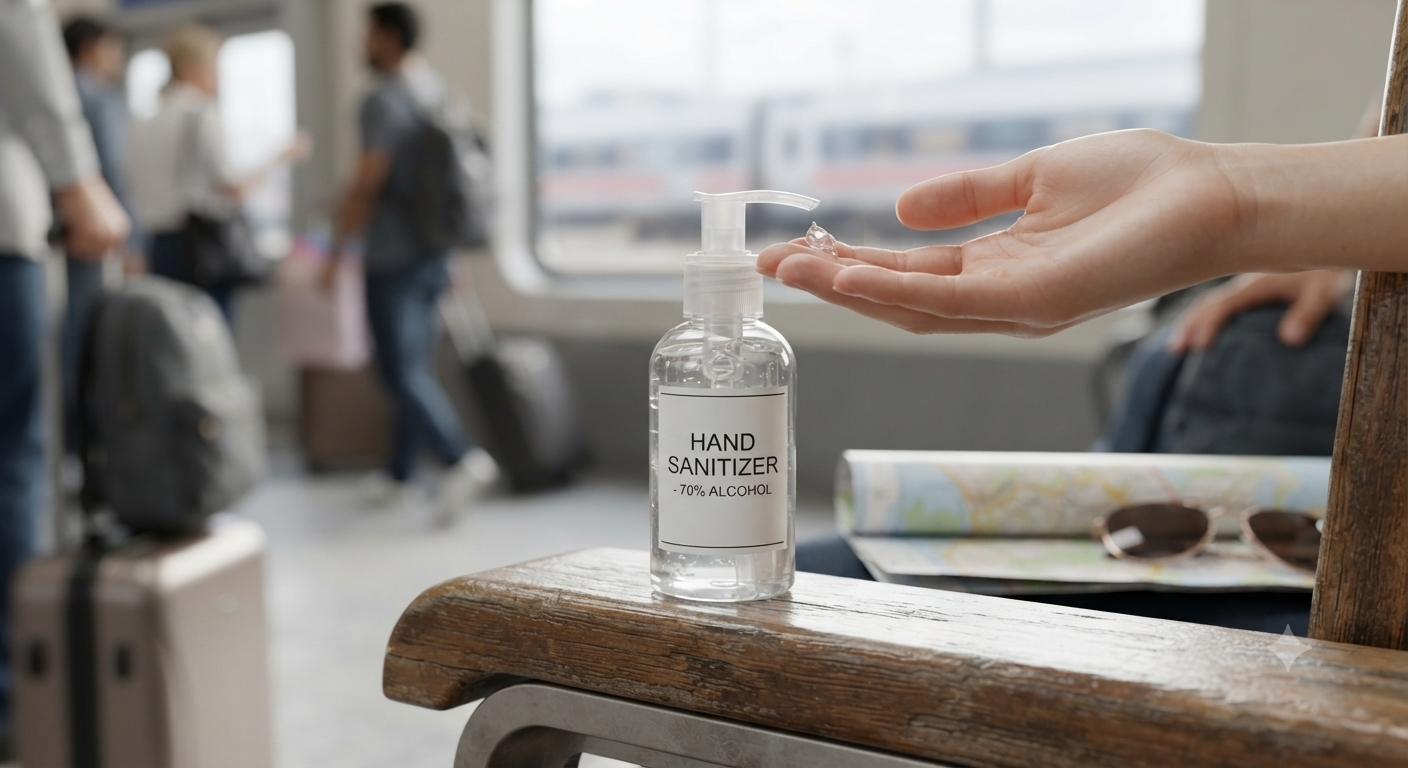
Airports, railway stations, buses and tourist attractions involve contact with frequently touched surfaces. Carry a hand sanitiser containing at least 60% alcohol for situations where soap and water are unavailable. Use it before eating, while remembering that washing with soap and water is the preferred option whenever possible.
3. ORS sachets for fluid loss
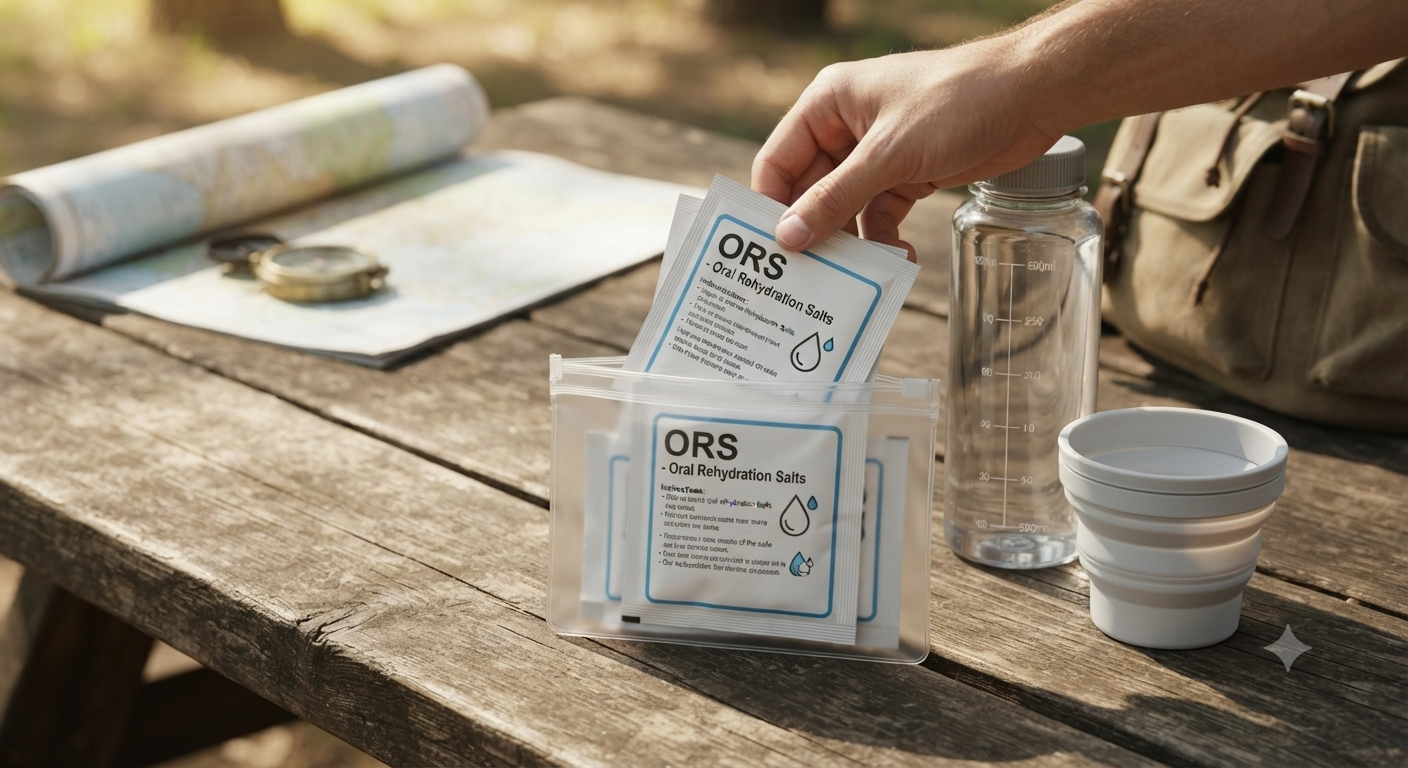
Vomiting, diarrhoea and heavy sweating can lead to the loss of water and essential salts. Oral rehydration salts, or ORS, can help replenish them. Carry a few sachets and prepare each one with the exact quantity of clean water mentioned on the packet. Medical advice should be sought if symptoms continue.
4. Prescribed and essential medicines
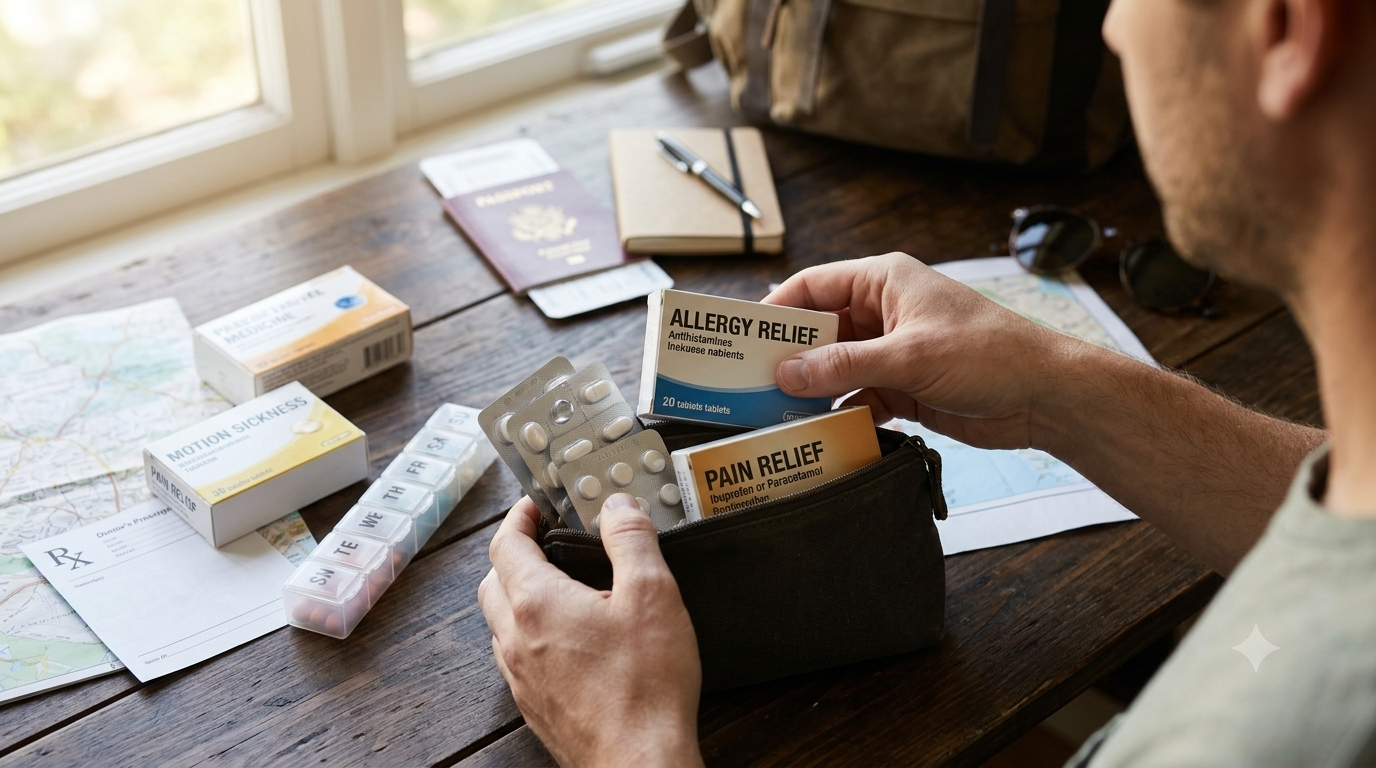
Travellers who take regular medication or are susceptible to headaches, allergies or motion sickness should plan their medicines in advance in consultation with a doctor. Pack enough prescribed medicine for the full duration of the trip, along with a reasonable backup if required. Medicines should remain in their original packaging, and antibiotics should not be taken without medical advice.
5. Basic first-aid supplies
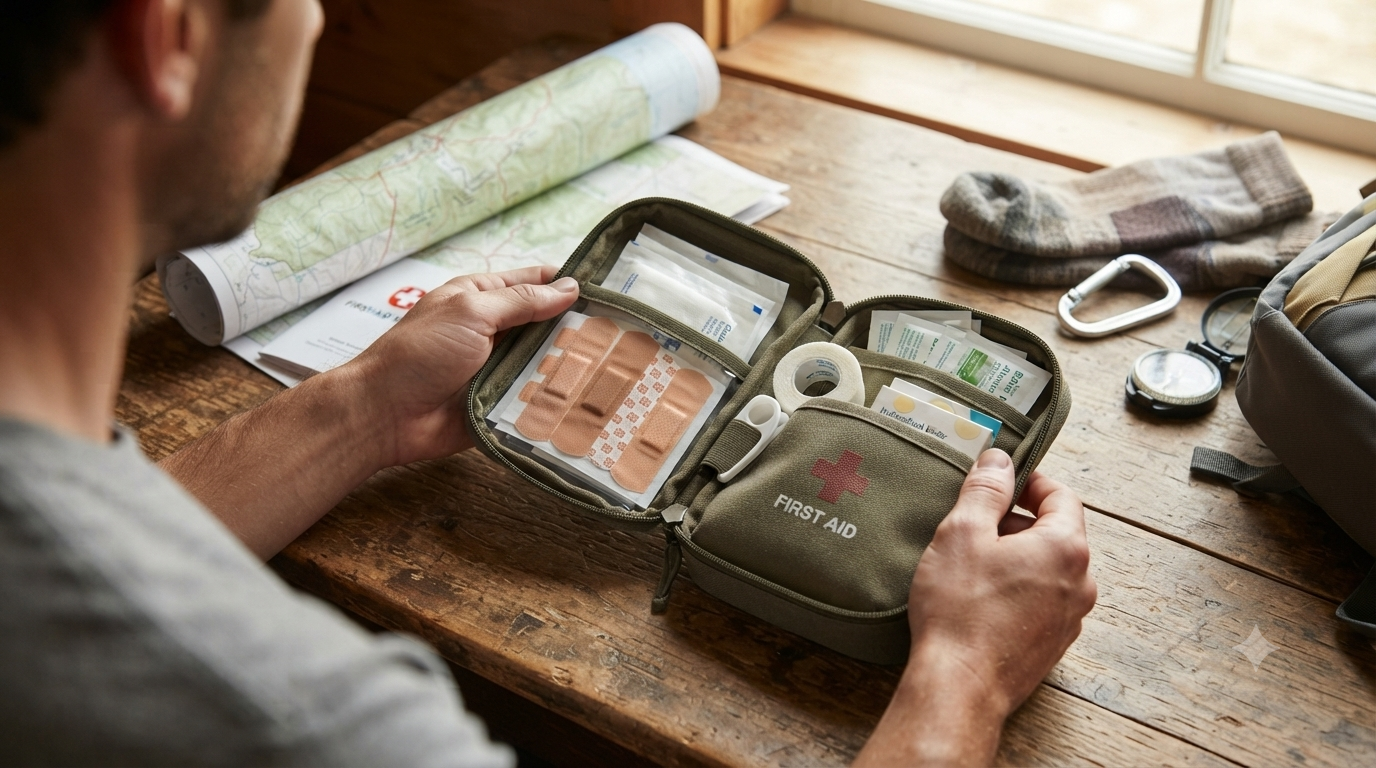
A compact first-aid kit can be useful for treating small cuts, scrapes and blisters that may occur during sightseeing or hiking. It should include adhesive bandages, gauze, medical tape and antiseptic wipes. Deep wounds, heavy bleeding and other serious injuries require prompt professional medical attention.
6. Sunscreen and insect repellent
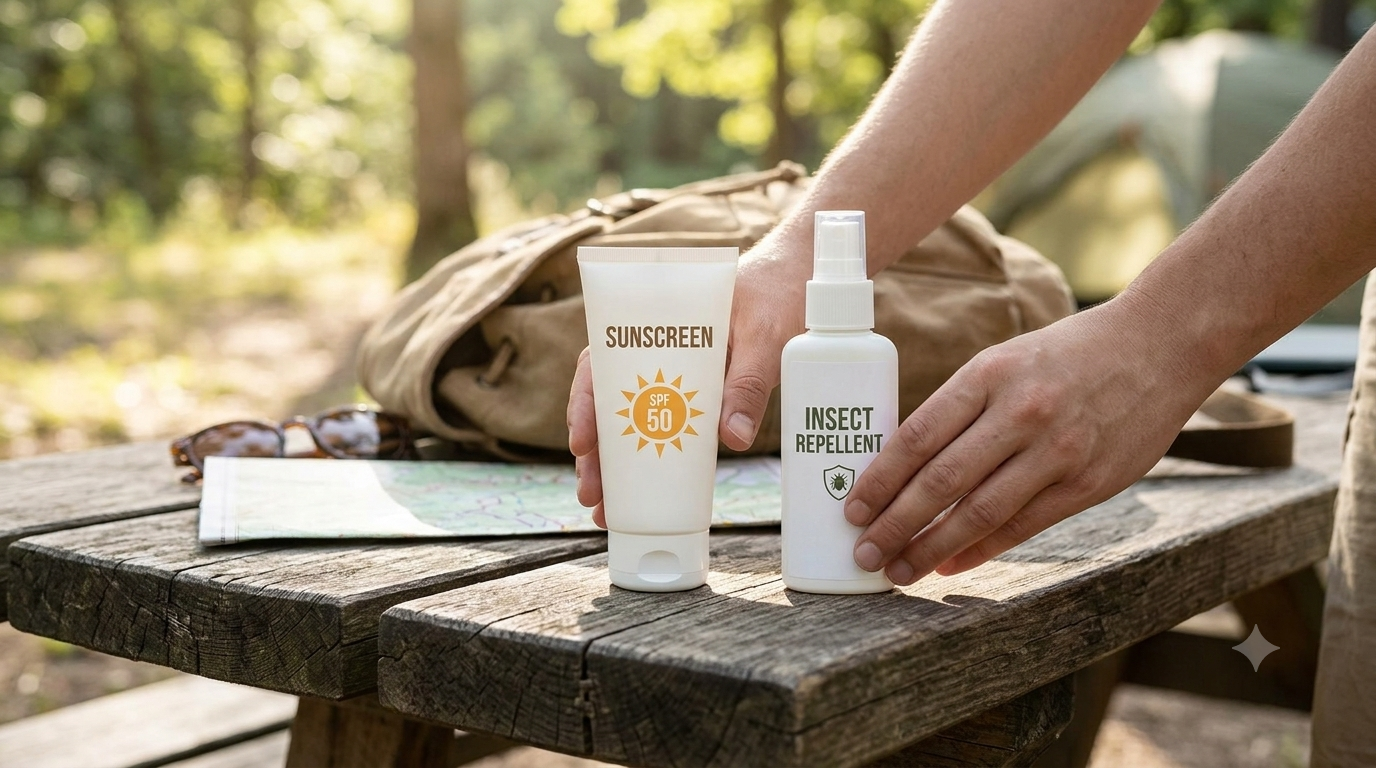
Sunscreen can help protect the skin from harmful ultraviolet rays when visiting sunny destinations. Travellers heading to forests, mountains or mosquito-prone areas should also carry a suitable insect repellent. Product instructions should be followed carefully, including directions on when to reapply it.
Maintain healthy habits during the trip
Health preparation should continue throughout the journey. Get adequate sleep, drink safe water and choose fresh, thoroughly cooked food. Avoid remaining hungry for long periods, maintain hand hygiene and respond to symptoms rather than continuing to push yourself when feeling unwell.

 Follow us