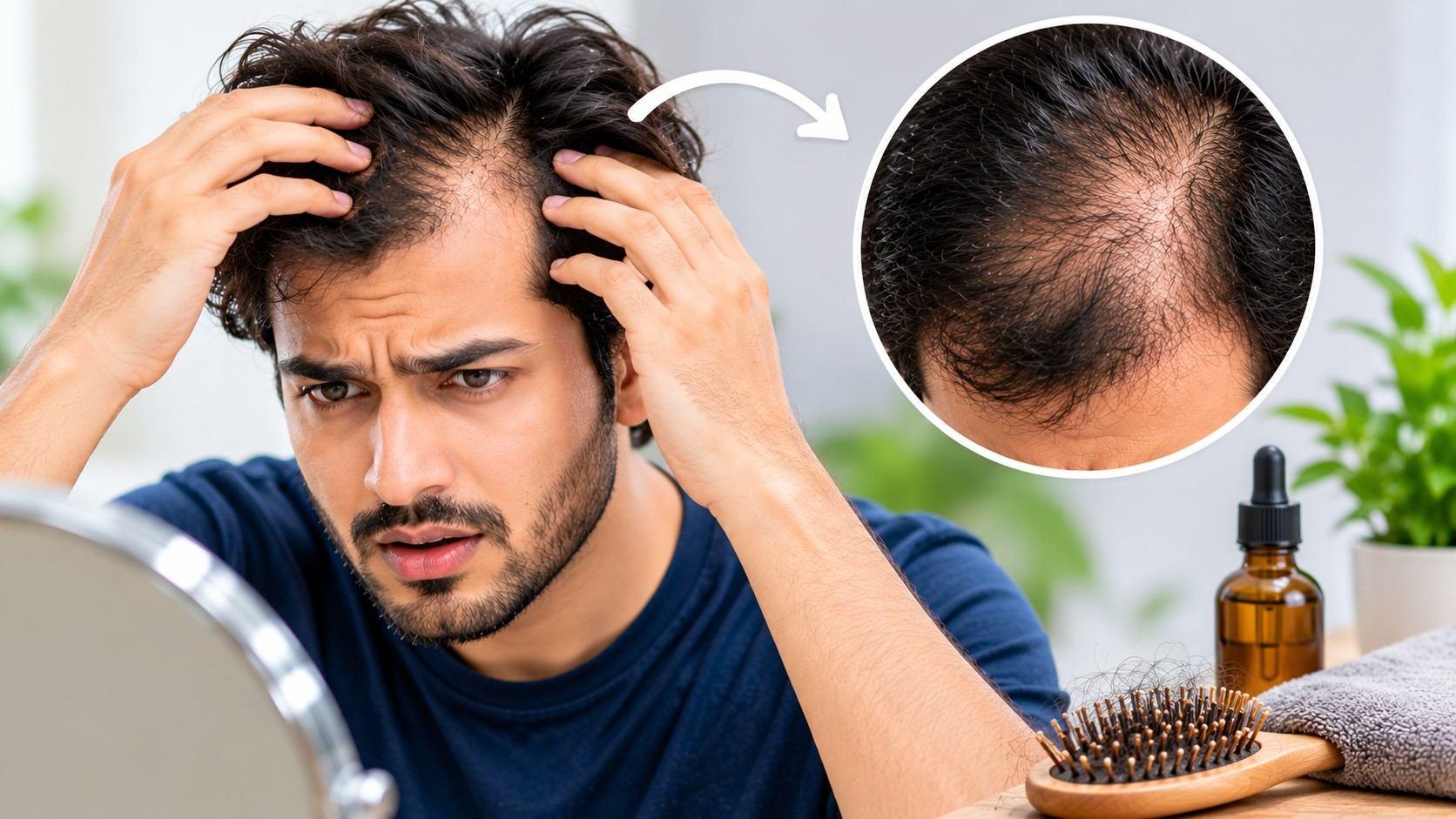
Hair loss is increasingly prompting Indian men in their 20s and early 30s to seek professional advice, rather than being treated solely as a concern associated with later adulthood. Receding hairlines, reduced density and loss of volume are among the issues bringing younger men to consultations.
The Man Matters Hairfall Index 2026 examined 7,04,152 consultations recorded between August 2025 and August 2026. It found that nearly 87.2 per cent of men seeking advice for hair loss were below the age of 35, with men in their 20s making up a substantial portion of those consultations.
However, early consultation does not always mean early intervention. Among men whose stage of hair loss was documented by a doctor, 65.2 per cent had reached Norwood Stage 3 or a more advanced stage when they sought help.
The Norwood scale is used to assess the progression of male pattern hair loss. A higher stage indicates more advanced hair loss, and the findings suggest that many men wait until the changes become clearly visible before consulting a medical professional.
Dr Sumit Upadhyay said that 87 per cent of Indian men consulting for hair loss were under 35, while two out of three had already reached Stage 2 or beyond at the time of consultation. He said that an earlier medical assessment generally leaves patients with more options, regardless of where they are in the progression of hair loss.
Hair concerns vary with age
The concern reported by men also appears to differ across age groups. Among men below 25, receding hairlines accounted for 18.8 per cent of consultations, compared with 14.5 per cent for thinning hair.
For men above 35, thinning and low hair volume were more frequently reported, accounting for 19.6 per cent of consultations. Receding hairlines represented 14.6 per cent in this age group.
These patterns indicate that younger men often first notice changes around the forehead and temples. Older men are more likely to focus on reduced density, especially around the crown and the top of the scalp. A receding hairline may also be followed over time by more widespread thinning, changing how the problem is perceived.
Hair shedding does not always mean baldness
Increased hair shedding and progressive hair loss are separate experiences, even though both are commonly described as hairfall. Androgenetic alopecia, or male pattern hair loss, is a hereditary condition associated with the sensitivity of hair follicles to dihydrotestosterone, or DHT, a hormone derived from testosterone. It can start at any point after puberty and generally develops gradually.
Temporary shedding may instead be linked to telogen effluvium, in which an unusually high number of hairs enter the shedding phase of the growth cycle.
Significant stress, illness and other changes in health can trigger the condition. In many cases, shedding reduces after the underlying trigger has passed.
Finding more hair on a pillow or in the shower does not by itself confirm that a person is going bald. The pattern, duration and likely cause of the change need to be considered when assessing hair loss.
Hair health becomes part of wider wellness discussions
Hair health is now being discussed alongside nutrition, lifestyle, stress, sleep, scalp health and grooming habits. For younger men, concerns about hair can also be connected with appearance and the pressure to maintain a particular look as grooming, skincare and self-care become more widely discussed.
Lifestyle and nutrition may affect hair health, but they do not explain every case of hair loss. Determining the underlying cause remains important before starting treatment or making major changes to a hair-care routine.

 Follow us