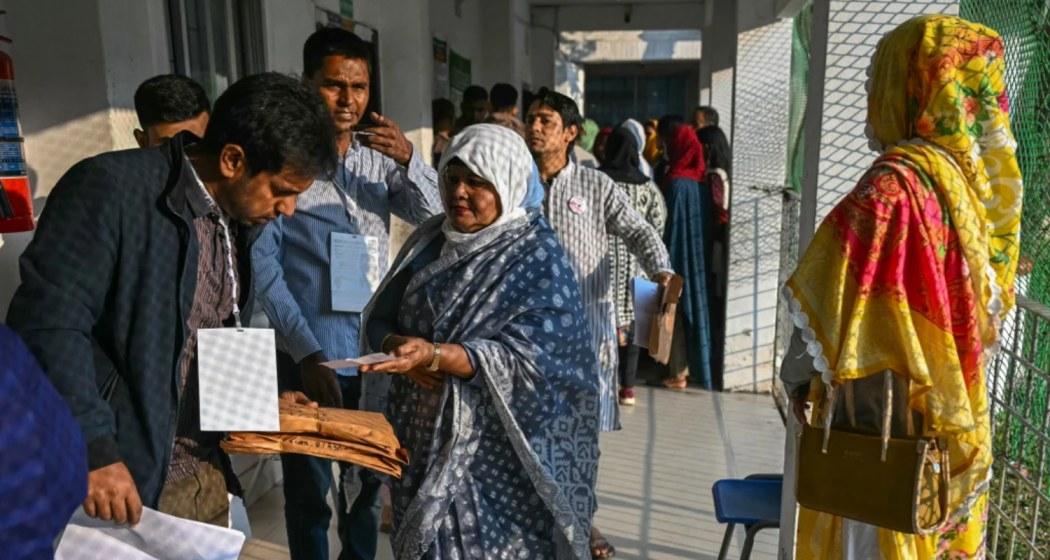
Voting for Bangladesh’s 13th Parliamentary Election and a Constitutional Referendum concluded across 299 constituencies on Thursday, marking a largely peaceful and orderly exercise in the nation’s democratic history. Election authorities immediately initiated counting after polling ended.
According to the Bangladesh Election Commission (EC), polling officially ran from 7:30 am to 4:30 pm local time, with voters already inside stations allowed to cast ballots even after closing hours. Senior Secretary Akhtar Ahmed reported that as of 2:00 pm, voter turnout at 36,031 polling stations stood at 47.91 per cent, though a total of 42,651 centres had been set up nationwide.
Chief Adviser of the interim government, Muhammad Yunus, praised the voters for enthusiastic participation and commended political parties, candidates, law enforcement, and officials for ensuring a smooth process. He highlighted the election as a demonstration of Bangladesh’s commitment to democracy and urged parties to maintain tolerance and mutual respect post-results.
The elections come nearly two years after the student-led July 2024 uprising that ousted former Prime Minister Sheikh Hasina and barred the Bangladesh Awami League from participating this year.
Also read: Bangladesh votes in first general election since Hasina’s ouster
The Bangladesh Nationalist Party (BNP), along with the Bangladesh Jamaat-e-Islami leading an alliance with the National Citizen Party (NCP), emerged as principal competitors, contesting on a seat-sharing basis alongside other parties.
A total of 2,034 candidates from 51 political parties are in the fray, competing for seats in the 299-member parliament. Observers described the polls as the most peaceful and festive in the country’s recent history, reflecting both citizen enthusiasm and institutional efficiency.
The referendum alongside the elections concerned the implementation of the July National Charter, a key document arising from the 2024 political transition. Analysts say that the smooth conduct of both polls underscores the resilience of Bangladesh’s democratic institutions and the active role of its electorate in shaping the nation’s political future.
With vote counting underway, attention now shifts to the results, which will determine the direction of governance and the consolidation of a new political order in Bangladesh.

 Follow us