The Bangladesh Awami League on Saturday congratulated BJP leader Suvendu Adhikari on his electoral victory in the West Bengal Assembly elections and his assumption of office as Chief Minister.
In a statement issued by its Central Working Committee, the Awami League described the mandate as “a unique recognition of Suvendu Adhikari's strong leadership.”
The party highlighted the “shared history, language, and cultural ties between Bangladesh and West Bengal” and expressed confidence that “this new chapter will elevate those relations to greater heights.”
It also underlined the longstanding relationship between Bangladesh and India, stating that the two countries share “a long-standing history of genuine friendship and cooperation.”
“During the tenure of the newly elected government of West Bengal, this bilateral relationship and the momentum of mutual development are expected to be further strengthened,” the statement said.
Also read: BJP ruling party in Bengal as Suvendu takes oath as CM
The Awami League further wished Adhikari and his cabinet “success and good health,” along with “continued peace and prosperity for the people of West Bengal.”
Adhikari took oath as the state’s first BJP Chief Minister earlier in the day, marking a significant political shift in the eastern state.
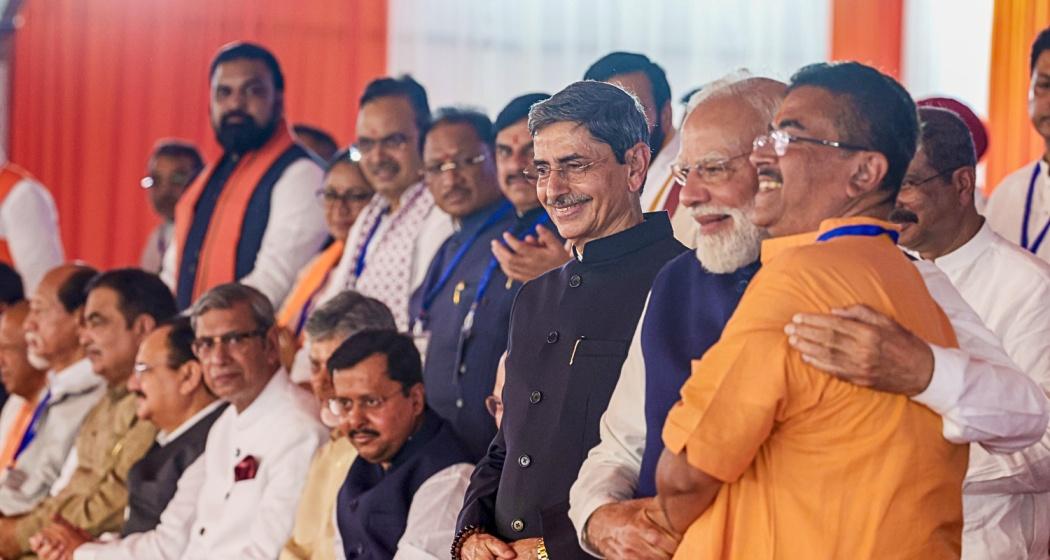
Prime Minister Narendra Modi, along with Union Ministers Amit Shah, Rajnath Singh, JP Nadda and Dharmendra Pradhan, attended the swearing-in ceremony. Chief Ministers Manik Saha, Himanta Biswa Sarma, Rekha Gupta and Pushkar Dhami were also present.
Adhikari was earlier elected leader of the BJP Legislature Party following the party’s victory in the 2026 Assembly elections.
He secured victories in both Bhabanipur and Nandigram constituencies. According to data from the Election Commission of India, Adhikari defeated former Chief Minister Mamata Banerjee in Bhabanipur by 15,105 votes and also won the Nandigram seat.
The BJP won over 200 seats in the 2026 West Bengal Assembly elections, while the Trinamool Congress secured 80 seats, ending its 15-year rule in the state.

 Follow us