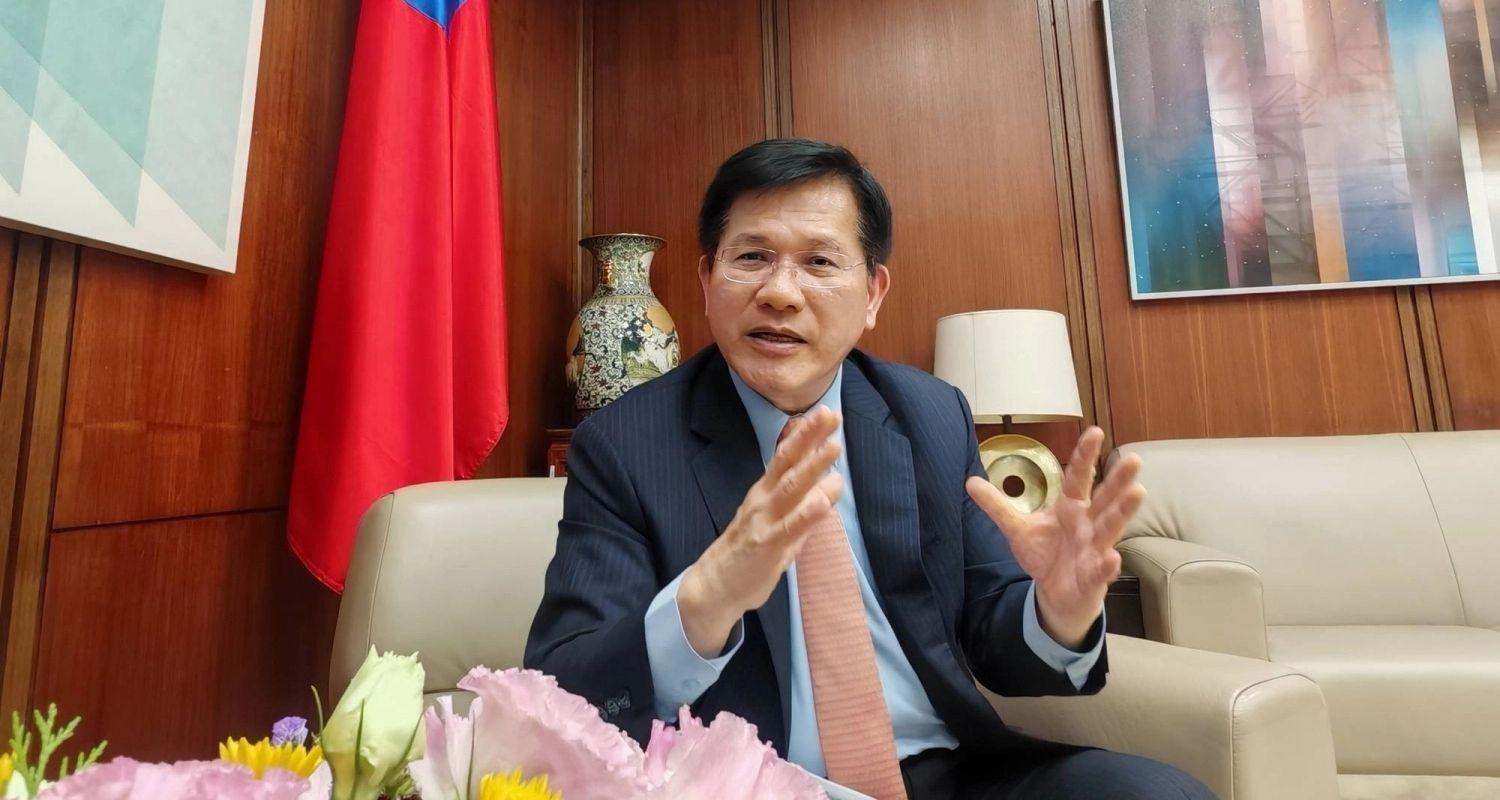
Taiwan's foreign minister Lin Chia-Lung has said China's efforts to pressure other countries into restricting Taiwan's participation in international events have become “the new normal”.
Lin Chia-Lung made the remarks on Wednesday after Taiwanese delegates were detained in Kenya and prevented from attending an ocean conference. Taiwan's Foreign Ministry said the incident happened due to pressure from China on the event organisers.
China considers Taiwan a part of its territory, even though the island is self-governed and democratic. Beijing has repeatedly said it reserves the right to use force to bring Taiwan under its control.
In recent months, China has stepped up efforts to persuade countries and organisations to limit the participation of Taiwanese officials and representatives at international gatherings.
Earlier this year, Taiwan's president had to delay a planned visit to Eswatini after three countries reportedly refused permission for his aircraft to fly through their airspace following pressure from Beijing. He later completed the trip using a plane arranged by Eswatini's king.
In the latest case, two members of Taiwan's delegation to the Our Ocean Conference in Mombasa were denied entry because Kenyan authorities did not recognise their Taiwanese passports, according to Taiwan's Foreign Ministry.
The ministry said the two delegates were detained for more than 20 hours. Their passports and mobile phones were also taken away before they were eventually allowed to leave Kenya.
Following the incident, the rest of Taiwan's delegation decided to withdraw from the conference. Kenya defended its actions. Foreign Ministry Principal Secretary Korir Sing'oei said the country's foreign policy recognises only one China.
Lin criticised Kenya's position, accusing it of wrongly expanding its interpretation of the "One China" policy and supporting Beijing's claims over Taiwan. He said preventing Taiwanese delegates from attending the conference was unacceptable and deserved strong condemnation and protest.
China has not publicly responded to the allegations made by Taiwan.
Beijing has long worked to limit Taiwan's participation in international organisations, including the World Health Organisation and the World Health Assembly.
At the Olympic Games, Taiwan competes under the name "Chinese Taipei" because of pressure from China. Lin said China is increasingly using its political and economic influence to persuade countries, particularly developing nations, to exclude Taiwan from international activities. He claimed that some countries in the Global South are being influenced by Beijing, while several democratic nations are trying to resist such pressure.
Kenya is hosting the Our Ocean Conference, an international event focused on issues such as climate change, marine biodiversity and ocean pollution.
The conference has attracted hundreds of delegates from Africa, the United States, the European Union and island nations vulnerable to climate change.
Organisers have highlighted Africa's growing role in shaping global policies related to ocean protection and governance.
Sing'oei said people carrying Taiwanese passports would normally not be allowed to enter Kenya because the documents are not recognised by the country. He also said Taiwan would not be represented at official state meetings hosted by the Kenyan government.
China and Taiwan have been governed separately since 1949, when the Chinese Communist Party came to power after a civil war. After losing the war, forces from the Nationalist Party retreated to Taiwan, which later developed into a multiparty democracy.
For many decades, China has maintained that Taiwan is part of its territory and must eventually come under Beijing's control, including through military action if necessary.
Also read: ‘China's repression in Tibet under global spotlight’

 Follow us