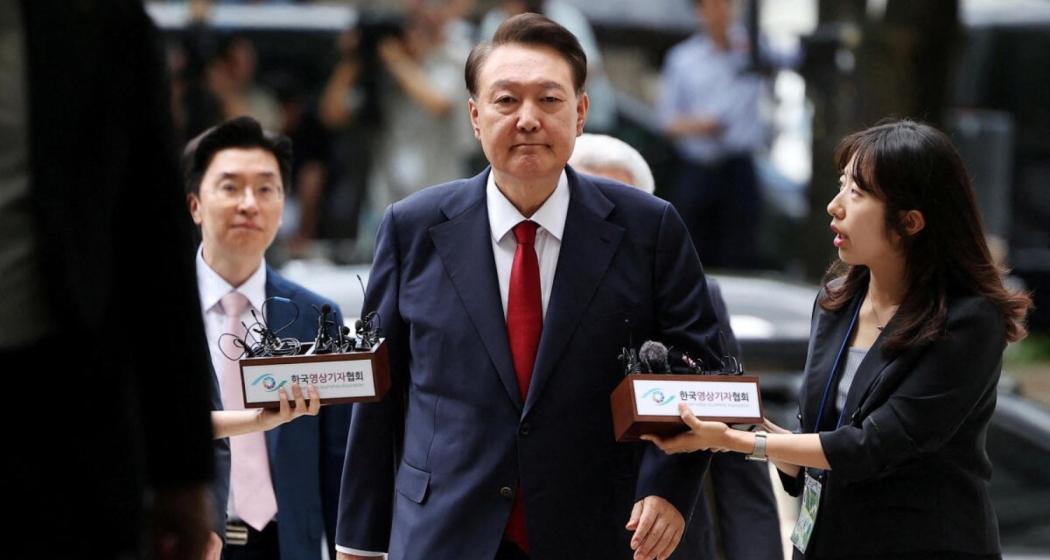
Ousted South Korean President Yoon Suk Yeol remained defiant on Friday, a day after a Seoul court sentenced him to life imprisonment for rebellion over his short-lived declaration of martial law in December 2024.
In a statement released through his lawyers, Yoon, 65, said his decision to impose emergency martial law was taken “solely for the sake of the nation and our people” and dismissed the Seoul Central District Court as biased. He questioned whether continuing the legal battle would be meaningful, citing concerns about judicial independence, though his counsel later clarified he had not waived his right to appeal.
Judge Jee Kui-youn, delivering the verdict on Friday, said Yoon had shown “no sign of apology for the staggering social costs incurred by the emergency martial law” and had repeatedly refused to appear in court without justifiable reason. Yoon has seven days to appeal the sentence.
The court found him guilty of orchestrating a rebellion by mobilising military and police forces in what prosecutors described as an illegal bid to seize the opposition-controlled legislature, arrest political opponents and establish unchecked rule. Yoon has consistently rejected the charges, portraying his actions as necessary to counter what he called “anti-state” forces.
Also read: S Korea’s former first lady gets 20 months in jail for bribery
Conservative supporters gathered near the court ahead of the ruling expressed anger and disappointment after the sentence was announced, while opponents celebrated nearby. Hundreds of police officers separated the two groups and no major clashes were reported.
The Seoul court also convicted five former military and police officials involved in enforcing the decree. Former Defence Minister Kim Yong Hyun was sentenced to 30 years in prison for his role in planning and executing the measure. He has appealed.
Yoon was impeached by lawmakers on 14 December 2024 and formally removed from office by the Constitutional Court in April 2025. Though the martial law lasted only about six hours before lawmakers voted to overturn it, the move triggered South Korea’s most severe political crisis in decades, paralysing governance and rattling markets before a snap election brought liberal leader Lee Jae Myung to power.

 Follow us