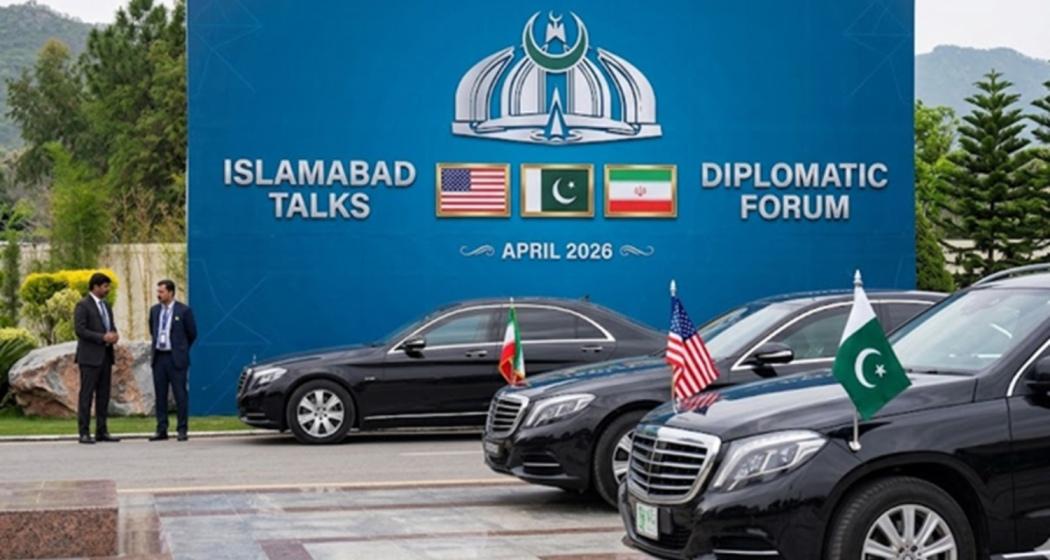
US President Donald Trump struck sharply divergent notes on Sunday amid the West Asia standoff, warning he could “knock out every single power plant and bridge” in Iran while simultaneously offering what he called a “very fair and reasonable deal” ahead of fresh talks in Pakistan. Accusing Tehran of violating the ceasefire by firing in the Strait of Hormuz, Trump said US representatives would travel to Islamabad for negotiations, but cautioned that failure to reach an agreement would invite decisive military action.
Last chance” to sign a peace deal or face destruction: Trump
Trump confirmed on Sunday that Witkoff, his special envoy, and Kushner, his son-in-law, would arrive in Pakistan on Monday night for a second round of face-to-face negotiations scheduled for Tuesday. Vice-President JD Vance led the first round in Islamabad earlier this month. “Steve’s going to be going there tomorrow night,” Trump told reporters, adding that the talks offered Iran its “last chance” to sign a peace deal or face destruction of its infrastructure. He explicitly threatened to “knock out” Iranian power plants and bridges if no agreement is reached before the ceasefire expires on Wednesday.
Standoff escalates after Iran re-closes Strait of Hormuz
The crisis sharpened on Saturday when Iran reversed a brief reopening of the Strait of Hormuz and declared it closed again in retaliation for the US naval blockade of Iranian ports. Tehran’s military fired on vessels attempting to transit the waterway, including two Indian-flagged crude carriers. India’s Ministry of External Affairs confirmed the attacks and summoned Iran’s ambassador to convey “deep concern”. Ships turned back after Iranian Revolutionary Guard gunboats opened fire without warning, according to the UK Maritime Trade Operations.
The Strait, which carries roughly one-fifth of global seaborne oil and significant LNG volumes, has seen traffic halt. Iran’s parliamentary Speaker Mohammad Bagher Qalibaf stated the waterway “will remain closed” until the US ends its blockade. “It is impossible for others to pass through the Strait of Hormuz while we cannot,” Qalibaf said in a televised interview, adding that control rests with Iranian forces and passage will follow “designated routes” under Tehran’s authorisation.
Also read: Israeli losses from Iran-Lebanon war reach $17.5 bn
US Navy deploys robots to sweep mines in Hormuz
In response, the US Navy has begun deploying unmanned sea drones and robotic systems to detect and neutralise mines allegedly laid by Iran. The Wall Street Journal reported that underwater vehicles will scan the seabed first, followed by explosive-laden robots to destroy threats, minimising risk to sailors. US Central Command confirmed additional forces, including drones, have joined the clearance effort.
Lebanon begins post-truce recovery in south
On a related front, Lebanon’s army has reopened key roads and bridges in the south damaged by Israeli strikes during the recent Israel-Hezbollah conflict. The military announced full reopening of the Nabatieh-Khardali road and partial reopening of the Burj Rahal-Tyre bridge, with work continuing on other routes under a 10-day truce.
The moves are part of a broader effort to reconnect war-hit areas.
The developments come amid a fragile regional ceasefire that has already shown signs of strain. Oil prices, which surged past $100 a barrel earlier in the crisis, remain volatile; any prolonged closure of the Hormuz chokepoint could add 0.1-0.2 percentage points to India’s inflation and shave 0.1-0.2 points off GDP growth for every $10 rise in crude, according to economic assessments.

 Follow us