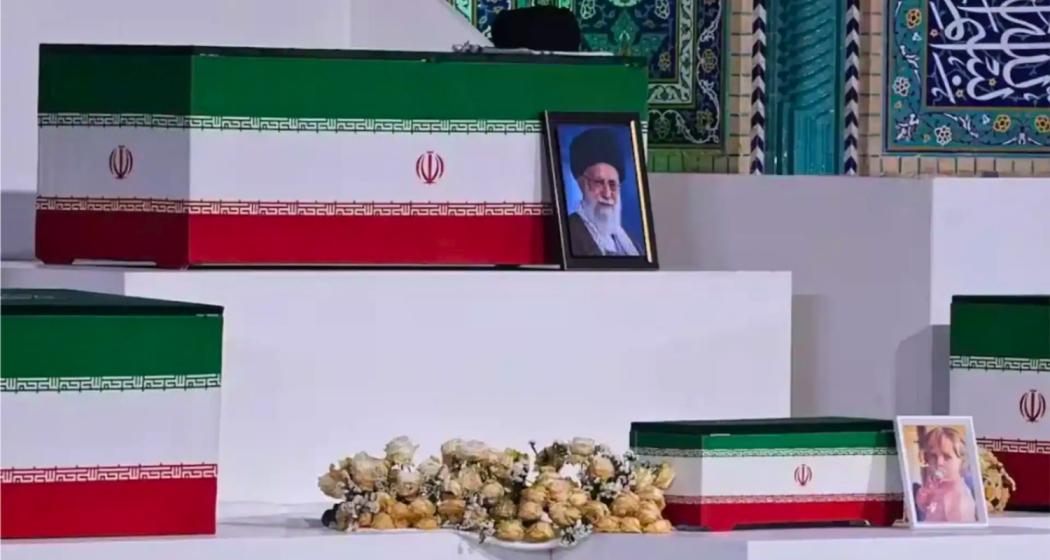
The preservation of the body of Iran's late Supreme Leader, Ali Khamenei, for nearly 125 days before his state funeral has drawn global attention, with experts pointing to a combination of advanced embalming procedures, controlled refrigeration and continuous medical supervision to delay decomposition during the prolonged interval before burial.
Khamenei, who was killed on February 28 during the opening phase of the US-Israeli military campaign against Iran, remained unburied for more than four months as the country postponed funeral ceremonies amid the conflict and security concerns. Iran has since begun a week-long state funeral programme, with the late leader lying in state in Tehran before burial in Mashhad.
Modern preservation techniques
Reports indicate that the preservation process began with the removal of blood and bodily fluids, a standard embalming practice aimed at slowing natural decomposition. The body's circulatory system was then reportedly infused with a specialised chemical solution containing formaldehyde, glycerin, alcohol and disinfectants to preserve tissues and maintain structural integrity.
The embalmed body was subsequently kept in a tightly controlled refrigerated environment. Reports suggest it was stored in an airtight vault maintained at temperatures between 0°C and 2°C, helping minimise bacterial activity and tissue deterioration. Medical teams are also reported to have carried out periodic inspections to monitor the condition of the remains and maintain external appearance using specialised waxes and silicone-based compounds to prevent drying and discolouration.
While these reported preservation techniques have circulated widely, Iranian authorities have not publicly detailed the exact procedures employed. Independent confirmation of several specific claims, including the storage conditions and maintenance schedule, has not been provided.
Rare but not unprecedented
Although Islamic tradition generally calls for burial as soon as possible after death and discourages embalming, scholars note that exceptional circumstances such as war or security concerns can permit delays. Analysts have suggested that long-term refrigerated storage, rather than conventional embalming alone, is likely to have played a significant role in preserving Khamenei's remains during the extended period before burial.
Long-term preservation of prominent political leaders is not unprecedented. The embalmed bodies of Vladimir Lenin, preserved since 1924, Ho Chi Minh and Kim Il Sung remain among the world's best-known examples of extended preservation.
Iran also has historical precedent. Former monarch Reza Shah Pahlavi, who died in 1944, was embalmed in Egypt before his remains were returned to Iran several years later.
The preservation of Khamenei's body has once again highlighted the intersection of medical science, religious practice and state protocol during extraordinary national circumstances, even as many technical details surrounding the process remain unverified publicly.
Also read: Millions gather as week-long funeral for Ali Khamenei begins

 Follow us