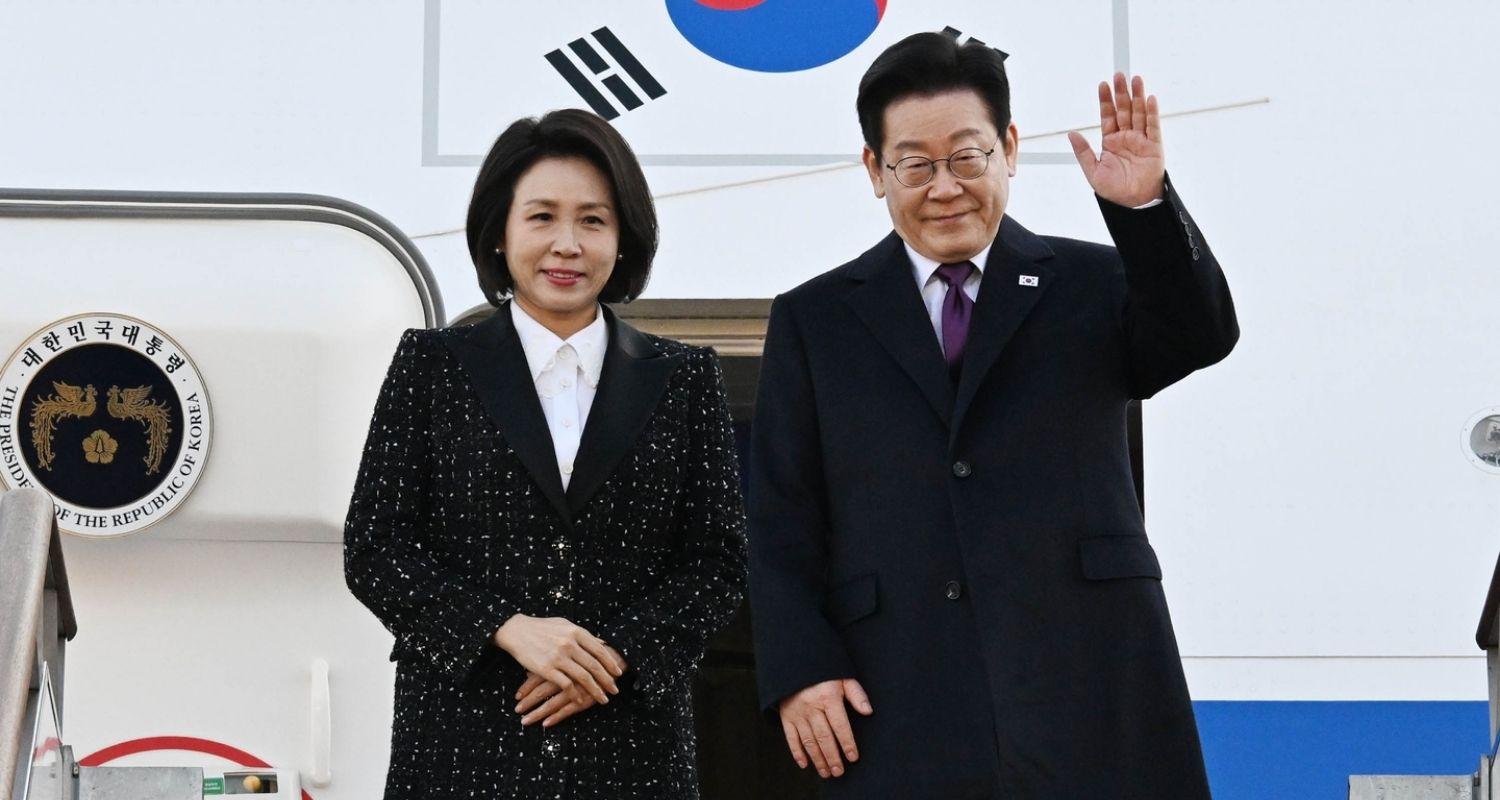
South Korean President Lee Jae Myung met with Japanese Prime Minister Sanae Takaichi on Tuesday and kick-started a summit aimed at improving ties between the two even as Tokyo and Beijing remain engaged in a diplomatic row.
Myung’s arrival in Japan, his first visit to the country since August 2025, was preceded by his meeting with Chinese President Xi Jinping last week, in which the two leaders seemed to portray warm accord.
Meanwhile, Takaichi, is looking to gain more popularity after a face-off with China, although she has enjoyed strong approval ratings back home after coming to power. Since her party has a majority in only one of the two houses of parliament, there is growing speculation that she may announce snap elections in hopes of gaining more seats.
After arriving in Nara city for the summit, Takaichi wrote on X: “Looking forward to reflecting on long-standing cultural exchanges between Japan and the Korean Peninsula in Nara, an ancient capital with more than 1,300 years of history.”
Nara is also Takaichi’s hometown, and known for deer and ancient architecture that includes centuries-old Buddhist temples.
On Wednesday, the Japanese PM will take Myung on a tour of Horyu Temple, which includes buildings from the late 7th or early 8th century, which are some of the world’s oldest surviving wooden structures and illustrate Japan’s adoption of Buddhism via the Korean Peninsula.
Also Read: China, South Korea leaders meet to strengthen ties
Tuesday’s meeting between the two leaders will focus on trade and the challenges of China and North Korea, as well as efforts to deepen trust between the two countries.
Japan and South Korea, both key US allies, must also figure out how to deal with US President Donald Trump’s unpredictable diplomacy, both being under pressure by the US to increase defence spending.
Takaichi is also likely to discuss with Myung, regional issues, including its tensions with China, and economic security cooperation.
Urged by Jinping to “stand firmly on the right side of history”, a thinly-veiled reference to China and South Korea’s shared history of being colonised by Japan, Myung has taken a more neutral “wait-and-watch” approach in its interactions with the Japanese leadership.
Wary of any repercussions for its economy, which is largely dependent on China, South Korea is unlikely to take sides in the dispute between the region’s two largest economies – China and Japan.
Meanwhile, Myung has sought a meeting with North Korean leader, Kim Jong-un, amid tensions between the two neighbours, although Kim repeatedly denies Myung’s requests.

 Follow us