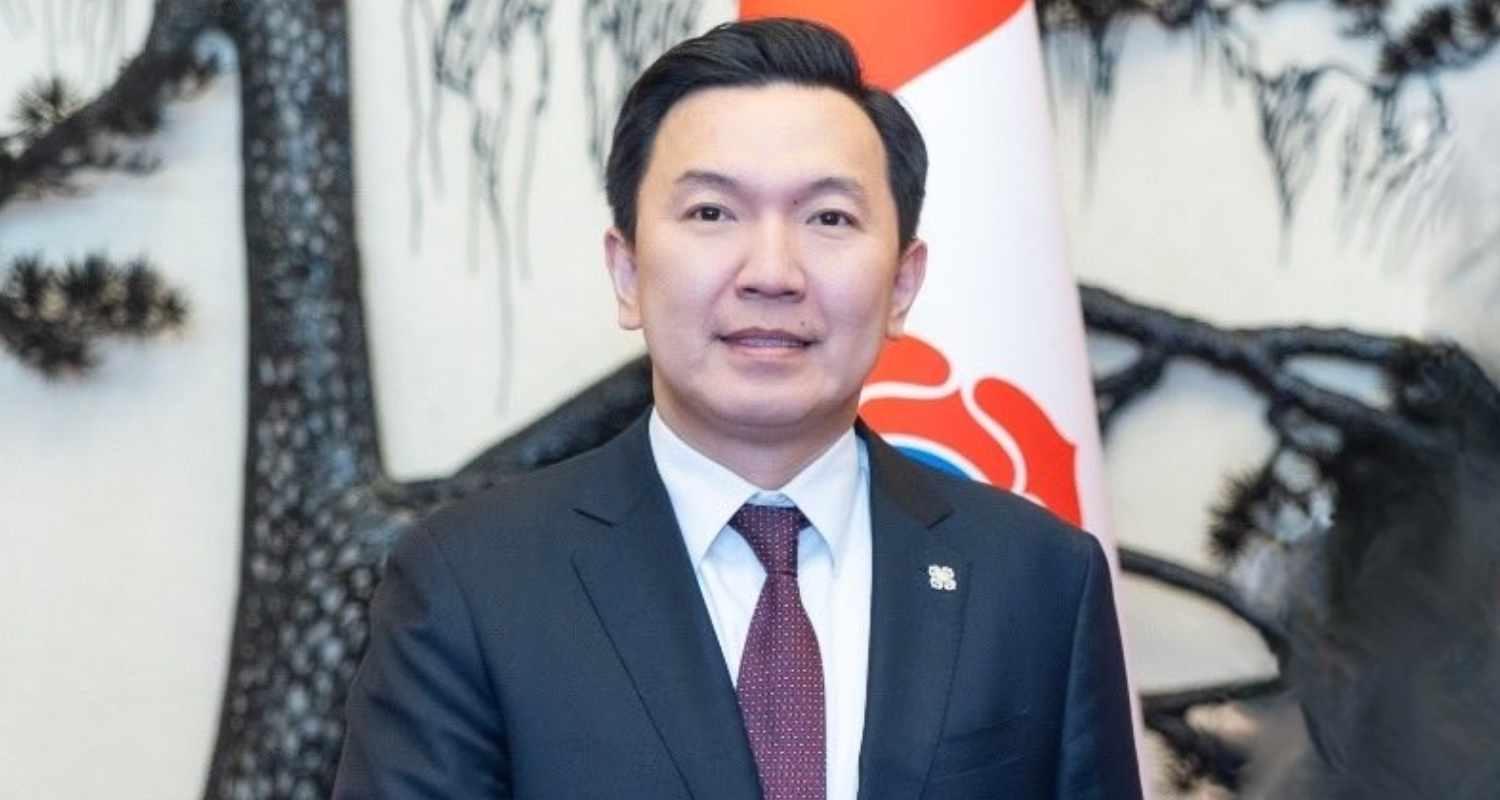
In the last nine months, Mongolia has named its “third” prime minister as the ruling party attempts to overcome internal power struggles at a time of mounting economic pressures and political infighting at home. The hope is that Uchral Nyam-Osor can manage the divisions in the Mongolian People's Party that toppled his two predecessors and now brought him to power.
As soon as Osor was appointed as the Prime Minister, he called for unity, saying, “As others unite to confront crises, we cannot afford political infighting that weakens our economy.” A total of 107 of the parliament's 126 lawmakers voted Monday night, with 88 supporting Uchral — or 82 per cent — clearing the way for him to take office.
Who is the hip-hop artist turned new prime minister?
Uchral was elected as leader of the Mongolian People's Party and speaker of the parliament last November. Before entering politics, he was a popular hip-hop artist known as “Timon”. The 39-year-old lawmaker has positioned himself as a reform-minded leader focused on modernising Mongolia’s regulatory environment.
He wants to end a Soviet-era system that gives officials the power to issue permits, creating fertile ground for corruption. Mongolia transitioned to democracy in 1990 after decades of Communist rule.
Former appointments —
Ucrhal is a former minister of digital development and communications who promoted transparency reforms and digital governance initiatives. He has played a role in efforts to attract foreign investment to the resource-rich country, including a uranium-related agreement with France's Orano Group in early 2025.
How was he chosen?
The Mongolian parliament has been paralysed following a boycott earlier this month by the opposition Democratic Party and infighting in the ruling party. Together, that meant not enough members were showing up for the legislature to hold votes.
The previous prime minister, Zandanshatar Gombojav, who submitted his resignation on Friday to resolve the crisis, had come under pressure because one of his senior ministers faced corruption allegations.
Uchral was seen as a compromise between factions in the Mongolian People's Party loyal to the president and the supporters of another former prime minister, Oyun-Erdene Luvsannamsrai.
Zandanshatar, who is close to the president, replaced Oyun-Erdene last June. All three prime ministers are from the Mongolian People's Party.
Mongolia’s crisis —
Uchral warned Monday that Mongolia is entering a period of three overlapping crises: rising global fuel prices, volatile commodity markets, and deepening domestic political divisions. He highlighted the country's heavy reliance on coal and copper exports, warning that price swings could erode government revenue and strain public finances. The government is also demanding a greater share of the financial benefits in talks with mining giant Rio Tinto over the Oyu Tolgoi copper and gold mine.
Mongolia, a landlocked country that depends entirely on imported fuel, is vulnerable to supply disruptions and price hikes. The government has asked Russia to keep fuel prices stable, and Moscow has indicated it would respond favourably in the near term, Zandanshatar said at a ceremony to transfer power to Uchral.
Uchral's appointment comes amid renewed concern among foreign investors over Mongolia's political instability, frequent policy changes, and reputation for corruption and regulatory unpredictability.

 Follow us