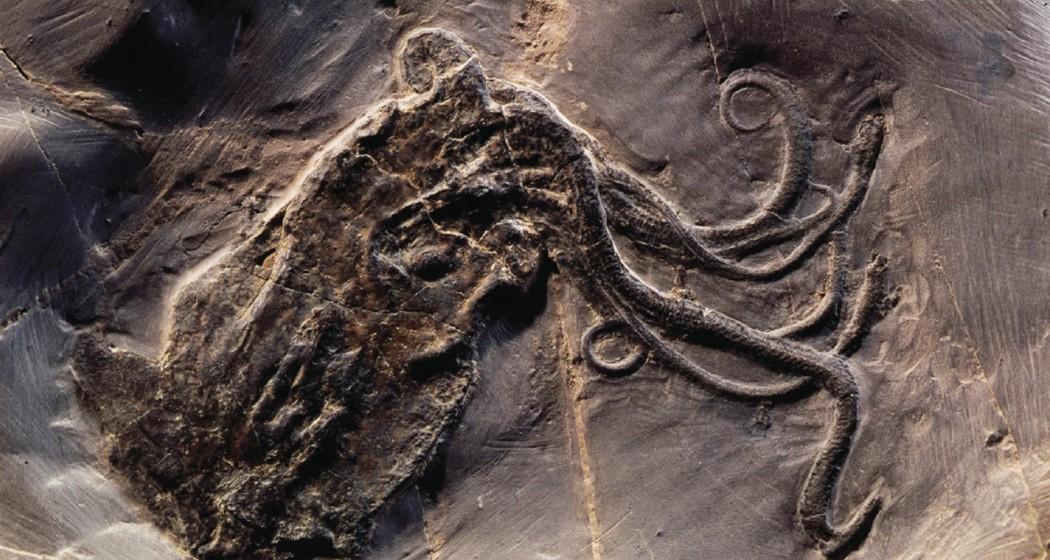
A 300-million-year-old fossil long regarded as the world’s oldest octopus has been reclassified, with scientists concluding it is not an octopus but a relative of the nautilus.
The fossil, Pohlsepia mazonensis, had been listed by Guinness World Records as the earliest known octopus. However, new research led by University of Reading zoologist Thomas Clements has challenged that identification, reopening questions about the evolutionary timeline of cephalopods.
The specimen, roughly the size of a human hand, was discovered in the fossil-rich Mazon Creek region of Illinois, an area known for preserving ancient marine life from before the age of dinosaurs. Since its classification as an octopus in 2000, it had suggested that octopuses evolved far earlier than previously believed, creating a gap of more than 200 million years with the next known fossil, dated at around 90 million years old.
“It's a very difficult fossil to interpret,” Clements said, describing the specimen as resembling a “white mush” that could easily be mistaken for a deep-sea octopus.
To resolve the uncertainty, researchers used a synchrotron, a powerful imaging tool that produces intense beams of light, to examine the fossil’s internal structure. Their analysis revealed a radula, a ribbon-like structure of teeth found in molluscs.
Also read: Research traces journey of rhinos to Kaziranga
Crucially, the fossil showed rows of 11 teeth, a number inconsistent with octopuses, which typically have seven or nine. Instead, the pattern matched that of nautiloids, a group of shelled cephalopods.
“This has too many teeth, so it can't be an octopus,” Clements said. “And that's how we realise that the world's oldest octopus is actually a fossil nautilus, not an octopus.”
The researchers believe the misclassification may have occurred because the creature lost its shell before fossilisation, obscuring key identifying features.
Following the findings, published in Proceedings of the Royal Society B, Guinness World Records said it would no longer recognise Pohlsepia mazonensis as the earliest octopus.
The fossil, named after its discoverer James Pohl, is housed at the Field Museum in Chicago. Rather than diminishing its importance, scientists say the reclassification enhances its value.
Clements noted that the specimen may now represent the oldest known soft-tissue nautilus, offering rare insights into ancient marine life and the evolution of cephalopods.

 Follow us