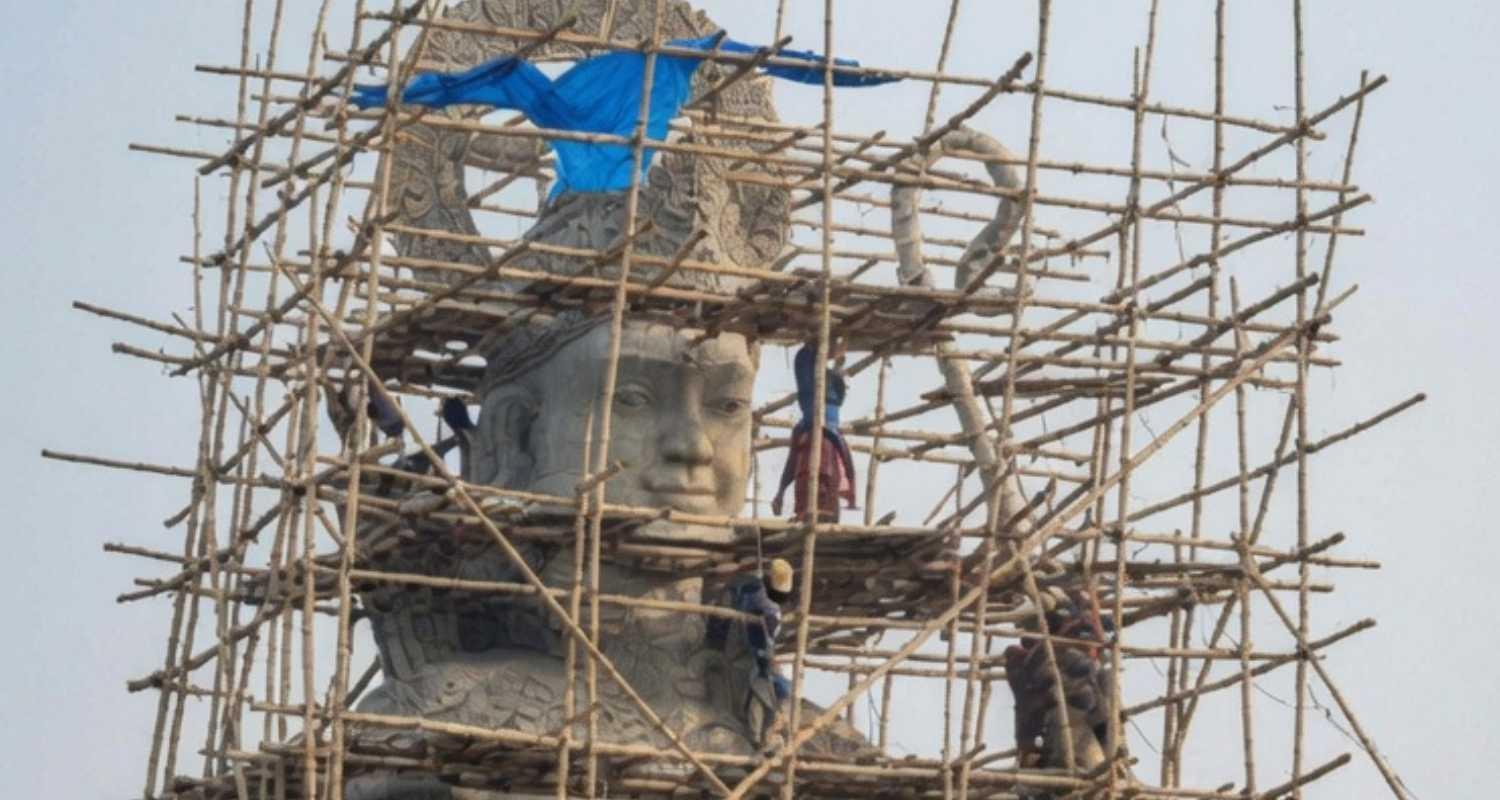
The construction of what is set to be one of the tallest idols of Lord Ram in a Muslim-majority nation has brought focus to Komorpur village in Bangladesh’s Gaibandha district, where a large Hindu temple complex is currently under development. The sprawling site, known as the Sri Sri Radha Govinda Kali Temple, is being built under the initiative of Haridas Tarani Kanti. According to project authorities, nearly BDT 28 crore (approximately Rs 22 crore) has already been spent on the complex, which aims to house 144 idols of Hindu deities upon completion.
Work on the Ram idol began on May 1, 2025, while construction of several other idols is already complete. A large Krishna idol at the site was inaugurated by an Indian diplomat in late 2025. Kanti has stated that the project is entirely funded through donations from devotees, with no financial contribution from either the Bangladesh government or the Indian High Commission.
However, developments in another part of the country have drawn attention for very different reasons. According to sources in Dhaka-based intelligence establishments, in Narayandahar village in Netrokona district, a relatively new religious institution—Darul Uloom Nomaniya, also described as a “Neo-Muslim Markaz”—has come under scrutiny for its activities related to religious conversions.
Founded in 2023 by Wasek Billah Numany, the institution has gained visibility through social media posts that document conversion cases. Numany’s online presence includes videos, photographs, and testimonials of individuals from minority communities—primarily Hindus—who have adopted Islam.
“In several publicly shared videos, individuals state that their conversions were voluntary. These conversions are legally permissible in Bangladesh, where Article 41 of the Constitution guarantees the right to profess, practice, and propagate religion, subject to public order and morality,” said an officer of an intelligence wing in Bangladesh.
Legal procedures require that conversions be formalised through affidavits signed before a notary or lawyer, confirming that the decision was made voluntarily. In cases linked to marriage, additional documentation is required.
Bangladesh, with an estimated population of over 168 million, is a Muslim-majority country, with more than 90 percent of its population adhering to Islam. Hindus constitute roughly 8 percent of the population, while other minorities include Buddhists, Christians, and smaller groups.
Experts note that while religious conversion is legal, it often remains a sensitive issue, particularly in regions where minority populations are concentrated. Demographic changes over the years have largely been attributed to migration patterns and socio-economic factors. The juxtaposition of a large-scale Hindu religious project in one part of the country and reports of active conversion efforts in another highlights the complex and evolving religious landscape of Bangladesh.

 Follow us