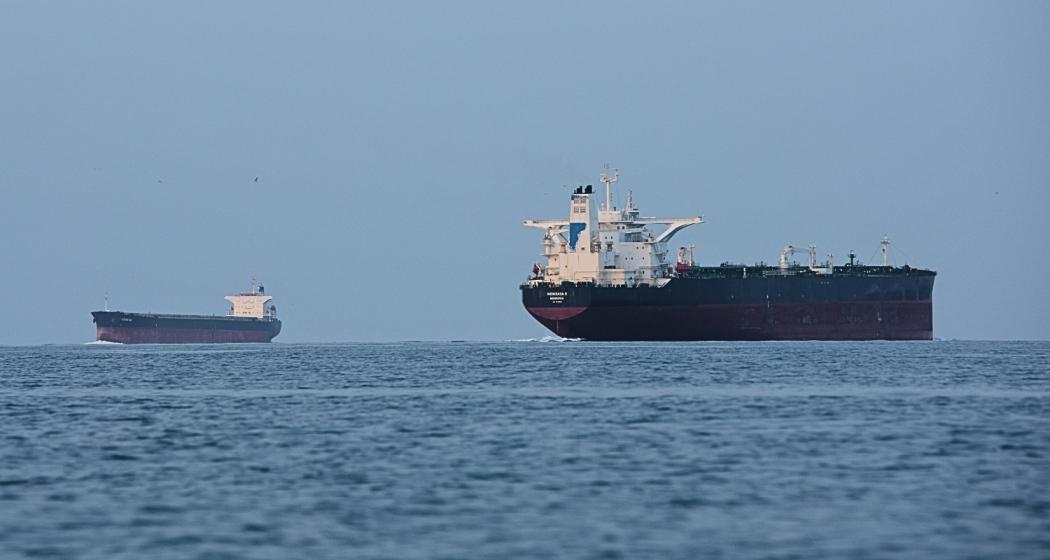
Amid ongoing tensions in West Asia, the United States has cautioned global shipping companies against making any payments to Iran for safe passage through the Strait of Hormuz, warning that such transactions could invite sanctions under US law.
In an alert issued by the US Office of Foreign Assets Control (OFAC), Washington said demands for payments could extend beyond cash to include “digital assets, offsets, informal swaps or other in-kind payments”, including charitable contributions or payments routed through Iranian embassies.
OFAC flags multiple payment routes, sanctions risk
According to the advisory, any form of facilitation to secure transit through Hormuz, a critical global oil chokepoint, may be treated as sanctionable activity. The warning comes as concerns grow over Iran’s attempts to assert control over shipping lanes following the recent conflict.
The Strait of Hormuz handles a significant share of global oil shipments, making any disruption or informal toll system a matter of international concern.
Trump ‘not happy with conversation with Iran’
US President Donald Trump indicated that negotiations with Iran remain uncertain despite recent diplomatic exchanges. “We just had a conversation with Iran. Let’s see what happens. But I would say that I am not happy,” he told reporters at the White House. “They’ve made strides, but I’m not sure if they ever get there,” he said, without elaborating on the specifics of the discussion and the participants involved.
Iran proposal linked to Hormuz reopening
According to Iranian media reports, Tehran has put forth a revised proposal before Washington through Pakistan, which is mediating the talks. The proposal sets reopening of the Strait of Hormuz and ending the US blockade as preconditions for broader negotiations on Iran’s nuclear programme.
A senior Iranian official was quoted as saying that the proposal is aimed at de-escalating tensions, though there has been no formal confirmation from the US on whether the offer is under consideration.
China rejects US sanctions on Iran oil trade
China, a major buyer of Iranian crude, said it would not comply with fresh US sanctions targeting refineries involved in purchasing Iranian oil. Beijing’s commerce ministry stated that such measures “shall not be recognised, implemented, or complied with”, signalling a widening rift over enforcement of sanctions.
Seven OPEC countries agree to raise oil output
In parallel developments, seven OPEC countries have reportedly agreed in principle to raise oil output by around 188,000 barrels per day in June following the United Arab Emirates’ exit from the group.
Meanwhile, violence persisted in the region with Israeli strikes in southern Lebanon reportedly killing at least seven people despite a fragile ceasefire, underscoring the broader instability affecting energy markets and global shipping routes.
With the US tightening enforcement signals and geopolitical tensions continuing to shape oil flows and maritime security, the situation around the Strait of Hormuz remains fluid with implications for global trade and energy prices.
Also read: Trump rejects Iran’s latest peace offer, says 'war will continue'



 Follow us