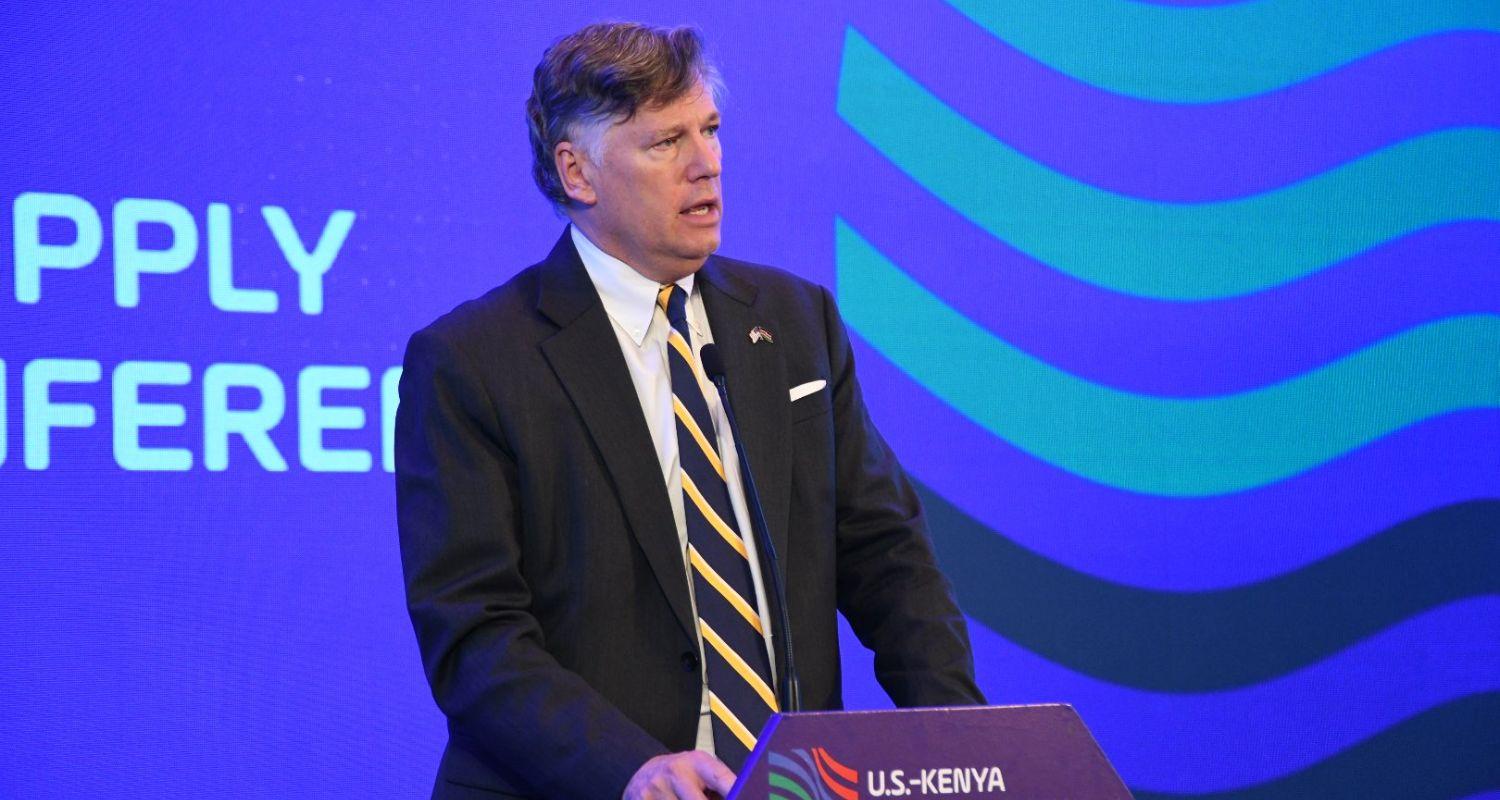
US Deputy Secretary of State Christopher Landau has made it clear that while Washington is eager to expand its economic ties with India, it will do so with a firm eye on protecting its own national interests. Speaking at the Raisina Dialogue in New Delhi on Thursday, Landau suggested that the US has learned difficult lessons from its trade history with China over the last two decades— mistakes it has no intention of repeating as it finalises a new trade framework with India.
Landau was candid about the "America First" doctrine, explaining that the US would not allow a situation where it helps a partner develop markets only to find itself being outcompeted in key commercial sectors later. He emphasised that any future agreement must be "fair" and accountable to the American people, just as the Indian government must answer to its own citizens. However, he was quick to point out that prioritising national interests does not mean the US is retreating into isolation. He noted that President Trump views the pursuit of greatness as a shared principle among sovereign nations, expecting Prime Minister Modi to be just as protective of Indian interests as Washington is of its own.
The Deputy Secretary described the 21st century as one that will be defined by the "rise of India," citing the country's status as the world’s most populous nation and its vast resources. He explained that this is because the increasing partnership between the US and India is not about "charity or social work" but rather about a "mutual benefit" relationship, where both countries are recognising the "win-win" opportunities that can be created from the partnership. On the issue of trade, Landau was positive that a trade deal between the two countries is "almost at the finish line." This is after the interim agreement framework was reached in February, which saw a significant recalibration of the terms of trade. This has seen the US lower its reciprocal tariff rate on products imported from India from 25 per cent to 18 pc. Most importantly, the US has removed a punitive duty of 25 pc that was imposed on India in late 2025 on the back of its continued purchase of Russian oil.
In return, New Delhi has committed to a massive strategic pivot. India has agreed to drastically scale back its imports of Russian crude in favour of American energy. This forms part of a broader pledge to purchase roughly $500 billion worth of US energy, aircraft, and high-tech goods over the next five years, marking a fundamental realignment of India’s supply chains toward the United States.
Also read: After Iran, Cuba next, says Trump

 Follow us