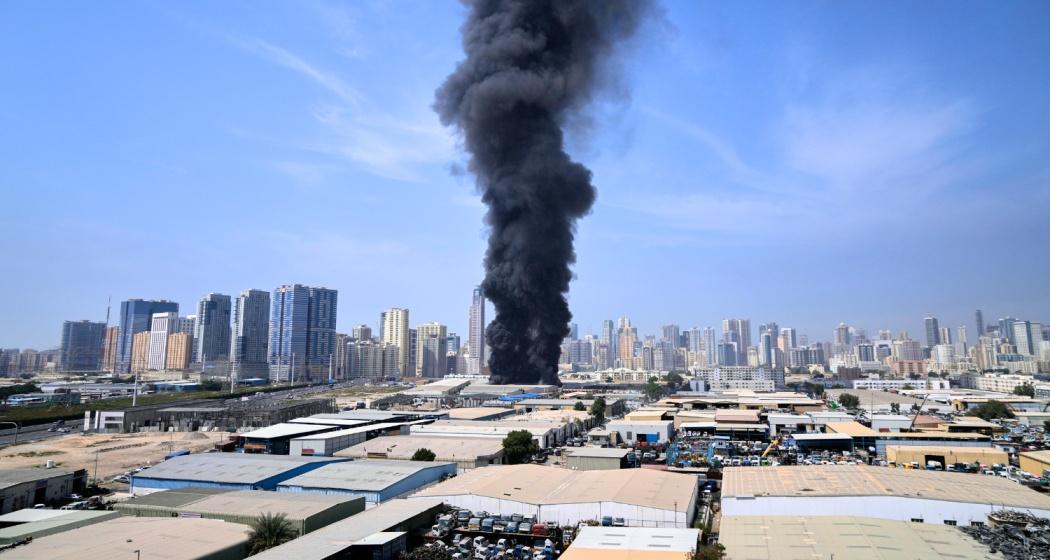
: The United States and Israel intensified their military campaign against Iran on Monday, drawing in Iranian-backed militias across West Asia and escalating what is now a regional conflict. Fresh missile strikes, drone attacks, and retaliatory measures have spread across multiple countries, triggering fears of prolonged instability and major disruptions to global energy supplies.
The conflict, entering its third day, has caused civilian casualties, closed airports, and disrupted oil and shipping routes. Iranian leaders have rejected calls for negotiations, while Israel and the United States continue their aerial strikes targeting strategic and military infrastructure.
Hezbollah joins the fray
In a marked escalation, Lebanon’s Hezbollah said it had fired missiles into northern Israel in response to the killing of Iran’s Supreme Leader Ali Khamenei and what it described as “repeated Israeli aggressions.” Israel said most projectiles were intercepted or fell in open areas, but retaliatory strikes on Lebanon killed at least 31 people and wounded more than 140, according to Lebanese authorities.
Lebanese Prime Minister Nawaf Salam condemned Hezbollah’s actions as illegal, stating that only the state had authority over war decisions, and called on security agencies to prevent further rocket or drone launches. The entry of Hezbollah, long considered Iran’s most powerful regional proxy, signals a turning point, raising fears of conflict spreading along Israel’s northern frontier.
US jets mistakenly downed in Kuwait
The US military confirmed that three American F-15E Strike Eagle fighter jets were “mistakenly shot down” in a "friendly fire" by Kuwaiti air defences amid the ongoing operations. All six crew members ejected safely and were recovered in stable condition. Iranian strikes reportedly targeted areas near the US Embassy in Kuwait, with smoke rising from inside the complex. Kuwait acknowledged the incident and said investigations were under way.
According to the US Central Command, this marked the first direct engagement of Iran’s conventional air force in the conflict.
Iran targets Israeli leadership and military site
Iran’s Islamic Revolutionary Guard Corps (IRGC) claimed responsibility for a wave of missile strikes on Israel, including the office of Prime Minister Benjamin Netanyahu in Tel Aviv, the headquarters of Israel’s air force commander, and key security and military facilities in Haifa and east Jerusalem. The IRGC said it used domestically developed Kheibar ballistic missiles, capable of striking deep inside Israel from Iranian territory.
In retaliation, the United States announced that its forces had destroyed the IRGC’s headquarters in Tehran, describing the operation as having “cut off the head of the snake.” US Central Command said the strike targeted Iran’s elite Revolutionary Guard, responsible for killing more than 1,000 Americans over the past 47 years.
Strikes inside Iran and regional energy threats
Multiple airstrikes hit Tehran and other Iranian cities, with the Iranian Red Crescent Society reporting at least 555 deaths nationwide since the US-Israeli campaign began. More than 130 cities are said to have been targeted. Iranian officials accused the US and Israel of striking the Natanz nuclear enrichment facility, though neither Washington nor Tel Aviv has publicly confirmed this. Israel has said its operations target leadership and nuclear infrastructure.
Iran has also targeted oil and energy infrastructure across the region. A drone attack on Saudi Arabia’s Ras Tanura refinery—one of the world’s largest—was intercepted, temporarily shutting down operations. In Oman, a bomb-laden drone struck a Marshall Islands-flagged oil tanker in the Gulf of Oman, killing one Indian crew member. Debris from intercepted drones injured workers at Kuwait’s Ahmadi refinery.
Analysts say Tehran’s strategy is to raise the economic costs of war by threatening oil facilities and shipping routes, particularly around the Strait of Hormuz, through which roughly a fifth of globally traded oil passes.
Iran rejects ceasefire talks
Iran’s Supreme National Security Council secretary Ali Larijani said Tehran would not negotiate with the United States, dismissing reports that Omani mediators attempted to resume talks. “We will not negotiate with the United States,” Larijani said on the social media platform X, signalling Tehran’s resolve as the conflict escalates.
The ongoing hostilities have already disrupted flights across the Middle East. Airports in Dubai and Doha were temporarily closed, while Brent crude futures jumped to $82.17 per barrel before easing to $79.59 at 07:10 GMT. At least three vessels have been struck near the Strait of Hormuz since the conflict began, and port infrastructure, including Duqm’s commercial port in Oman, has been damaged.
Proxies widen the conflict
Iranian-backed militias in Iraq launched drone attacks on US forces at Baghdad airport and in Erbil, widening the battlefield. Cyprus reported limited damage after a drone struck a British air base. Civilian casualties have been reported across Israel, Lebanon, the UAE, Kuwait, and Bahrain. The World Health Organisation urged protection for civilians and healthcare facilities amid the escalating violence.
The widening use of proxies and militia groups underscores the potential for the conflict to spread across West Asia, heightening global concerns over instability and energy security.
Global diplomatic and economic impact
World powers have expressed alarm, calling for restraint while condemning civilian casualties. Countries like Australia have ruled out direct military involvement, advocating diplomatic solutions. The conflict has sent oil prices and global energy markets into turmoil, with shipping and trade disrupted. Indian-flagged vessels have been advised to avoid West Asian ports, while airlines rerouted flights to ensure safety.
Also read: Fresh blasts rock Doha, Dubai, Jerusalem on Day 3 of Iran war

 Follow us