
Trending:
Through dust, silence and survival: A Spiti circuit like no other
A motorcycle journey through Spiti’s stark Himalayas reveals treacherous roads, ancient routes, and profound solitude, where riders are humbled by scale, silence, and a landscape shaped over millions of years. Follow us
News Arena Network - Chandigarh - UPDATED: April 6, 2026, 04:19 PM - 2 min read
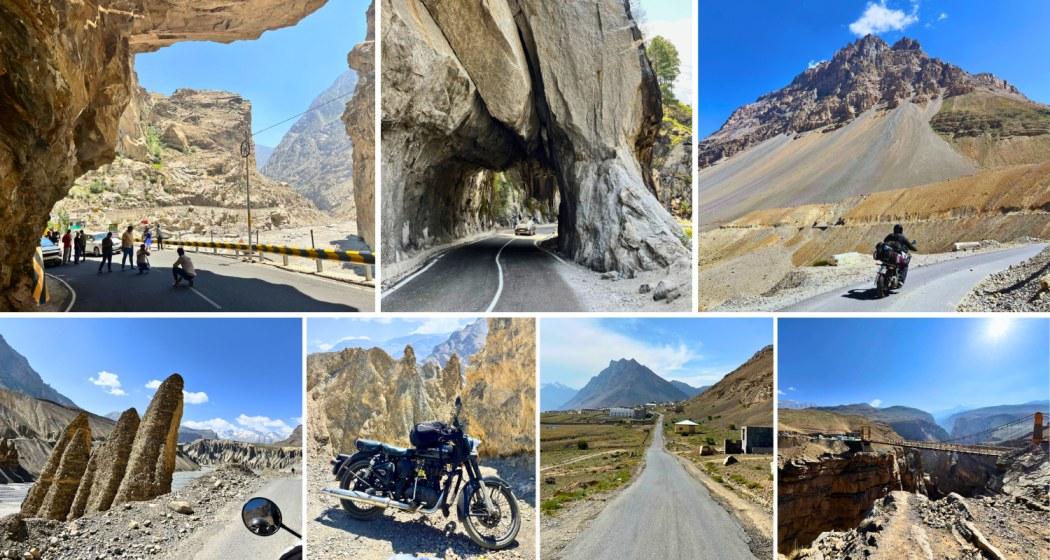
Glimpses of the unforgiving terrain of the Spiti circuit.
There are journeys one plans, and then there are journeys that quietly claim and stay with you, long after the road has ended. Riding into Himachal's Spiti Valley is the latter. The engine thump fades into insignificance against the vast, endless silence of the Himalayas. You begin as a rider, but somewhere between the bends and the barren ridges, you become a witness to sheer vastness, to solitude, to something older than memory itself.
On my humble RE 350, the road, if one could call it that, unfolded not as a route but as a test of my will. The wind cut through layers, the dust clung stubbornly, and the mountains loomed like ancient sentinels. It was May turning into June, the brief window when Spiti opens its doors. In winter, I was told, it shuts itself off completely, not metaphorically, but in every other sense that matters.
The circuit: riding on the edge
The Spiti-Kinnaur circuit is less a road trip and more a pilgrimage for riders. It begins in the hills of Shimla, winding towards Narkanda and up to Hatu Peak, before descending through Wangtu and the Karcham Dam to reach Reckong Peo in Kinnaur. From here, the route enters the stark, rocky expanse of the Kinnaur valley, marking the true beginning of the Kinnaur-Spiti stretch. It then moves through Kalpa, an off-route halt, offering breathtaking views of the Kinnaur Kailash range, before arriving at the quiet, reflective waters of Nako Lake.
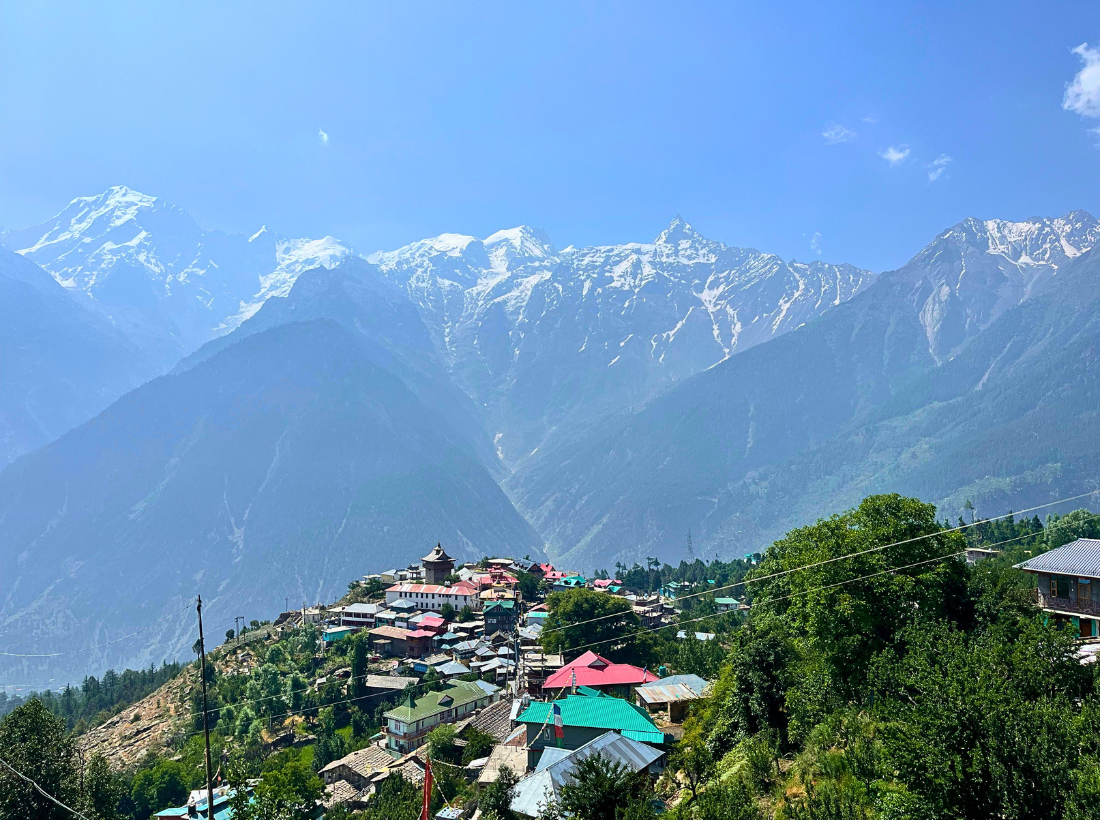
A serene view of Kalpa town stands against the majestic Kinnaur Kailash mountain range.
From Nako you head towards Tabo, home to one of the oldest monasteries in the region. Built in 996 AD, Tabo has beautiful old murals and caves that feel like stepping back in time. Locals proudly call it the Ajanta of the Himalayas. A short ride from Tabo lies Gue village and its famous mummy, the naturally preserved body of a 15th-century Buddhist monk who still sits in meditation pose. The dry, cold air has kept it intact for nearly 600 years. Locals believe the monk gave his life to save the village from a scorpion plague.
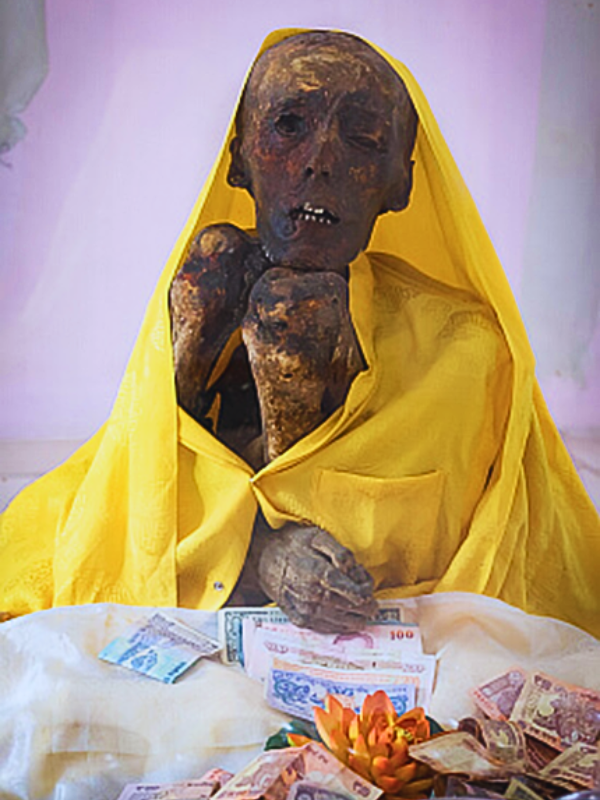
The mummy at Gue Monastery rests in quiet stillness
The route continues to Dhankar Monastery, perched high on a cliff where the Spiti and Pin rivers meet. From Kaza, many riders visit Key Monastery, which sits dramatically on a hillside like an eagle’s nest. There a monk of the Gelugpa sect offered me a blessing, “Respect the mountains, and they will protect you.”
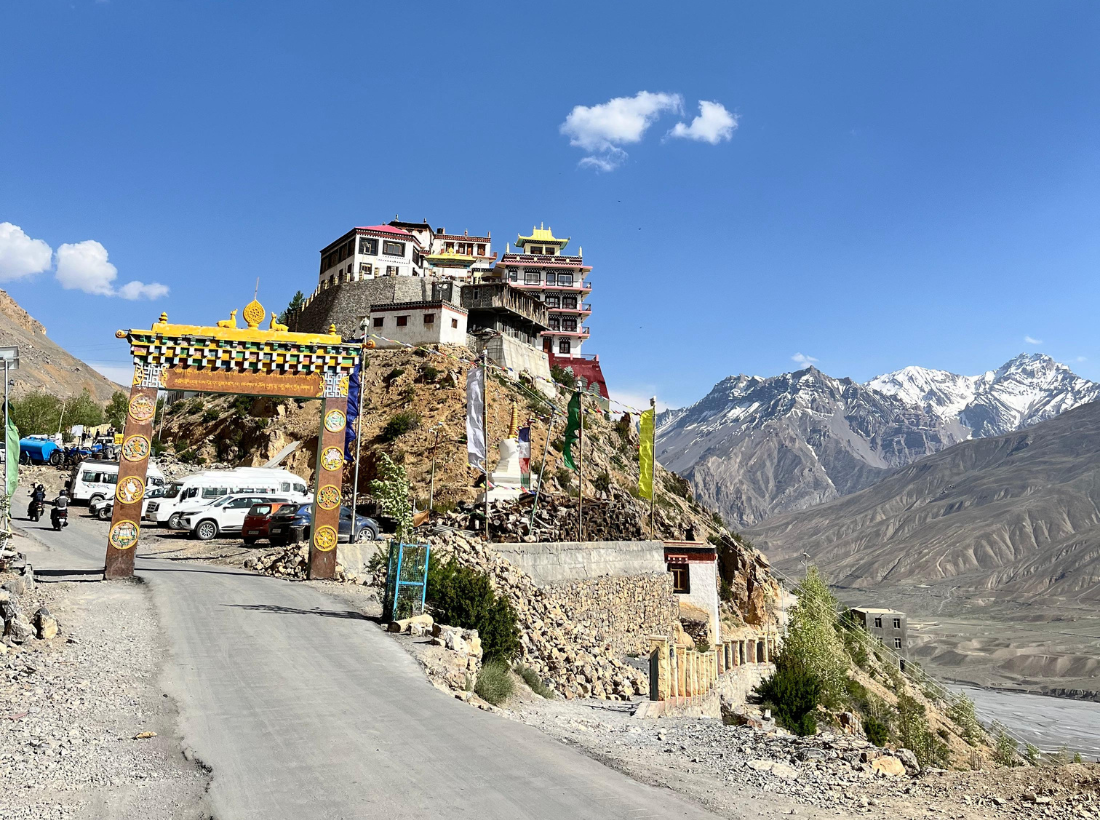
Gateway to the enigmatic Key Monastery
Some places test you more than others, but they are simply part of the journey. Near Nako, Maling Nalla, often called ‘Pagal Nalla’ by locals, needs careful crossing. A few kilometres after Nako village, this wild stream flows across the road with strong, cold water and loose rocks. Further ahead, near Sumdo on the way to Kaza, small rocks and debris sometimes tumble down the hills. Even on the Kinnaur side, at Nigulsari and Naptha Julla near the border, falling rocks can block the path after rain or snow melt.
There are stretches where the tarmac simply vanishes. You ride on dust, stones, and instinct. Streams spill across paths without warning. The motorcycle lurches, slips, steadies, and you learn to trust it, and yourself. Winter turns everything far harder. Snow buries these routes, temperatures drop very low, and survival becomes the only focus. Summer feels almost kind by comparison, but only almost.
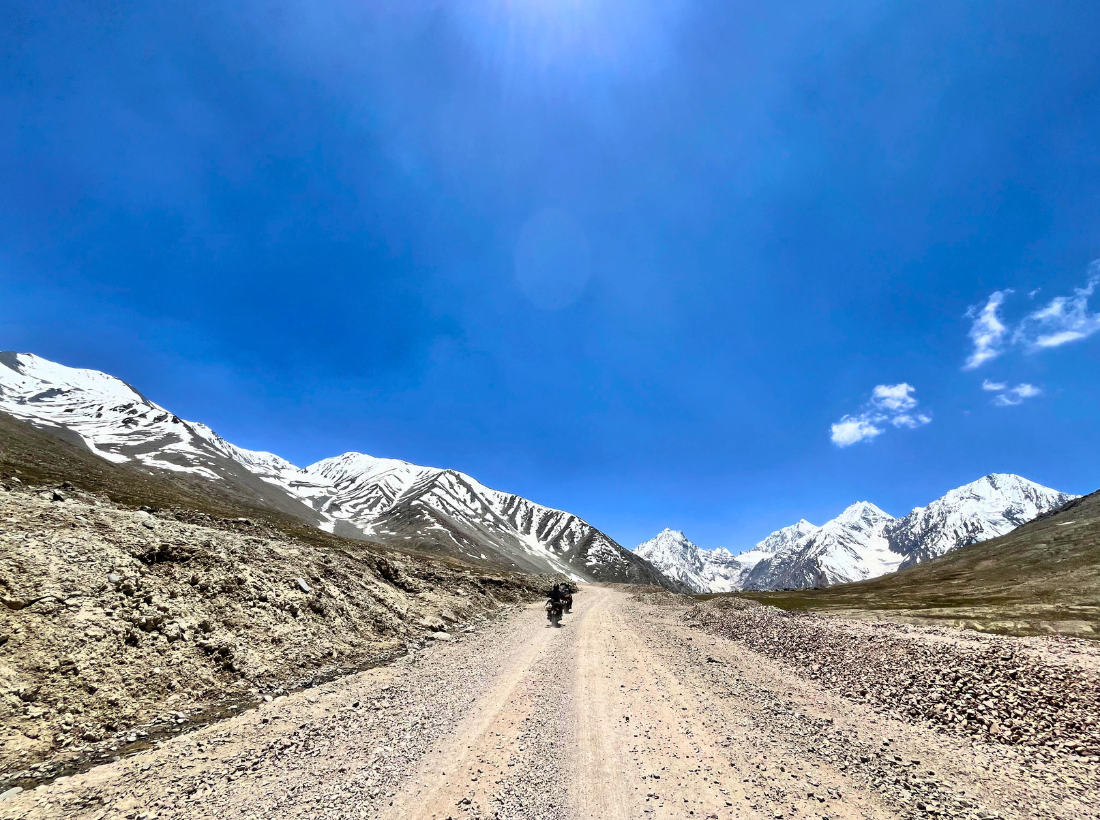
Motorcyclists traverse the treacherous terrain en route to Chandratal
At Kaza, I stayed with Tandip, a homestay owner. He spoke in measured tones about winters that isolate entire communities. “You don’t fight the mountains here,” he said. “You wait, you adjust with it.”
After Kaza, the highlight is crossing the Chicham Bridge, Asia’s highest suspension bridge at over 13,500 feet. It spans a deep gorge and offers stunning views as you ride towards Chandratal Lake (14,100 feet), exceptional for night sky photography and stargazing.
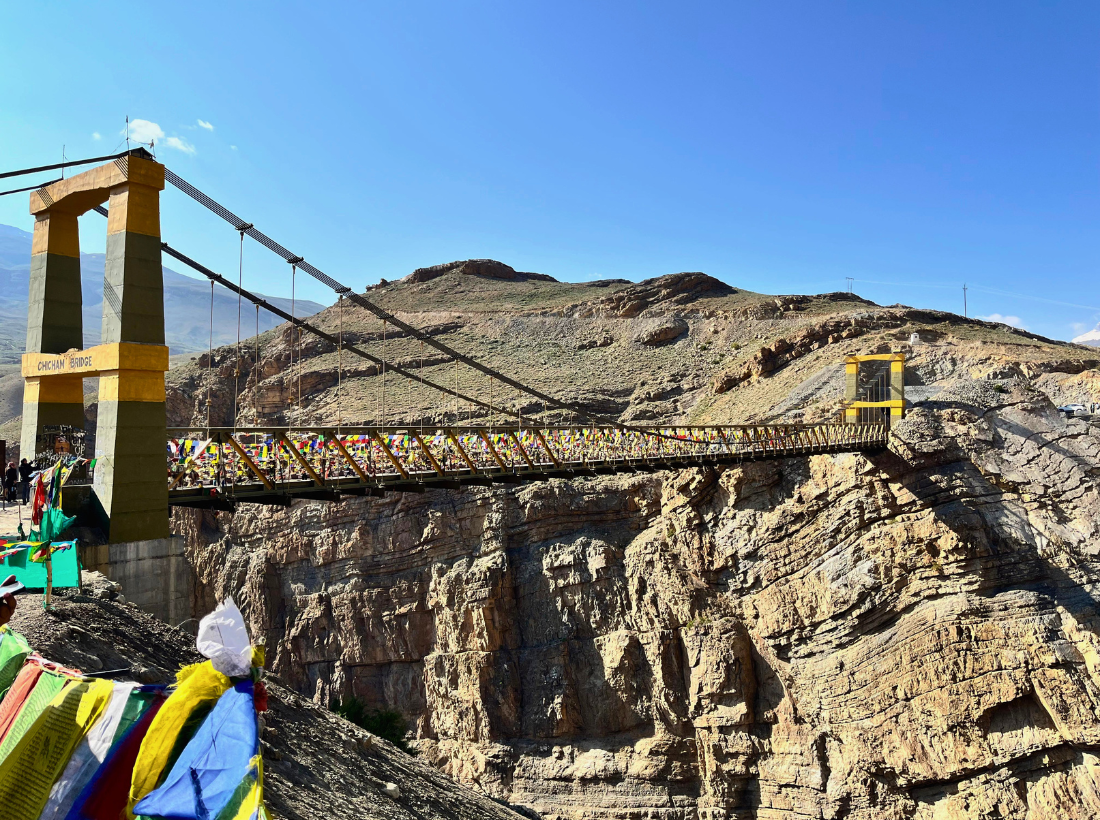
The Chicham Bridge, perched at 1,260 metres above the Spiti River, stands as one of the highest road bridges in the world, connecting remote Himalayan village
The crescent-shaped Chandratal Lake, or ‘Lake of the Moon’, is steeped in mythology, believed to be where Lord Indra’s chariot carried Yudhishthira to heaven, and linked in folklore to a forbidden celestial love story.
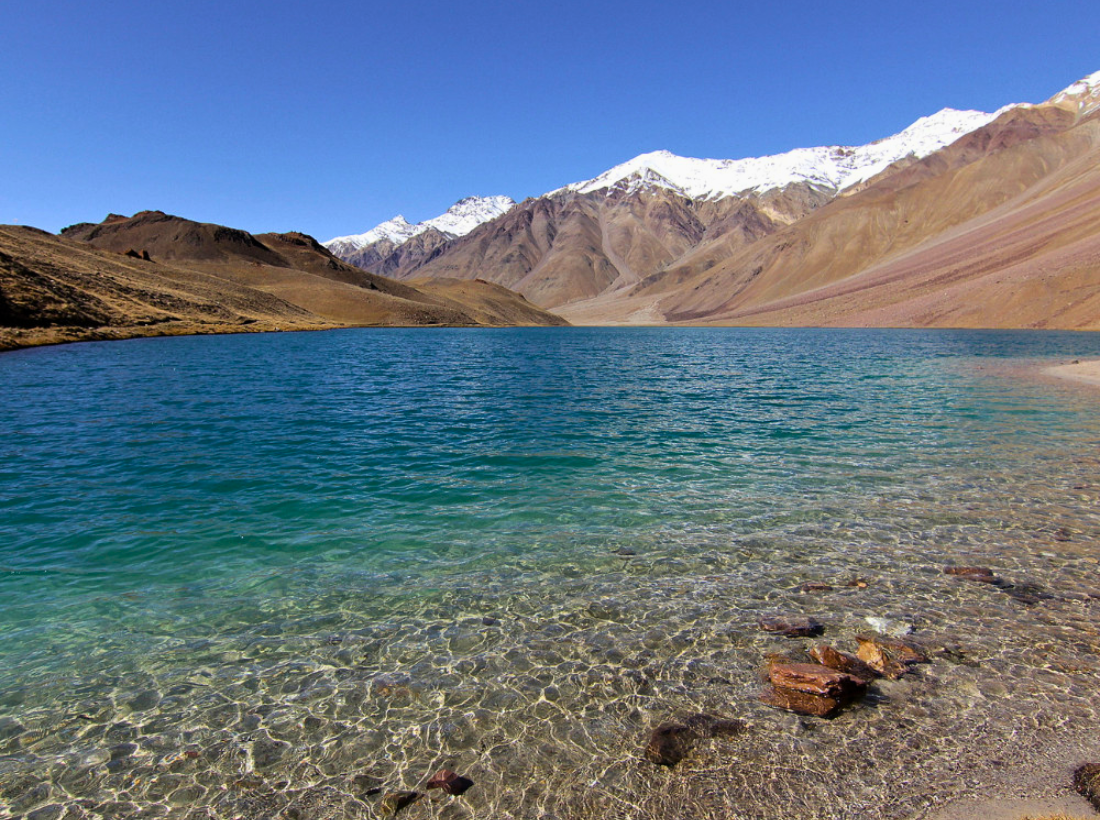
Glimpses of the pristine Chandratal Lake, its crystal-clear waters reflecting the surrounding Himalayan peaks.
Here I met Tenzin, who runs makeshift tents. He laughed when asked about the hardships. “This is easy,” he shrugged, pointing to the clear blue sky. Then, almost as an afterthought, he added, “Chandratal looks calm, but the weather turns in minutes, the mountain decides everything here.”
What makes the ride special is the other riders you meet. On lonely stretches, you spot couples and small groups resting by the roadside, sharing tea and stories. Someone offers water, another talks about the mighty mountains and the tricky roads they have just crossed.
These quick meetings remind you that you are not alone in this vast land.
Geography and the making of the unrealistic landscape
Spiti is a cold desert. The high mountains block the monsoon rains, leaving the land dry and empty. The hills look scarred and bare, with long parallel lines running down their sides. These marks come from years of melting snow, strong winds, and river erosion. The patterns look almost like artwork made by nature.
This landscape began millions of years ago. The Indian landmass broke from an ancient southern continent and drifted north. Around 50 million years ago, it collided with the rest of Asia. That slow crash pushed up the Himalayas and left behind the layered rocks and fossils we see today. What was once a sea floor is now these high, barren peaks.
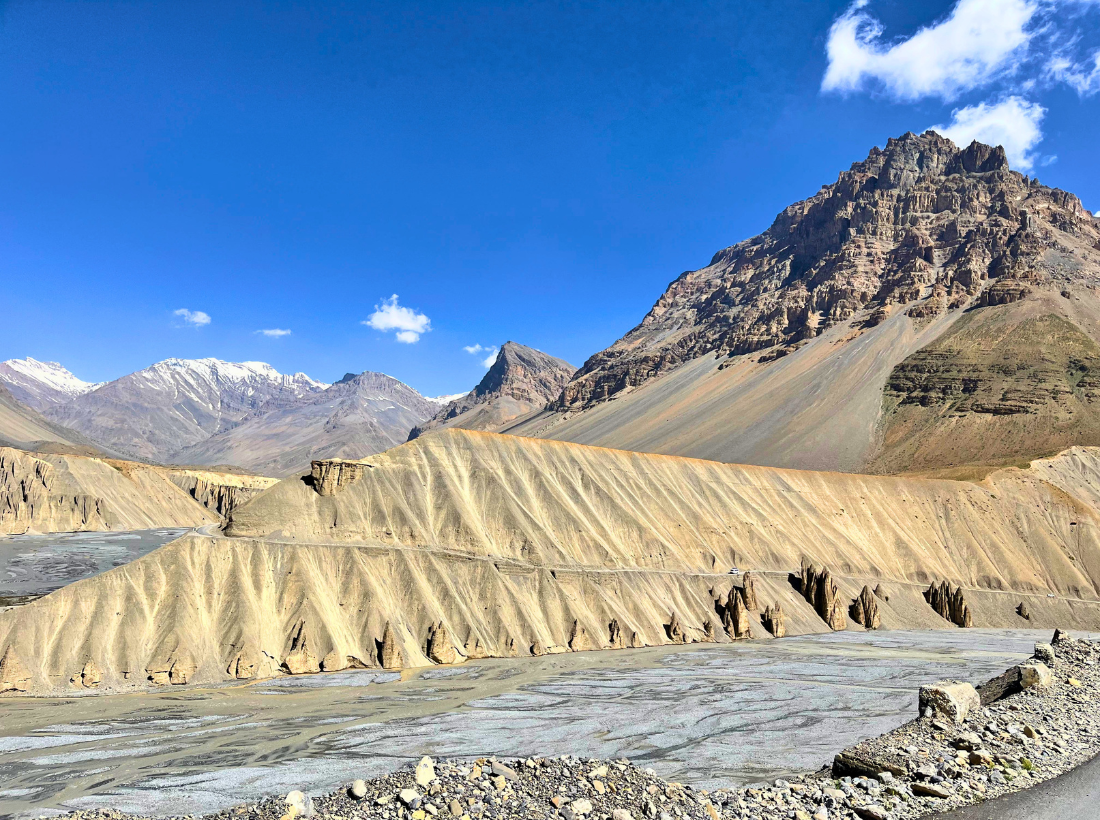
The scarred Himalayas: Centuries-old glaciers have melted dramatically over the decades, leaving behind barren rock faces, deep crevasses and exposed moraines.
Survival in isolation
Spiti quickly teaches you how basic life can become. Fuel stations are few. You fill up at Reckong Peo or Kaza and carry extra cans, because the next reliable pump may be far away. Mobile network is weak or missing in most places. It works in Kaza and a few bigger villages, but elsewhere there is only silence. No quick calls, no maps, just you and the road.
Food is simple: hot thukpa, steamed momos, dal and rice. Fresh vegetables are rare. You eat what the high fields give and what the homestays can offer. In winter, even these basics become hard to find.
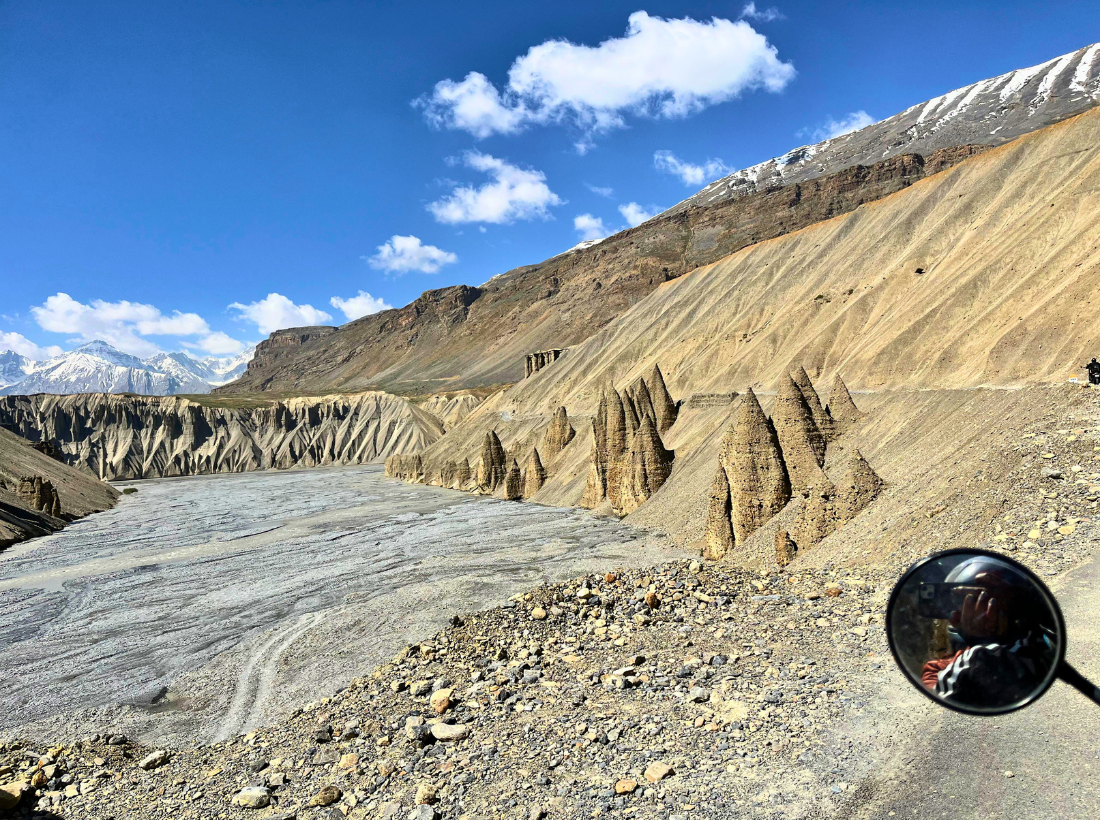
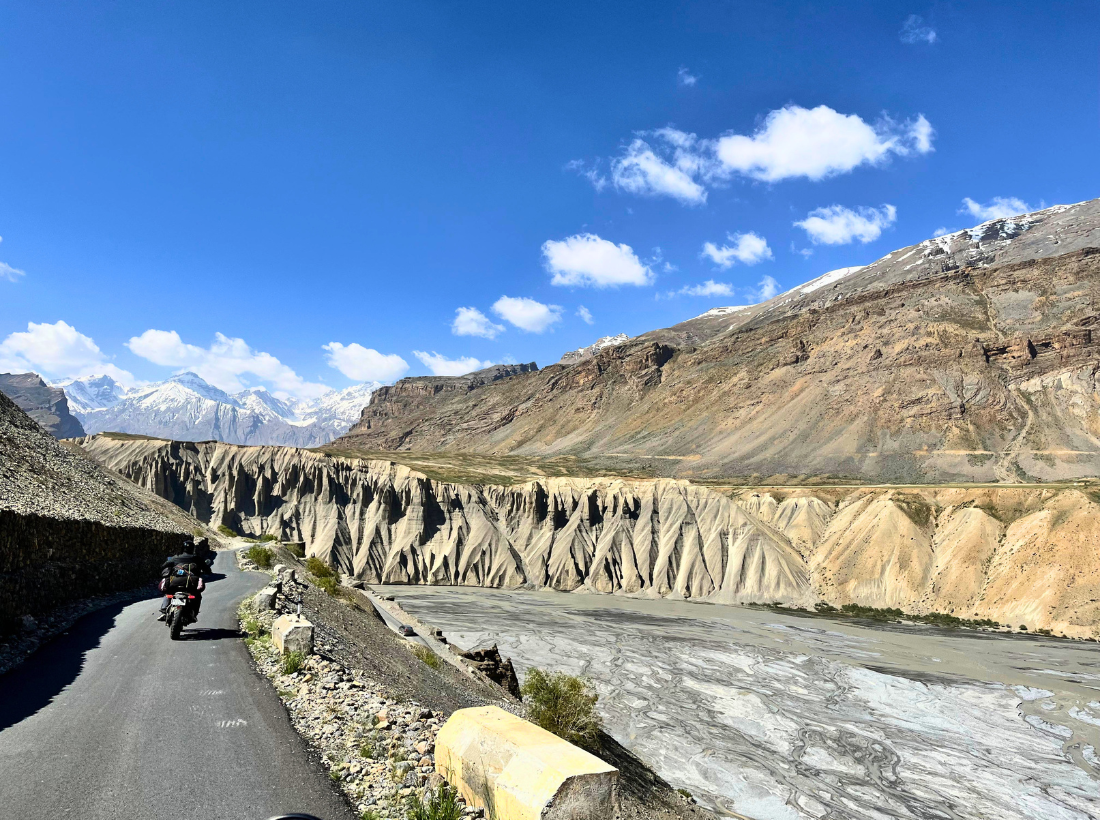
Riders navigates the rugged Himalayan valley, with the scarred, carved terrain in the background telling the story of millions of years of geological history.
Water crossing, non-existing roads and the final push
The Spiti River flows through the valley like a turquoise thread before joining the Sutlej. Near Chandratal, the Chandra River begins its journey. Riding beside them means crossing small streams and watching the water rush far below.
The roads are not proper highways. They are narrow trails cut into the mountains. No guardrails, no easy margins.
The ride from Chandratal to Manali is one of the toughest part. The 78-km stretch is a relentless test, loose gravel, boulders, stones, pebbles, slush, knee-deep water crossings and no network with the rest of the world. Every kilometre demands grit, and patience.
The trail drops sharply to Batal fromm where the track pushes on to Chhatru over broken paths. Beyond Chhatru lies Gramphoo, where you finally join the Manali-Leh highway. The ride continues to Koksar, then enters the Atal Tunnel, a 9.02-km engineering feat, world's longest highway tunnel above 10,000 feet at over 3,100 metres.
Emerging on the other side, the stark white and browns of Spiti give way to the lush greens of the Kullu Valley. The roads smoothen as you roll into the busy streets of Manali.
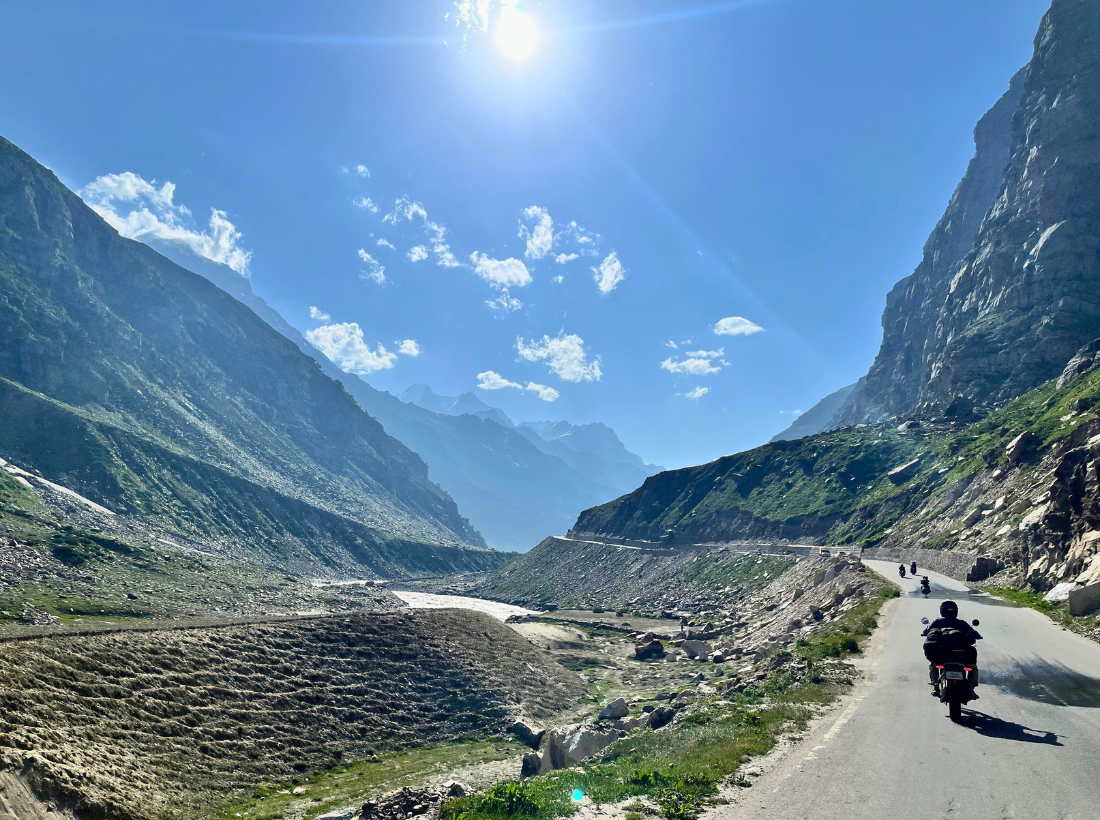
Riders moves through the vibrant green Kullu Valley, where fertile fields and orchards paint a serene canvas against the majestic Himalayan backdrop.
My motorcycle, covered in dust and scratches by the end, felt like a dear old friend. I came looking for a ride. I left carrying something much deeper, a quiet respect for these mountains and for the people who call them home.
Spiti does not end when the ride does. It lingers, in the silence you carry back, in the humility it leaves behind, and in the quiet certainty that some roads are not meant to be conquered, only understood.
By Deepan Chattopadhyay
