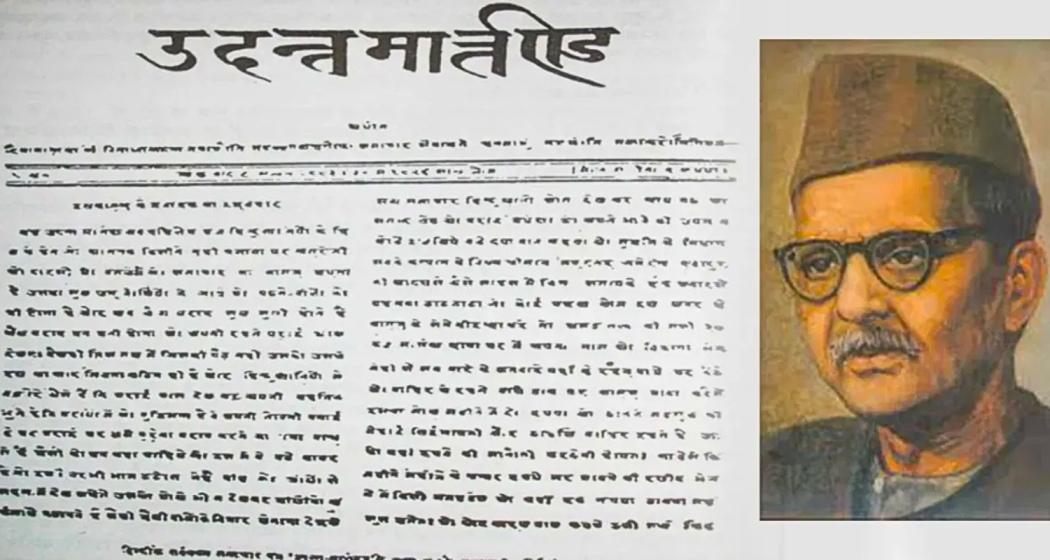
Hindi journalism completed 200 years on Saturday, marking the historic publication of Udanta Martand, widely regarded as the first Hindi newspaper, first issued on May 30, 1826 from an old press in the bylanes of Calcutta (now Kolkata).
Edited by Pt. Jugal Kishore Shukla, the weekly carried the motto “Hindustaniyon ke hit ke het” and symbolised the beginning of Hindi journalism in India. The title Udanta Martand, meaning “rising sun”, is seen as heralding the dawn of Hindi print media in the country.
To mark the bicentenary, the Indira Gandhi National Centre for the Arts (IGNCA) in New Delhi hosted a two-day seminar beginning May 30, along with an exhibition showcasing rare archival records of early Hindi journalism. The event was organised in collaboration with the Madhavrao Sapre Memorial Newspaper Museum and Research Institute, Bhopal.
Union Minister for Communications Jyotiraditya Scindia attended the inaugural session as chief guest and released a commemorative stamp and a special bicentenary volume. A message from Prime Minister Narendra Modi, dated May 29, was also played at the event.
In his message, Modi said he was confident that the 200-year journey of Hindi journalism would inspire new generations of journalists, researchers and media professionals.
Also read: Into the heart of ‘Tunnel Number 33’
The exhibition featured rare cover pages and archival material of 19th and 20th century Hindi journals, including Malwa Akhbar, Akhbar Gwalior, Samachar Sudhavarshan, Kavivachansudha, Hindipradip, Hindosthan, Ananda Kadambini, Bharatbhrata, and Shree Venkateswar Samachar, among others.
Pre-Independence era journals such as Dainik Lokmat, Madhukar, Hind Kesari, Saraswati, Vigyan, Vishwamitra, Aaj, Sainik and Aryavarta were also displayed.
According to exhibits, Udanta Martand was published every Tuesday from Martand Press in Calcutta’s Kolhu Tola, Amratala Gali, Haveli No. 37. However, despite its historic significance, it struggled financially and was discontinued after one year and seven months.
Veteran journalist and Sapre Memorial Museum founder Vijaydutt Shridhar said he built the museum through nationwide archival research. Quoting Makhanlal Chaturvedi, he said journalism should neither lose direction nor deviate from truth.
Scindia, in his address, said the seed planted 200 years ago by Pt. Jugal Kishore Shukla had grown into a vast banyan tree of Hindi journalism across India, stressing that commitment, sensitivity and national interest must remain central to the profession.

 Follow us