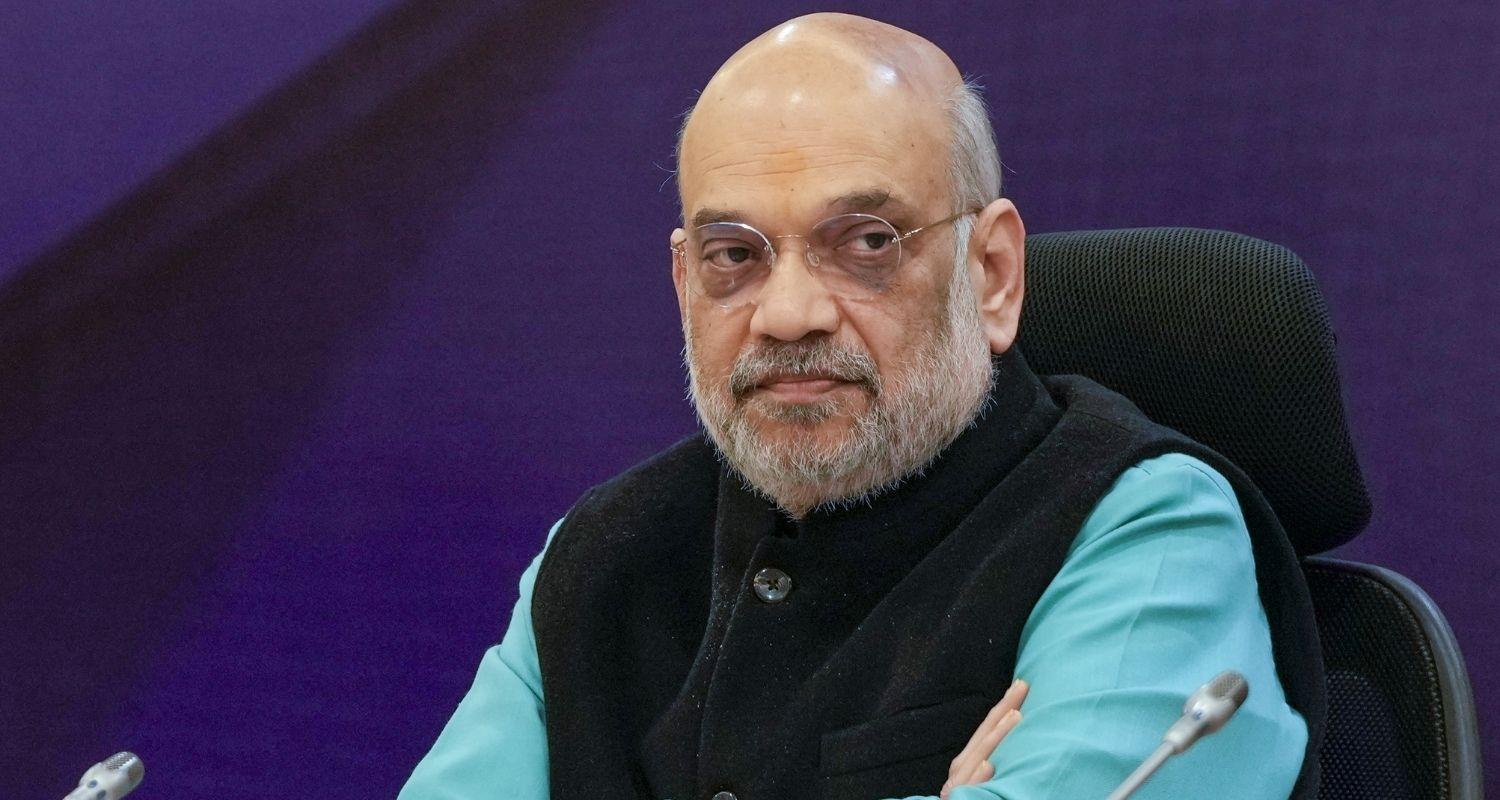
Union Home Minister Amit Shah on Friday announced a nationwide campaign against drugs that begins from March 31.
At the 9th apex-level meeting of the Narco-Coordination Centre (NCORD), Shah said a working methodology for all pillars against drug abuse will be defined as part of the campaign, which will also see targets set and time-bound reviews conducted. He also virtually inaugurated a Narcotics Control Bureau (NCB) office in Amritsar on the occasion.
“In the next three years, we have to fight on all fronts against drugs across the country and make India ‘drug-free’, and make every effort to protect the country’s youth from drugs,” the minister said, adding that the government is clear in showing no compassion to those who manufacture or sell narcotics.
“Only continuous awareness can keep us safe,” he added, and asserted that the government wants to create a permanent system capable of fighting this battle against drugs.
“We should move forward with a humanitarian approach towards the victims of drugs,” he said.
Directing all the departments to prepare a three-year roadmap for the campaign by March 31, Shah said a monitoring mechanism will be the central focus so that a comprehensive solution to the problem can be found.
The meeting, which was organised in hybrid mode by the NCB, was attended by key stakeholders from Central ministries and departments, representatives from state governments, as well as drug law enforcement agencies, according to a government statement.
Also Read: Amit Shah calls for complete dismantling of J&K terror eco system
Shah also appealed to all the DGPs to prepare a plan for their respective states and take concrete steps for the timely destruction of drugs.
“Prime Minister Narendra Modi has set the goal of making India number one in the world in every field by 2047, when the centenary of Independence is celebrated. To create such an India, it is the responsibility of all of us to provide complete protection to the young generation from drugs,” the home minister said.
“Under Prime Minister Modi, considerable success has been achieved in the past 11 years in the fight against drugs, and after the reorganisation of NCORD in 2019, we have also ensured the path to complete control over this problem”, Shah said.
“Now we have gained speed and will move forward with a three-pronged plan of action,” he said.
Blaming narco-terror for damaging the youth, Shah said it was a conspiracy to ruin the future generations of India, their ability to think and perform. He recommended a “collective ruthless approach” towards destroying the drug supply chain and a humane approach towards harm reduction to achieve the goal of creating a drug-free India.
Stressing on compliance and accountability to engage in the fight against drugs, Shah said it isn’t the number of high-level meetings that will decide the outcome, but action taken against drug trade kingpins, financiers, and logistics routes that will show results.
The minister also said that the utilisation of forensic science laboratories (FSLs) and increasing the rate of timely filing of chargesheets and securing convictions should be included in the targets.
From 2004 to 2013, drugs weighing 26 lakh kg worth Rs 40,000 crore were seized, whereas from 2014 to 2025, 1.11 lakh kg of drugs worth Rs 1.71 lakh crore were seized, marking an 11-fold increase, Shah said.
In 2020, opium crop on 10,770 acres of land was destroyed, and by November 2025, crops on 40,000 acres of land were destroyed, he added.
“The NCORD mechanism has a four-tier structure with an apex-level NCORD committee, which is headed by the Union home secretary; an executive-level NCORD committee headed by the special secretary, Ministry of Home Affairs; state-level NCORD committees headed by chief secretaries; and district-level NCORD committees headed by district magistrates,” the statement said.
The mechanism was established in 2016 to enhance coordination between the states, the Ministry of Home Affairs and concerned stakeholders in addressing the challenge of drug menace holistically, it said.

 Follow us