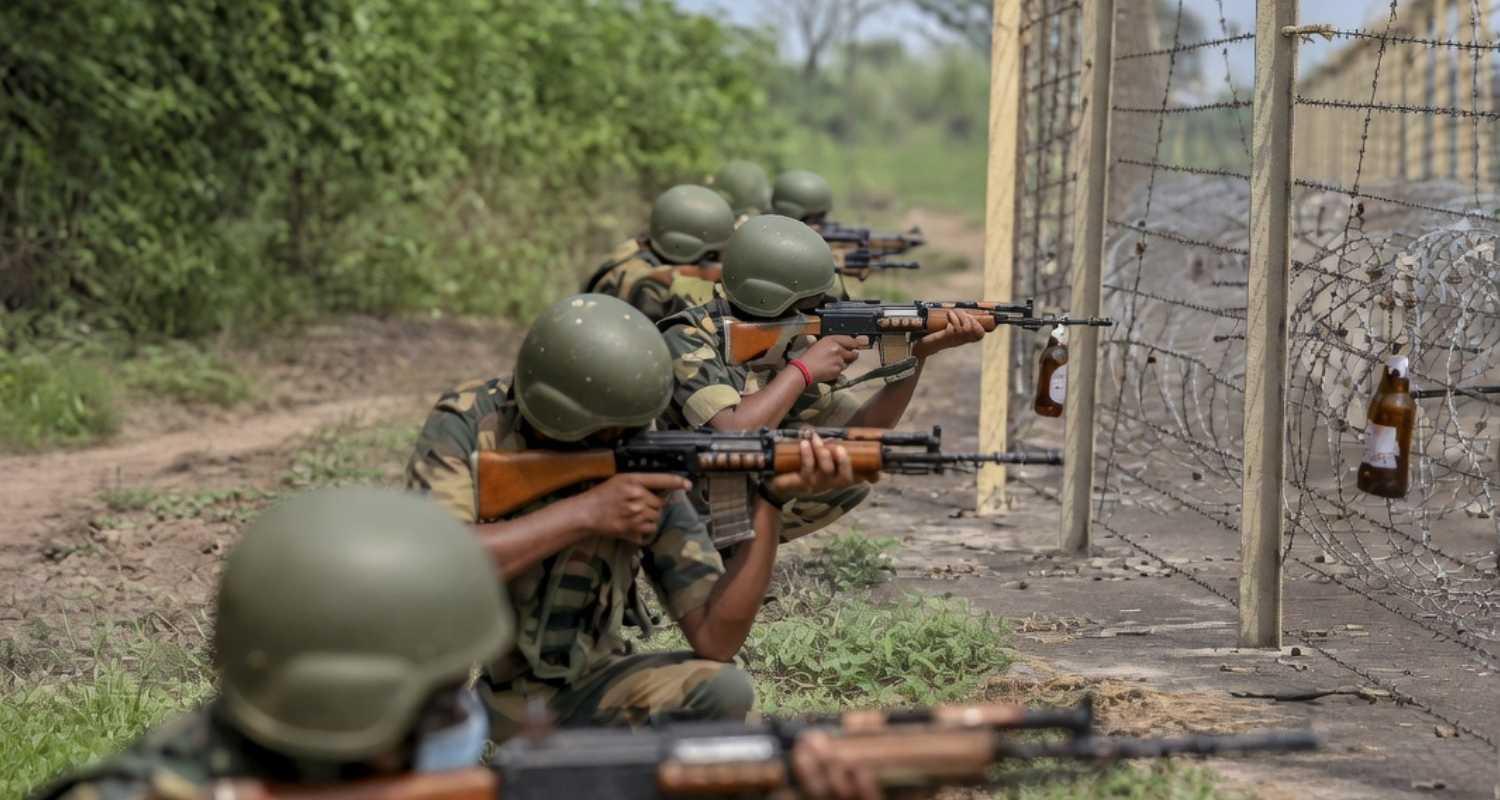
Tensions along sections of the 4,096.7 kilometers-long India–Bangladesh border have risen sharply since early May, with the latest incident reported on Tuesday near the “zero point” in Karimganj district. According to reports, a confrontation broke out between personnel of India’s Border Security Force (BSF) and Bangladesh’s Border Guard Bangladesh (BGB), with locals being involved.
A video shows BSF personnel attempting to detain a Bangladeshi national, an action that was resisted by BGB troops. As tensions escalated and villagers advanced towards the scene, a BSF jawan reportedly pointed his rifle at the crowd, prompting them to retreat. The detained individual was eventually released and escorted away by BGB personnel.
This incident is the latest in a string of confrontations reported since May 9, when a new government assumed office in West Bengal following Assembly elections. At least eight such episodes of friction between the BSF and BGB have been recorded across multiple border sectors, often involving allegations of cross-border smuggling, illegal movement, and disputes over protocol.
Earlier incidents include firing by BSF personnel during anti-smuggling operations at the Kamalasagar-Pathariyadwar border in Tripura on May 9, which resulted in the deaths of two suspected Bangladeshi smugglers. On May 14, a Bangladeshi national was shot dead in the Mathabhanga sector of Cooch Behar after allegedly attacking an Indian patrol during a fence-cutting attempt. The same day, another fatal shooting was reported near the Amjhol border area across in Bangladesh’s Lalmonirhat district.
Subsequent incidents further strained ties. On May 16, BGB personnel and local villagers reportedly prevented an attempt by the BSF to push a large group of infiltrators into Bangladeshi territory in Brahmanbaria. On May 18, tensions flared again at the Sonarhat border in Sylhet, with reports of firing from both sides—though BSF officials later denied any exchange of gunfire.
On May 22, BGB forces halted BSF personnel from installing a border pillar near international marker No. 806 in Lalmonirhat, citing violations of established “zero point” regulations. Video footage from the scene showed BGB officers crossing into Indian territory to demand a halt to the work. On the same day, BGB personnel reportedly fired blank rounds to disperse suspected smugglers attempting to cut through fencing in the Kolsimmukh sector.
Security experts note that several of these flashpoints are located within 150 yards of the international boundary — an area governed by the 1975 Border Guidelines, which require both countries to coordinate any construction or activity. Disputes have arisen over allegations that due procedures were not followed in certain instances, particularly regarding fencing work that Bangladesh perceives as having potential defensive implications.
The border areas in Lalmonirhat and parts of Tripura have historically witnessed frequent incidents of violence, often linked to cattle smuggling and illegal crossings. Observers point out that disputes over payments and local-level arrangements related to smuggling networks sometimes exacerbate tensions between border forces.
Officials also highlight that nearly 30 stretches along the border remain unfenced, particularly in zones close to the international boundary, making them vulnerable to infiltration and clashes. Some areas, including parts of Karimganj, are considered porous and inadequately monitored by both sides.
While both governments have yet to issue comprehensive statements addressing the recent spate of incidents, the pattern of recurring confrontations has raised concerns about stability and coordination along one of South Asia’s most sensitive borders.

 Follow us