The Centre on Friday told the Supreme Court that a forensic examination has found audio recordings allegedly implicating former Manipur Chief Minister N Biren Singh in the 2023 ethnic violence to have been manipulated, and urged the court to dismiss the petition seeking an independent investigation.
Appearing before a Bench of Justices Sanjay Kumar and Sanjeev Sachdeva, Additional Solicitor General Aishwarya Bhati relied on a report submitted by the National Forensic Sciences University (NFSU), Gandhinagar, to argue that the recordings had undergone multiple alterations and could not be treated as reliable evidence.
Bhati submitted that the petitioner had recently produced a longer version of the audio recording, but claimed it too showed signs of tampering. Referring to inputs received from a Central Forensic Science Laboratory (CFSL) expert, she told the court that the recording contained 41 alterations. On that basis, the Centre sought dismissal of the plea along with costs.
The petition has been filed by the Kuki Organisation for Human Rights Trust, which has sought an investigation into audio clips allegedly featuring Singh admitting to fuelling the insurgency and shielding those involved in looting arms during the ethnic violence that erupted in Manipur in 2023.
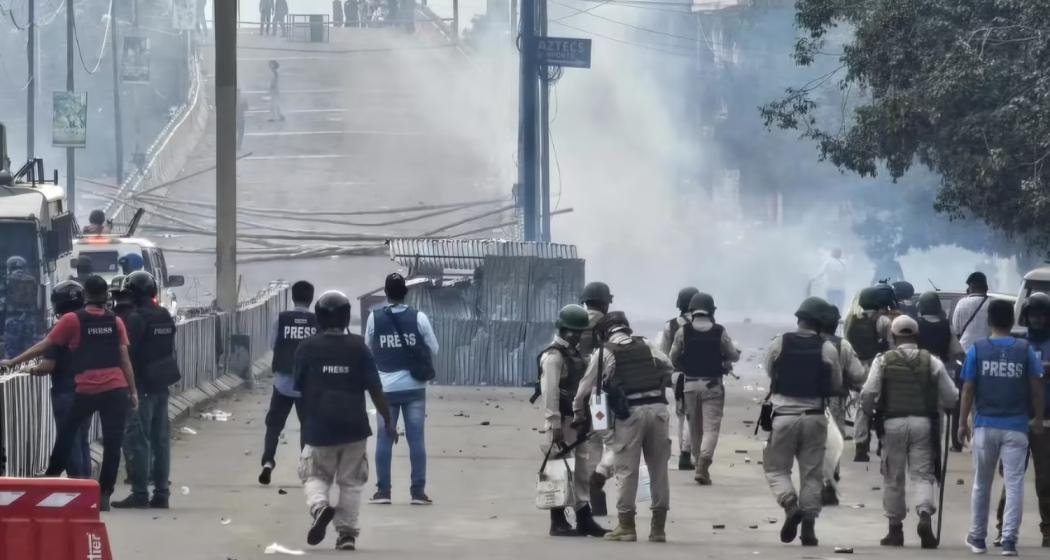
Also read: Mob attacks Assam Rifles camp in Manipur, vehicles torched
Counsel for the petitioner, advocate Prashant Bhushan, questioned the Centre's reliance on the NFSU findings. He pointed to an earlier forensic analysis conducted by Truth Labs, which had reportedly found a 93 per cent match between the voice in the recordings and that of Singh.
Taking note of the latest forensic report, the Bench directed that copies of the six-page NFSU report dated July 30, 2026, be provided to both sides, allowing them time to study its findings before further arguments.
The case has seen multiple rounds of forensic examination. The petitioner had initially submitted a 48-minute audio clip, following which the Supreme Court directed the NFSU in August 2025 to examine its authenticity and determine whether the voice belonged to Singh. The university concluded that the clip was an edited and truncated segment of a longer recording and said it could not conclusively establish either its authenticity or the speaker's identity.
After the petitioner later produced the complete two-hour-and-26-minute recording, the apex court in April directed the NFSU to analyse the full audio and compare it with Singh's admitted voice samples. The matter will now be taken up after both parties examine the latest forensic findings.

 Follow us