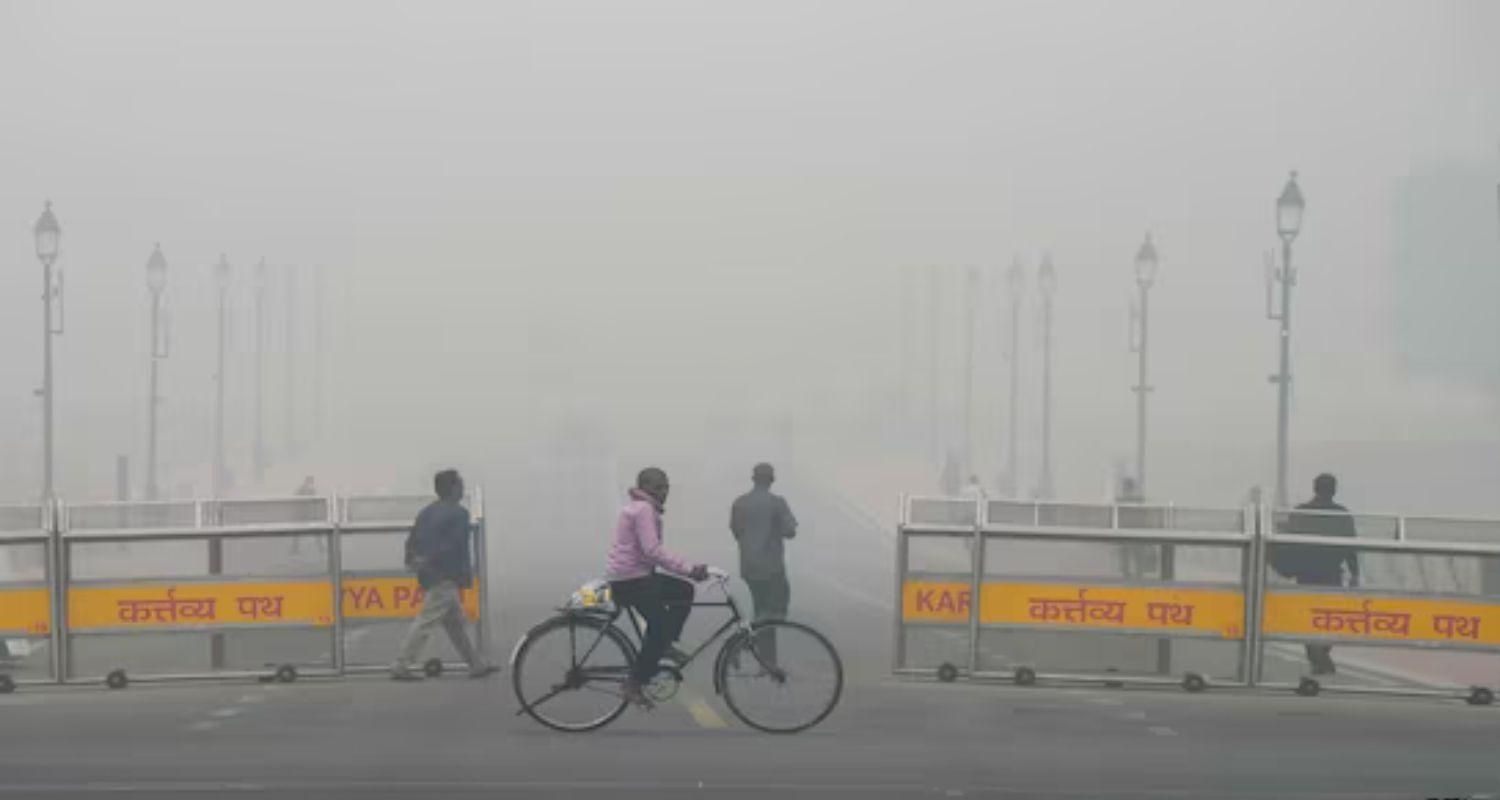
A dense layer of smog enveloped Delhi on Sunday, with the city’s Air Quality Index recorded at 305, placing it in the very poor category. This was a slight improvement compared to the previous day, even as temperatures stayed in single digits during the prevailing cold spell.
According to Central Pollution Control Board data at 7 a.m., Mundka registered the highest AQI at 365. Out of the capital’s 39 monitoring stations, 26 reported air quality in the very poor range, while the remaining 13 stations recorded poor levels.
Areas in the very poor category included RK Puram at 326, Punjabi Bagh at 320, Chandni Chowk at 308, Rohini at 341, Vivek Vihar at 304, Bawana at 352, Sirifort at 318, Wazirpur at 337, Anand Vihar at 327, Ashok Vihar at 325, and Sonia Vihar at 320.
Stations in the poor category included Alipur at 282, NSIT Dwarka at 239, Mandir Marg at 212, IGI Airport at 227, Aya Nagar at 263, and eight other locations. As per CPCB standards, an AQI between 0–50 is good, 51 and 100 satisfactory, 101 and 200 moderate, 201 and 300 poor, 301 and 400 very poor, and 401–500 severe.
Delhi’s air quality fluctuated significantly through the week: the 24-hour average AQI stood at 279 on Sunday, rose to 304 on Monday, reached 372 on Tuesday, and was 342 on Wednesday. It continued in the very poor category with 304 on Thursday and 327 on Friday.
According to the Decision Support System for Delhi’s air-quality management, transport within the city remained the largest local contributor at 14.8 per cent, followed by industries in Delhi and nearby areas at 7.3 per cent, residential sources at 3.6 per cent, and construction activities at 2 per cent. Among neighbouring NCR districts, Jhajjar contributed 13.9 per cent to Delhi’s pollution, while Rohtak accounted for 5.2 per cent.
Also Read: Delhi AQI nears 'severe' level, some areas breach 400-mark

 Follow us