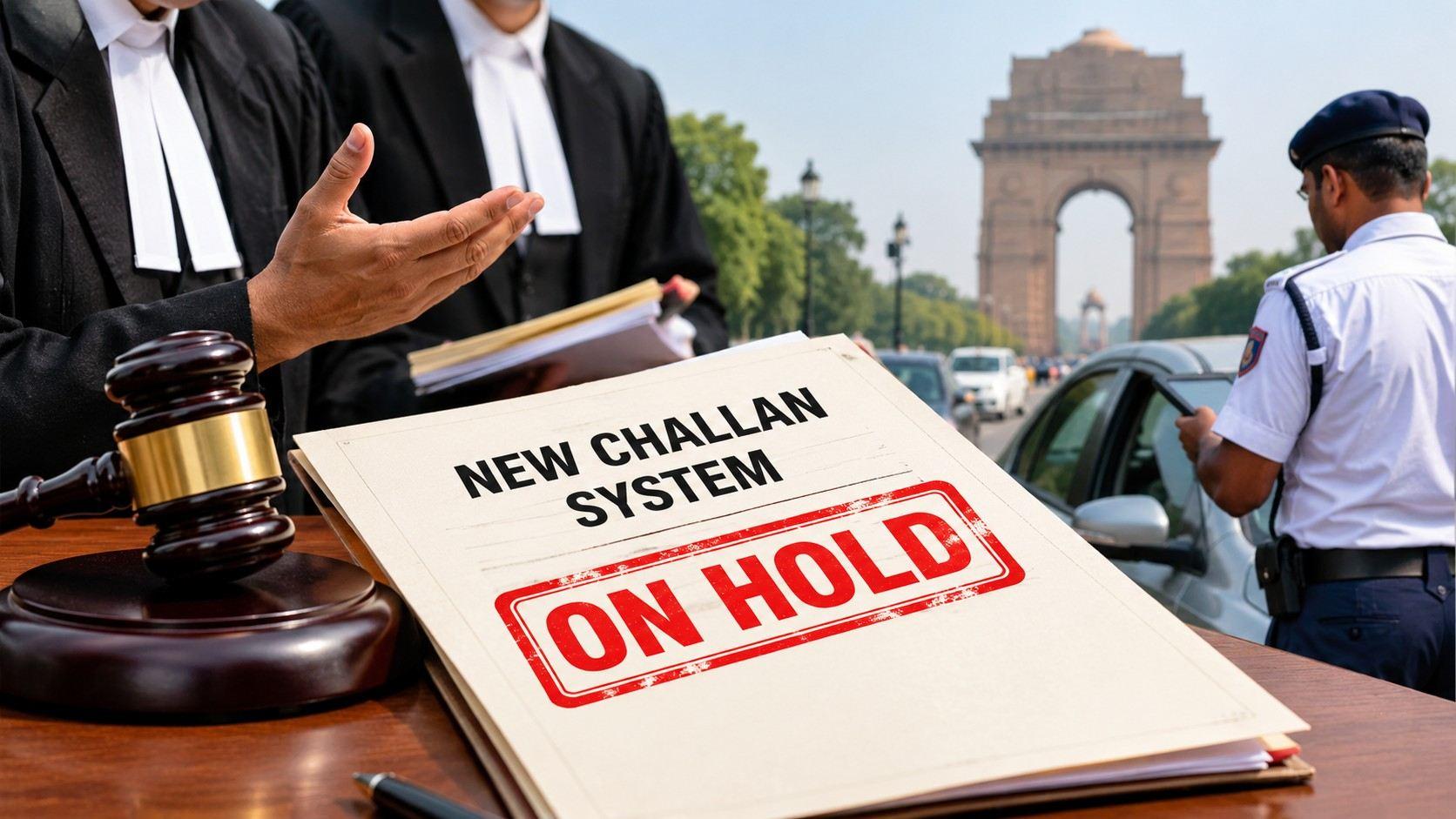
The Delhi Government has suspended implementation of its new challan system notification issued on September 14, 2026, after the Coordination Committee of All District Court Bar Associations of Delhi raised objections to the amended mechanism.
Delhi Transport Minister Pankaj Kumar Singh said the concerns presented by advocates were being taken seriously. He said the representation would be examined by the Transport Department and brought to the notice of Lieutenant Governor Taranjit Singh Sandhu and Chief Minister Rekha Gupta.
The Transport Department has been instructed to keep the notification on hold until further consideration, Singh said in a press note.
The dispute centres on amended Rule 167 of the Central Motor Vehicles Rules, 1989, which sets out the process for adjudicating contested traffic challans.
In a circular dated September 20, the Coordination Committee stated that a person issued a challan could either accept it and pay the prescribed amount or challenge it before the designated authority. Such a challenge, supported by documentary evidence, would have to be filed within 45 days of the challan being issued.
The lawyers’ committee objected in particular to the requirement that a person whose challenge is rejected must deposit 50 per cent of the challan amount before moving the competent court.
It also said the amended process allows the state government to designate authorities to deal with challan disputes. The committee later learnt that Food and Supplies officials, Tehsildars, and officers from District Transport and Enforcement Offices had been notified for the role.
The committee said it had submitted representations to the Delhi Government on August 27 and September 7. It further stated that, during meetings with the Law and Justice Minister, it was assured that the proposal to appoint Sub-Divisional Magistrates and other departmental officers would not be implemented until the matter was taken up with the Central Government.
Before the latest decision, lawyers from Delhi’s district courts had abstained from judicial work and protested against the changes introduced under Rule 167.
Under the Coordination Committee of All District Court Bar Associations of Delhi, the lawyers opposed shifting adjudicatory powers from Judicial Magistrates to Sub-Divisional Magistrates, Executive Magistrates and officers from various government departments.
The Delhi Government said it had given a patient hearing to the advocates’ concerns and was examining the issues surrounding the implementation of the new challan system.

 Follow us