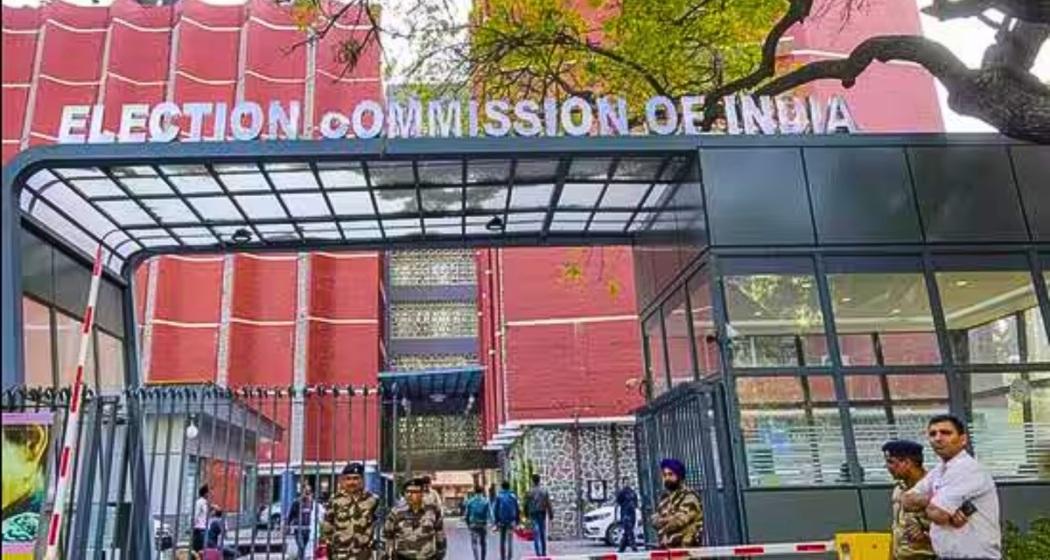
The Election Commission of India (ECI) has made pre-certification mandatory for political advertisements in print media during the pre-poll period and on polling day for the 2026 Assembly elections and bye-elections, in a move aimed at ensuring transparency and a level playing field.
The directive follows the Commission’s announcement of poll schedules on March 15 for Assembly elections in Assam, Kerala, Puducherry, Tamil Nadu, and West Bengal, along with bye-elections in six states.
According to the guidelines, no political party, candidate, organisation, or individual will be allowed to publish political advertisements in newspapers on polling day or one day prior without prior approval from the Media Certification and Monitoring Committee (MCMC).
The Commission said contesting candidates and individuals must apply for certification through the district-level MCMC, while recognised political parties headquartered in a state or Union Territory will need to obtain clearance from the state-level MCMC.
Also read: Fear vs voter rolls: Modi, Mamata spar in Bengal
Providing a detailed timeline, the ECI said that for Assam, Kerala, and Puducherry, where polling is scheduled for April 9, pre-certification will be required for advertisements published on April 8 and 9.
For Tamil Nadu, which goes to the polls on April 23, certification will be mandatory for advertisements appearing on April 22 and 23. In West Bengal, where elections will be held in two phases on April 23 and April 29, the requirement will apply to April 22–23 for Phase I and April 28–29 for Phase II.
The Commission also directed that applications for pre-certification must be submitted at least two days in advance of the intended publication date to allow sufficient time for scrutiny.
To ensure compliance, MCMCs have been activated across states and districts. These committees will not only process certification requests but also monitor suspected cases of paid news and take appropriate action to safeguard the integrity of the electoral process.
The move is part of the Commission’s broader efforts to regulate campaign practices and prevent misuse of media platforms during elections.

 Follow us