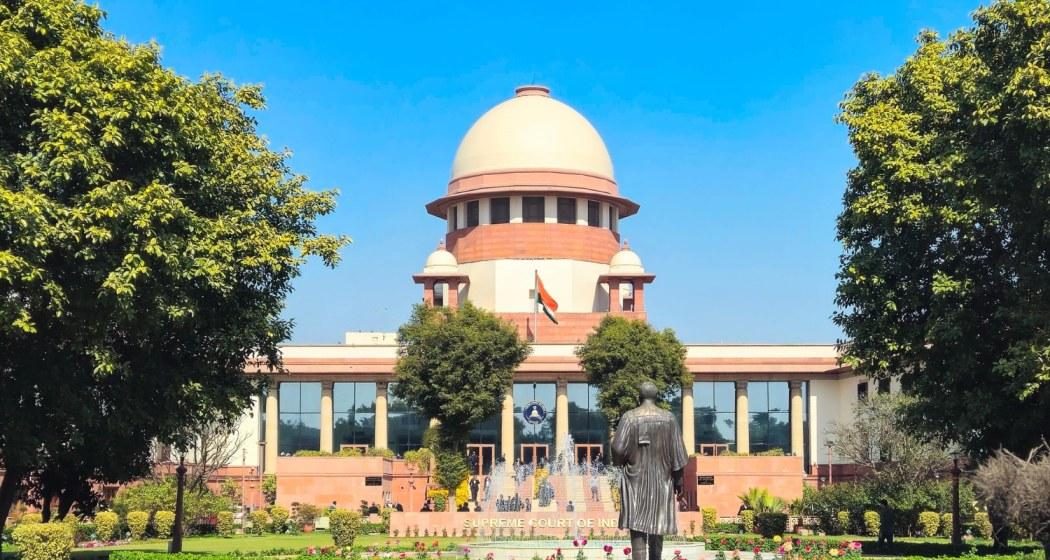
The Supreme Court of India on Thursday observed that exclusion of any denomination from temples could adversely affect Hinduism and lead to social division, as it heard petitions on religious freedom and entry into places of worship.
A nine-judge Constitution bench, headed by Chief Justice Surya Kant, made the remarks during hearings on issues related to discrimination against women at religious sites, including the Sabarimala Temple.
The bench, which also includes Justices B V Nagarathna, M M Sundresh, Ahsanuddin Amanullah, Aravind Kumar, Augustine George Masih, Prasanna B Varale, R Mahadevan and Joymalya Bagchi, is examining the scope of religious freedom across faiths.
During the proceedings, Justice B V Nagarathna raised concerns over exclusionary practices in denominational temples. “Everybody must have access to every temple and math… if you say it is a practice and it is a matter of religion that I will exclude others… that is not good for Hinduism,” she observed, cautioning that such practices could prove counterproductive.
Justice Aravind Kumar concurred, noting that exclusion could lead to divisions within society.
Also read: India is not patriarchal society: Centre to SC on Sabarimala row
Senior advocate C S Vaidyanathan, appearing for organisations including the Nair Service Society, Ayyappa Seva Samajam and Kshetra Samrakshana Samiti, argued that denominational temples have the right to regulate entry and restrict worship to members of their denomination.
He submitted that such temples, if limiting access, should not seek funds from the state, private donors or the public. He also emphasised that any law governing such matters must meet the constitutional tests of public order, morality and health.
The court referred to the earlier Devaru judgment, which upheld the Madras Temple Entry Authorisation Act, allowing temples to remain open to all Hindus while permitting certain ceremonial practices to be reserved for specific denominations.
The present proceedings stem from the long-standing debate over entry restrictions at the Sabarimala Temple. In September 2018, a five-judge Constitution bench had, by a 4:1 majority, struck down the ban on entry of women aged between 10 and 50 years at the shrine, declaring the practice unconstitutional.
Subsequently, in November 2019, another Constitution bench referred broader questions on discrimination at places of worship across religions to a larger bench, noting the need for a comprehensive examination of the issue.
The nine-judge bench has since framed seven key questions on the ambit of religious freedom, indicating that the matter involves complex constitutional principles that go beyond any single case.

 Follow us