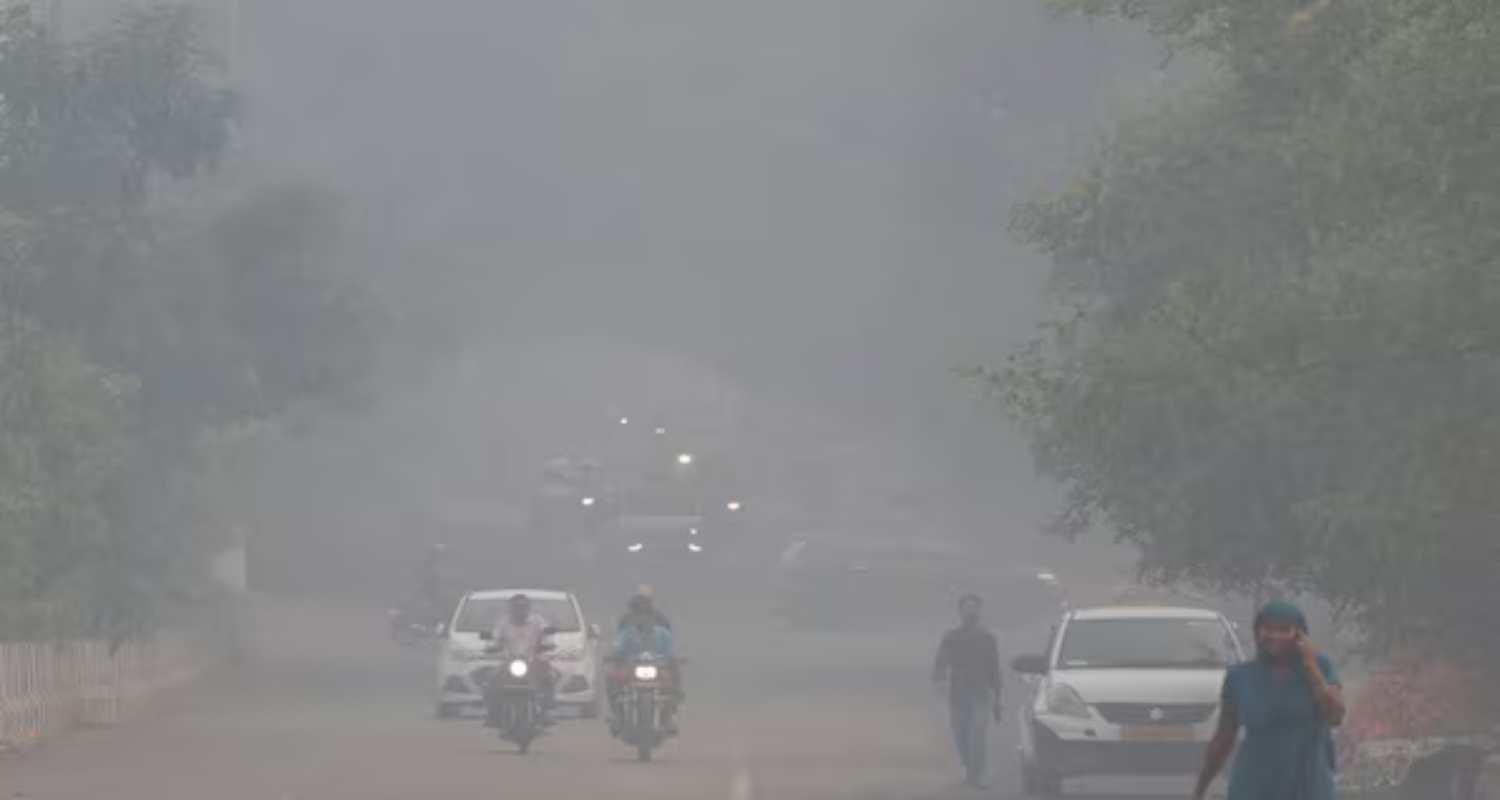
Delhi-NCR experienced a swift escalation in anti-pollution restrictions on Saturday, with authorities implementing the most stringent measures under Stage-IV of the Graded Response Action Plan (GRAP). This came as the region's air quality deteriorated into the "severe" category, with the curbs activated mere hours after Stage-III measures had been imposed.
By late Saturday night, the air quality worsened further, entering the "severe plus" category.
The decision was made by the Commission for Air Quality Management (CAQM), prompted by real-time monitoring data indicating a hour-by-hour decline in Delhi's air quality. Official data from the Central Pollution Control Board (CPCB) highlighted a sharp deterioration throughout the evening, with the Air Quality Index (AQI) rising from 431 at approximately 4 pm to 441 by 6 pm. By 12 am on December 14, pollution levels had crossed into the "severe+" category, reaching an AQI of 460.
For context, air quality is categorised into escalating stages based on the AQI: readings between 201 and 300 are classified as 'Poor', 301 to 400 as 'Very Poor', above 401 as 'Severe', and any value exceeding 450 as 'Severe Plus'—representing the highest level of hazard.
The CAQM linked the abrupt worsening on Saturday to a combination of low wind speeds, a stagnant atmospheric layer, and adverse meteorological conditions that trapped pollutants near the surface, hindering their dispersal.
The effects were starkly evident across the city. In Anand Vihar, dense and hazardous smog enveloped the area by evening, pushing the local AQI to 488—deep into the ‘severe plus’ range—according to CPCB data, raising significant public health alarms.
Meanwhile, a heavy blanket of toxic smog shrouded India Gate and Kartavya Path that evening, as air quality fell to severe levels, registering an AQI of 407.
In view of the worsening situation, the CAQM’s Sub-Committee on GRAP invoked all actions prescribed under Stage-IV, the highest level of restrictions, with immediate effect across the entire National Capital Region.
One of the most significant steps under GRAP-IV is a complete ban on construction and demolition activities across Delhi.
Also Read: Delhi-NCR air improves, but smog keeps AQI 'poor'
Authorities have also ordered the closure of stone crushers, mining operations and associated activities throughout the NCR, as these are considered major contributors to dust and particulate pollution.
Educational institutions have been directed to shift to hybrid learning modes for classes up to Class 5, reducing the exposure of young children to hazardous air. Schools have been advised to limit physical attendance while continuing academic activities through a mix of online and offline classes.
Transport curbs have been tightened sharply. State governments across the NCR and the Delhi government have been instructed to strictly restrict the movement of BS-III petrol and BS-IV diesel four-wheelers. These restrictions will apply not only in Delhi but also in key adjoining districts, including Gurugram, Faridabad, Ghaziabad and Gautam Buddha Nagar.
Also Read: Delhi chokes as AQI nears ‘severe’, smog blankets city

 Follow us