India on Sunday categorically rejected Pakistan's allegations of New Delhi's involvement in militant attacks that disrupted peace in Balochistan, describing the charges as baseless tactics to deflect attention from Islamabad's internal failings and human rights violations in the restive province.
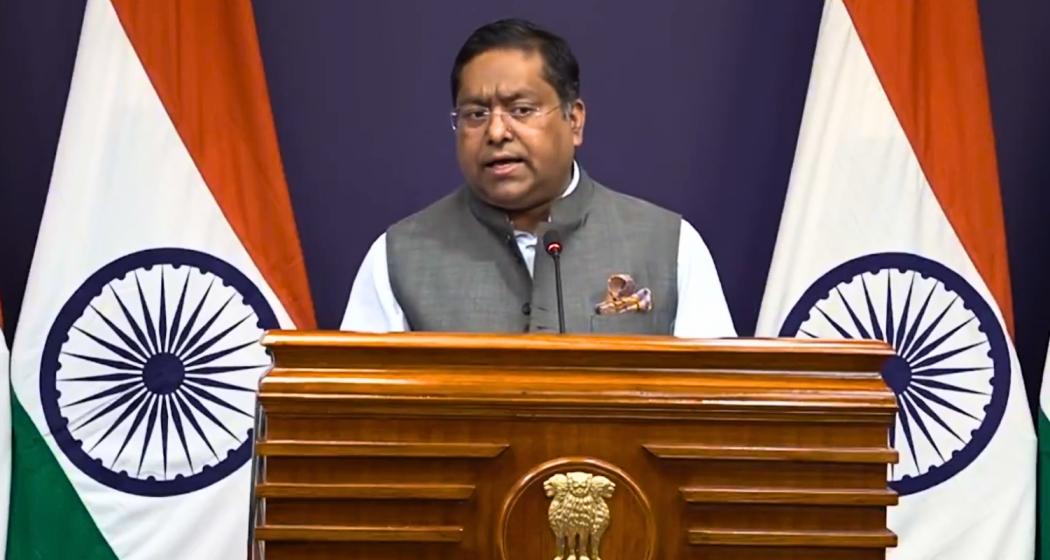
External Affairs Ministry spokesperson Randhir Jaiswal dismissed the claims following Pakistan's military assertion that India supported terrorist elements behind the violence.
"We categorically reject the baseless allegations made by Pakistan, which are nothing but its usual tactics to deflect attention from its own internal failings," Jaiswal said.
He added: "Instead of parroting frivolous claims each time there is a violent incident, it would do better to focus on addressing long-standing demands of its people in the region. Its record of suppression, brutality and violation of human rights is well known."
The rebuttal came amid escalating tensions after coordinated attacks by militants on 31 January across multiple districts in Balochistan, including Quetta, Mastung, Nushki, Dalbandin, Kharan, Panjgur, Gwadar, Pasni, Turbat, and others. The Balochistan Liberation Army (BLA), a banned separatist group, claimed responsibility for the assaults, dubbed "Operation Herof Phase II", targeting security installations, police stations, and paramilitary headquarters.
Also read: Balochistan violence: 10 security personnel, 57 militants killed
Pakistan's security forces launched counter-terrorism operations in response, killing 92 militants while losing 15 soldiers. At least 18 civilians also perished in the clashes, marking one of the deadliest flare-ups in the province's ongoing insurgency.
Balochistan, Pakistan's largest province by area but poorest in development, has endured a decades-long separatist movement. Ethnic Baloch nationalists accuse the central government of exploiting vast natural resources like gas and minerals while neglecting local welfare and perpetrating abuses. Groups like the BLA seek independence or greater autonomy, often clashing with state forces in a conflict that has claimed thousands of lives since the 1970s.
Pakistan's Interior Minister Mohsin Naqvi directly blamed India for orchestrating the attacks. "India is behind these attacks. I can tell you for sure that India planned these attacks along with these terrorists," he told the Pakistani media. Prime Minister Shehbaz Sharif echoed the accusations, praising security forces for foiling the assaults while vowing to expose foreign backing.
Such allegations are recurrent; Pakistan has frequently charged India with sponsoring Baloch militants, a claim New Delhi consistently denies. The latest violence followed military raids on 30 January that killed 41 armed fighters allegedly linked to India.
The insurgency intensified in 2025 with sophisticated operations, including train hijackings and suicide bombings. Pakistan maintains the militants receive external support, while rights groups highlight enforced disappearances and extrajudicial killings by state actors in the province.

 Follow us