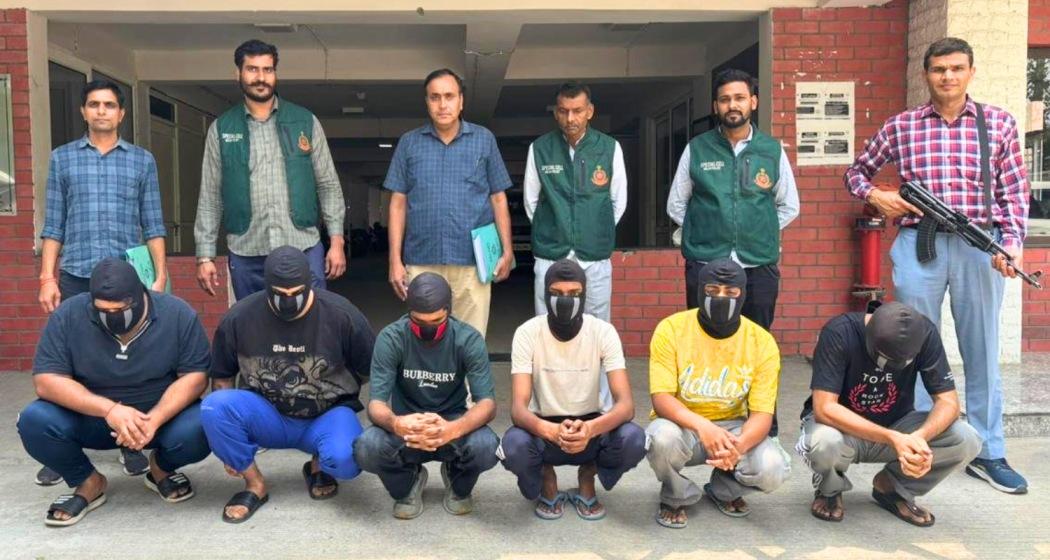
An espionage network allegedly backed by Pakistan’s Inter-Services Intelligence (ISI) has been busted, with 11 people arrested for using covert surveillance to monitor Indian Army movements across northern India, police said on Friday.
The module, unearthed by the Delhi Police Special Cell, had installed solar-powered CCTV cameras at strategically sensitive locations to capture real-time visuals of military activity, including troop movement routes and areas near cantonments.
According to investigators, the surveillance network spanned multiple states, including Punjab, Haryana, Jammu and Kashmir, and Rajasthan — covering cities such as Kapurthala, Jalandhar, Pathankot, Ambala, Kathua, Bikaner and Alwar, all of which are key military or logistics hubs.
Officials said the cameras were deliberately positioned near highways used for troop mobilisation, border-linked infrastructure and Army installations. What made the operation particularly concerning was that the footage was transmitted live to handlers based in Pakistan.
“The handlers could sit across the border and watch Indian Army movements unfold in real time,” an officer said, adding that the system enabled long-term monitoring of defence patterns.
The devices were fitted with SIM cards obtained using fake identities and linked to mobile applications, allowing seamless remote access. The use of solar-powered units ensured uninterrupted functioning even in remote areas, making detection difficult.
Additional Commissioner of Police (Special Cell) Pramod Singh Kushwah said the operation was carried out in two phases. In the first phase, six accused were arrested from Punjab and Delhi, with police recovering nine CCTV cameras, four pistols, including three foreign-made weapons, and 24 live cartridges.
Also read: Terror module busted in Punjab, 2 held
The second phase, based on inputs from military intelligence, led to the arrest of five more operatives involved in reconnaissance and sharing sensitive data.
Investigators said the network was operating under direct instructions from Pakistan-based handlers. While some accused were tasked with installing and maintaining the cameras, others handled communication, arms movement and intelligence sharing.
Police said the surveillance was not merely observational but aimed at analysing patterns and identifying vulnerabilities in military operations. Such inputs, officials added, could potentially have been used to plan terror attacks or facilitate cross-border activities.
“The intention was strategic monitoring over time,” the officer said, noting that the module also had links to arms smuggling and possible terror planning.
The accused include individuals from Punjab and Delhi, with varied backgrounds ranging from small trades to higher education. One of the key operatives was found to be in direct contact with handlers through encrypted applications.
Security agencies are now examining digital evidence, including mobile devices and data retrieved from the CCTV systems, to trace further links and identify additional operatives.
Officials said the crackdown may have averted a major security threat, but did not rule out more arrests as the investigation continues.

 Follow us