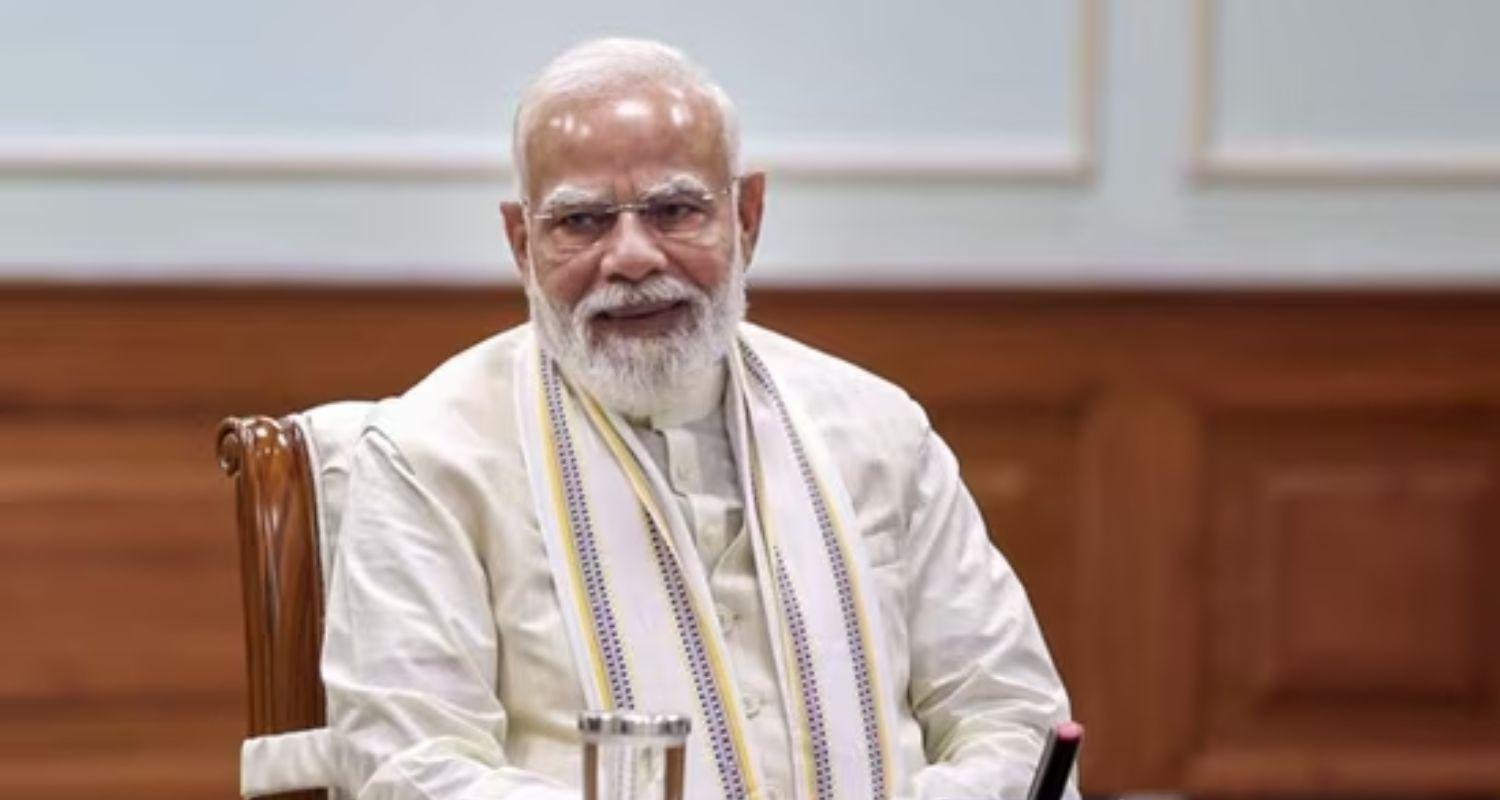
Prime Minister Narendra Modi will on Wednesday become the country’s longest continuously serving elected premier, marking 12 years at the helm of the central government during a period that saw the Bharatiya Janata Party (BJP) become the national political hegemon, expand to newer regions, and attract support from myriad communities.
By Wednesday, PM Modi will have completed 4,399 days in office. While India’s first Prime Minister, Jawaharlal Nehru, initially assumed office in 1947 and served until his death in 1964, his tenure followed the country's first general election in 1951–52. Indira Gandhi, the nation's first female prime minister, accumulated nearly 16 years in office, but her service was divided across two separate stints. Over the past 12 years, the current administration has overseen the eradication of left-wing terrorism, a revolution in welfare delivery via the JAM trinity and the Unified Payments Interface (UPI), and significant upgrades to rail, road, and airport infrastructure. The government has also retooled India’s defence and nuclear doctrines, responded to cross-border threats with targeted military actions such as Operation Sindoor following the Pahalgam attack, and navigated the country through a global pandemic alongside three major international conflicts.
This milestone arrives only weeks after Modi led the BJP to historic victories in the state assembly elections of West Bengal and Assam. Notably, the party formed a government in West Bengal for the first time since independence, unseating the Trinamool Congress and securing a solid foothold in a region historically dominated by the Left and the Congress, which also happens to be the birthplace of Jana Sangh ideologue Syama Prasad Mookerjee.
To mark the occasion, the National Democratic Alliance (NDA) is scheduled to pass a celebratory resolution at a meeting on Wednesday. Insiders indicate that the Prime Minister will be formally felicitated by alliance members during the session, which will include 72 NDA leaders and be chaired by Modi himself. In commemorating his 12-year tenure, the Prime Minister revealed that the period had been spent exclusively in developing a relationship of trust and ensuring welfare among others. He thanked his 1.4 billion people for their continued backing and pointed out the immense effort that went into empowering the youth, women, and farmers to create a new India in the international community.
Modi first took office on May 26, 2014; he retained his majority again in 2019 and will be sworn in for a third time in 2024. As congratulations arrived from world leaders, BJP President Nitin Nabin lauded the tenure for its focus on poverty alleviation and comprehensive development. He highlighted that schemes had lifted over 250 million people out of poverty, providing 40 million permanent homes, subsidised healthcare for 600 million people, and 120 million toilets to safeguard women's dignity. The party chief also reported record defence exports reaching ₹38,400 crore alongside overall exports of ₹79 lakh crore, whilst praising decisive political moves such as the effective abrogation of Article 370 in Jammu and Kashmir.
Senior cabinet ministers, including Rajnath Singh, Amit Shah, and JP Nadda, attended the commemorative event. Union Minister for Parliamentary Affairs Kiren Rijiju remarked that the 4,399 days in office were a source of immense pride, suggesting the achievements would be remembered as the era when India took its initial steps toward becoming a fully developed nation. Union Minister Jyotiraditya Scindia added that the country was witnessing a historic moment, pointing to an average domestic growth rate of 7 per cent over the past 12 years. He detailed the scaling up of national highways to 150,000 kilometres, the expansion of operational airports from 74 to 160, and a fourfold increase in railway capacity and development.
Global figures also recognised the Prime Minister's transformative governance and his advocacy for the Global South. Sri Lankan President Anura Kumara Disanayaka wrote that the milestone reflected the enduring trust placed in Modi's leadership by the world's largest democracy. Papua New Guinea’s Prime Minister, James Marape, described him as a role model for leadership, calling the poverty reduction numbers an extraordinary feat, while Trinidad and Tobago’s Prime Minister, Kamla Persad-Bissessar, noted that India had firmly established itself as a leading global voice.
Throughout the week, the BJP plans to widely publicise these administrative successes, emphasising reforms in public service, social security expansion, and energy self-reliance. Looking ahead, Modi is set to chair a strategy meeting on Thursday with the chief ministers and deputy chief ministers of NDA-governed states to assess policy implementations, the roadmap for national development, and measures to buffer against the ongoing crisis in West Asia. The political gathering has also fuelled intense speculation regarding an imminent reshuffle of both the Union Cabinet and the BJP’s internal organisational structure. No changes have been made to the council of ministers since the third term began in June 2024, but the recent expiry of parliamentary tenures for two ministers of state has led to widespread expectations that new faces will soon be inducted.
Also read: Centre approves 10 lakh houses under PMAY for WB

 Follow us