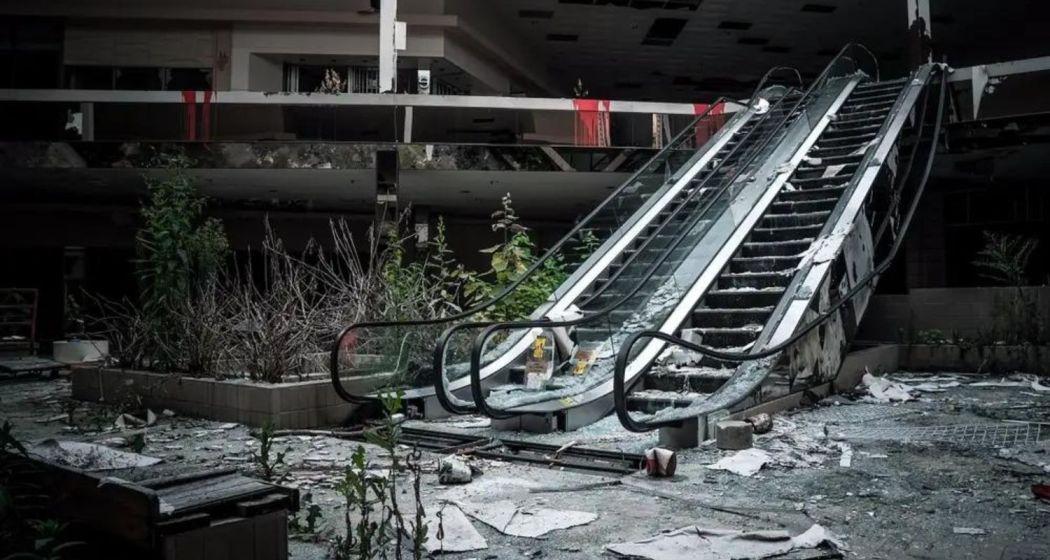
A new report by real estate consultancy Knight Frank India paints a concerning picture of the Indian retail landscape, with the number of "ghost malls" – shopping centres with vacancy rates exceeding 40% – surging to 64 in 2023 across eight major cities.
This marks a significant rise from 57 such malls identified in 2022, reflecting a shift in consumer preferences and highlighting challenges faced by the traditional retail sector.
The report, titled "Think India Think Retail 2024," delves into the dynamics of shopping centres and high streets across 29 Indian cities. Key findings reveal a sharp increase in low-performing retail assets, particularly in Tier I cities.
In 2023, a staggering 64 shopping malls, encompassing a combined gross leasable area of approximately 13.3 million square feet, were categorized as ghost malls.
This represents a substantial rise of 58% compared to the 8.4 million square feet recorded in the previous year.
The report attributes this concerning trend to a growing preference for premium retail experiences amongst consumers.
Knight Frank estimates that the rise of ghost malls has resulted in a loss of value exceeding Rs 6,700 crore (USD 798 million) in 2023.
NCR leads the rise of ghost malls, while Hyderabad bucks the trend
Among the eight major cities analysed, the National Capital Region (NCR) emerged as the epicenter of ghost malls, accounting for the highest vacancy rate.
Malls within NCR boast a staggering 5.3 million square feet of vacant space, reflecting a year-on-year increase of 58%.
Mumbai followed closely with 2.1 million square feet of vacant space (up 86% YoY), and Bengaluru witnessed a significant rise of 46% YoY, accumulating 2 million square feet of vacant retail space.
Interestingly, Hyderabad serves as a solitary bright spot in this otherwise gloomy picture. The city witnessed a commendable decline of 19% YoY in ghost mall stock, bringing the total vacancy to 0.9 million square feet in 2023.
Kolkata sees sharpest rise, while major metros struggle
The report also highlights a significant rise in ghost malls within Kolkata, with a staggering 237% YoY increase, albeit from a lower baseline compared to other metros. This surge indicates a potential vulnerability in the city's retail landscape.
Further analysis reveals a concerning distribution of ghost malls across the eight major cities. Delhi-NCR houses the highest number (21), followed by Bengaluru (12), Mumbai (10), and Kolkata (6). The remaining cities – Hyderabad (5), Ahmedabad (4), Chennai (3), and Pune (3) – also grapple with varying degrees of vacant retail space.
Commenting on the report's findings, Shishir Baijal, Chairman & Managing Director of Knight Frank India, emphasized the evolving nature of consumer preferences.
He noted a growing momentum in organised retail, driven by factors such as rising disposable incomes, a youthful demographic, and rapid urbanization. In this context, Baijal stressed the continued importance of physical retail spaces that deliver an enhanced shopping experience.
"Grade A malls have demonstrably excelled in this regard," Baijal said, "maintaining robust occupancy rates, high foot traffic, and impressive conversion rates, ultimately translating into value for their customers."
However, the report paints a contrasting picture for Grade C malls and those classified as ghost malls. These underperforming assets are struggling to keep pace with changing consumer demands.
Baijal suggests that landlords must take swift action to rejuvenate these properties or consider divestment as a strategic option.
Consolidation in the retail sector: Fewer malls, more shutdowns
Knight Frank's report further reveals a noteworthy trend of consolidation within the retail sector.
While eight new retail centres were inaugurated in 2023, the overall number of shopping centres across Tier I cities witnessed a net decline.
This can be attributed to the closure of 16 shopping centres over the past year.
The report suggests that these underperforming malls met various fates. Some were demolished to make way for new residential or commercial developments, while others faced permanent closure or were auctioned off.
The data for this report was meticulously compiled through primary surveys encompassing 340 shopping centres and 58 high streets across 29 Indian cities. This comprehensive approach provides valuable insights into the current state

 Follow us