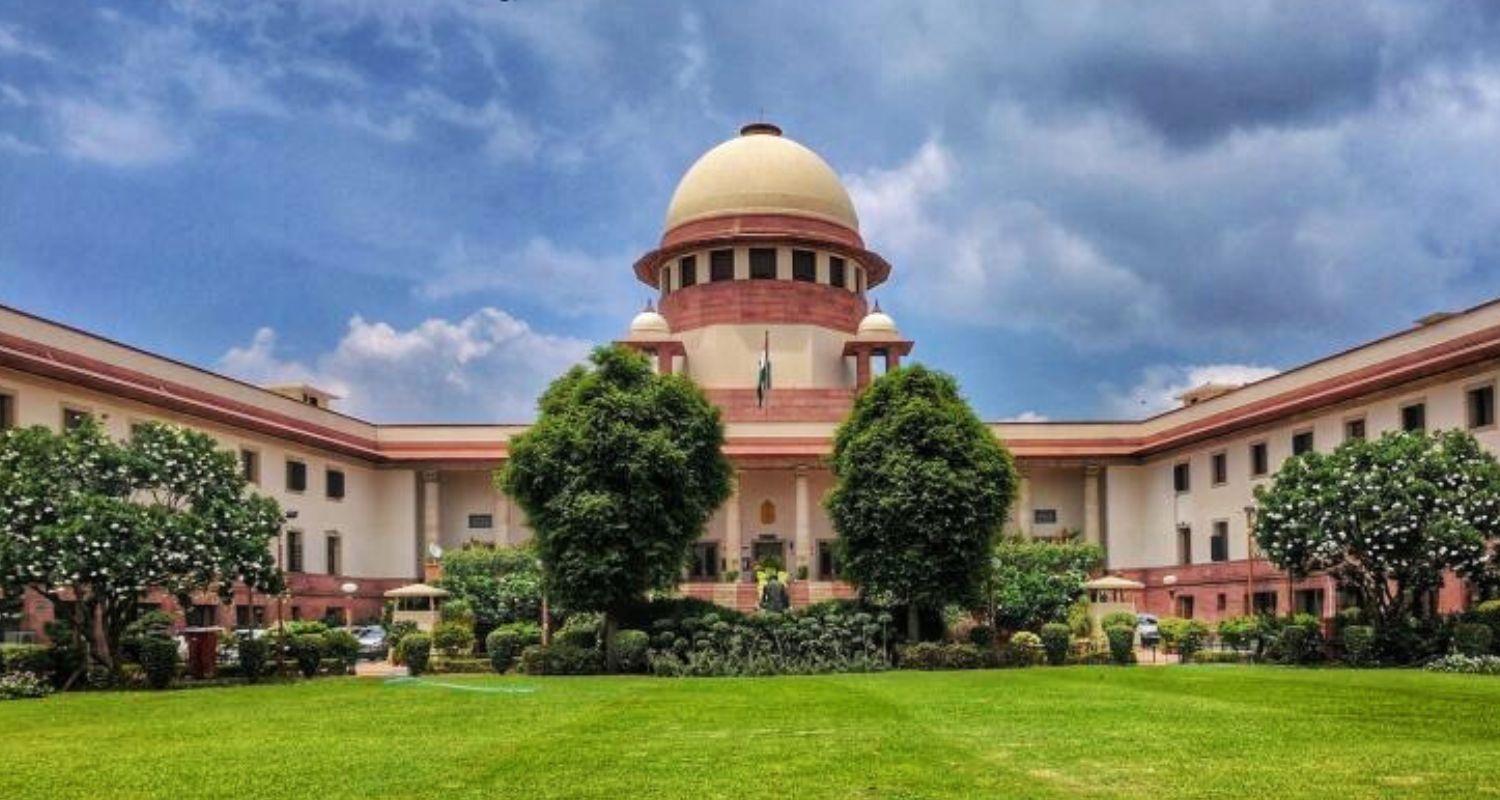
The Supreme Court on Thursday set aside a National Company Law Tribunal (NCLT) order after finding that it relied on non-existent, fake and AI-generated "hallucinated" judicial precedents, declaring that courts and lawyers must adopt "zero tolerance" towards such material.
A Bench of Justice P.S. Narasimha and Justice Alok Aradhe quashed the NCLT's order in an insolvency case involving Essel Infraprojects Ltd, observing that the use of fabricated legal precedents strikes at the heart of the justice delivery system.
In a strongly worded judgment, the Bench likened the use of fake AI-generated judicial material to the release of methyl isocyanate, saying it was "invisible, insidious, and catastrophic by the time anyone notices".
"It not only contaminates but takes away the very lifeblood of judicial determination," the court said.
The apex court ruled that citing AI-generated precedents without proper verification amounted to professional misconduct by advocates and described it as an equally serious lapse if judges relied on such fabricated material while deciding cases.
Also read: Meghalaya moves SC against Sonam Raghuvanshi's bail
"We have no hesitation in declaring that such a decision is no decision in the eyes of the law," the Bench said, adding that any judgment containing even "an iota" of fake or hallucinated material must be set aside as it compromises the sanctity of adjudication.
The court clarified that its ruling was not against the legitimate use of artificial intelligence in the legal system but against presenting or relying on fabricated AI-generated material as genuine judicial precedents.
The case arose from an insolvency dispute involving Pooja Ramesh Singh, Jammu and Kashmir Bank Ltd and Essel Infraprojects Ltd. While examining the NCLT's order, the Supreme Court found that several cases cited by the tribunal did not exist. Among them were purported decisions in ICICI Bank Ltd vs Urban Infrastructure Real Estate Ltd (2019) 16 SCC 528 and Sarbjit Singh vs Union Bank of India (2022) 7 SCC 464, which the court said were entirely fabricated.
The Bench directed the Bar Council of India (BCI) to constitute a committee to frame guidelines and recommend disciplinary action against advocates who submit fake or AI-generated precedents without verification.
The court also emphasised that while AI could assist judicial processes, adjudication must always remain under meaningful human oversight, with judges retaining complete control over decision-making.

 Follow us