
Trending:
A new era in nuclear power policy
India has an opportunity to become not just a large nuclear market but a global innovation hub in the sector. If executed with prudence, transparency and long-range strategy, the shift toward private participation could mark the beginning of a new era. Follow us
News Arena Network - Chandigarh - UPDATED: December 23, 2025, 02:58 PM - 2 min read
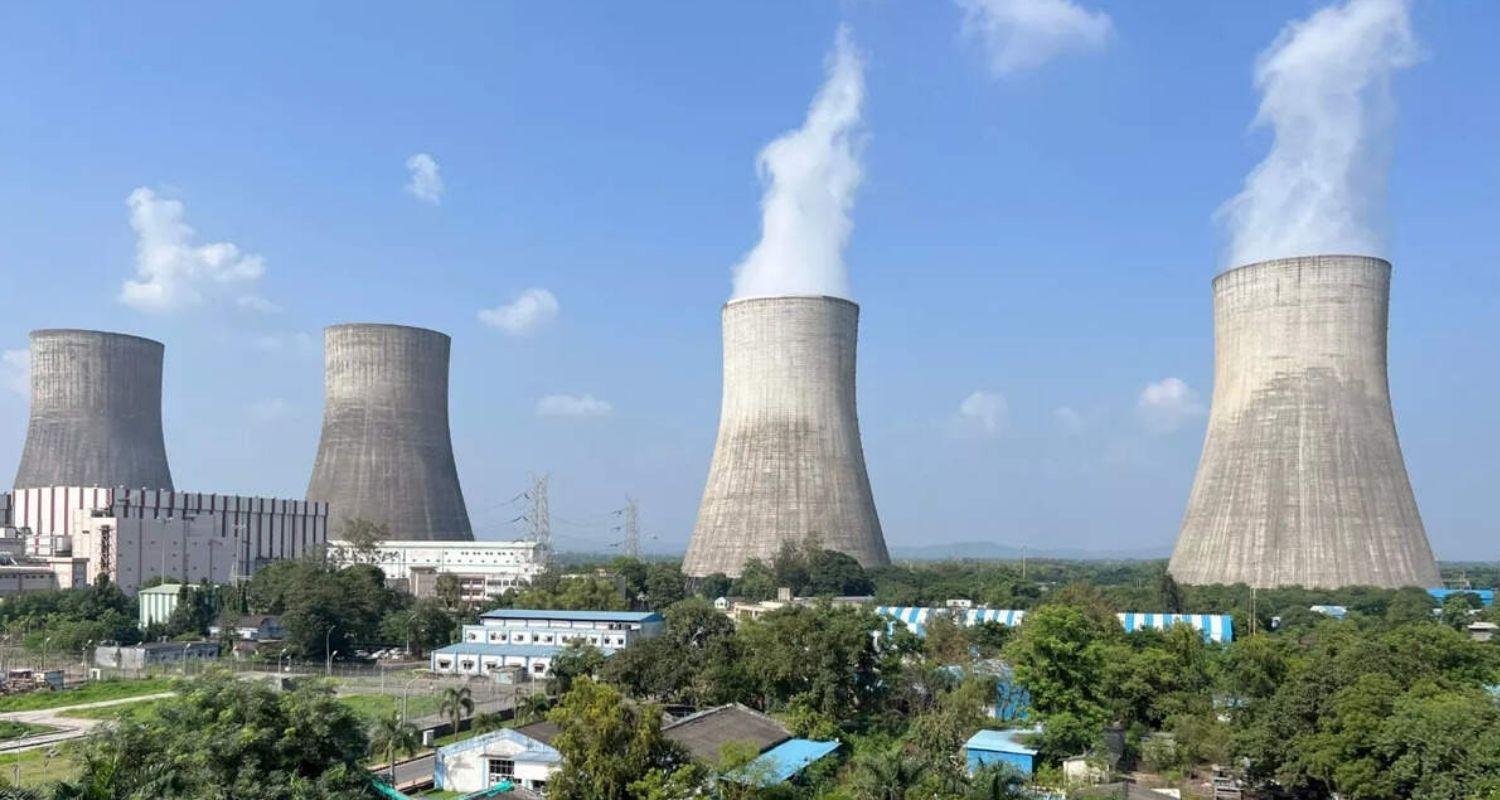
Nuclear power, considered a clean, carbon-free source of energy, is crucial for the country to achieve its target of ‘net zero’ carbon emissions by 2070.
It’s a reform whose time has finally come. Nuclear power sector has been freed from the shackles of state control and opened for private participation. A new beginning has been made with the Parliament passing the Sustainable Harnessing and Advancement of Nuclear Energy for Transforming India (SHANTI) Bill, 2025, allowing private players to enter the sector.
For a country that aspires to decarbonise without slowing economic aspirations, this is a landmark legislation signalling a major policy shift. Overcoming several hiccups and resistance from status quo-ists, the NDA government has finally succeeded in pushing through a legislation that is in sync with the ongoing efforts to accelerate the expansion of atomic energy as part of India’s long-term energy transition.
Like the rest of the world, India needs to focus its attention on clean energy to reduce the carbon footprint. Nuclear power, considered a clean, carbon-free source of energy, is crucial for the country to achieve its target of ‘net zero’ carbon emissions by 2070. Any delay in undertaking the overhaul of the nuclear power industry will derail the onward march of India to emerge as a global economic powerhouse.
India has an opportunity to become not just a large nuclear market but a global innovation hub in the sector. If executed with prudence, transparency and long-range strategy, the shift toward private participation could mark the beginning of a new era.
Sluggish growth
Nuclear power currently contributes just over 8 GW, roughly 1.6 per cent of the total energy mix from 25 nuclear reactors in seven power plants across the country. This is because India’s nuclear industry has long been a government monopoly, with state-owned entities overseeing every aspect from uranium mining to power generation. The promise of massive additions to the installed capacity continues to elude the Department of Atomic Energy since the 1980s, when it first set the target of 20,000 MW by 2000.
Reforms in the nuclear energy sector have been long overdue. Decades of state monopoly has stymied its growth. Delays and cost overruns have plagued multiple reactor projects. Competition and accountability could help overcome those structural bottlenecks. Nuclear power is crucial to reach the target of 100 GW of nuclear capacity by 2047. This cannot be met by public investment alone.
Allowing private participation could unlock capital, speed up project execution and bring in operational efficiencies that government entities often struggle to guarantee.
The new legislation seeks to repeal the Atomic Energy Act, 1962 and the Civil Liability for Nuclear Damage Act, 2010. In doing so, it removes long-standing legal barriers that restricted nuclear power generation and related activities to government-owned entities.
Best bet
Nuclear energy is India’s best bet for reliable, round-the-clock clean power, especially as it seeks to phase down coal without slowing down the pace of growth. Solar and wind are indispensable, but they are intermittent.
Also read: SHANTI Bill tabled: Your cheat sheet on India’s nuclear reform
Building nuclear plants is an expensive proposition, requiring both capital and modern technology. Opening the nuclear sector presents an opportunity for India to build a robust supply chain ecosystem. The decision to permit private players in the sector will help in enhancing the country’s long-term energy security and technological innovation. It will also make way for advanced technologies such as small modular reactors, potentially accelerating deployment and reducing upfront costs.
The passage of the Bill follows approval by the Union Cabinet last week, signalling the government’s intent to accelerate the expansion of atomic energy as part of India’s long-term energy transition.
Once notified, the new law will replace two key legislations—the Atomic Energy Act, 1962 (AE Act) and the Civil Liability for Nuclear Damage Act, 2010 (CLNDA). This would effectively mean redrawing the country’s nuclear power regime and tweaking norms regarding who can build and operate plants, how accident liability is capped, the role of the safety regulator, and mechanisms for dispute resolution and compensation, among other things.
Regulatory oversight
Despite opening the sector, the law retains a stringent safety regime. All entities must obtain mandatory safety authorisation from the Atomic Energy Regulatory Board (AERB). Authorisation is required for the manufacture, possession, use, transport, import, export and disposal of radioactive substances, radiation-generating equipment, and for establishing, operating or decommissioning radiation facilities.
The law also retains exclusive Central government control over certain critical and sensitive activities, including enrichment and isotopic separation of radioactive substances, the management and reprocessing of spent fuel and high-level radioactive waste, and the production and upgradation of heavy water.
In another key shift, the new law grants statutory status to the AERB, which was established in 1983 to carry out certain regulatory and safety functions. Section 27 of the old act allowed the Centre to pass on its powers or responsibilities under the law to officers or authorities working under it. But this provision did not provide for the creation of an independent authority or board, and instead only enabled the delegation of powers to a subordinate body.
As a result, the AERB functioned as an authority exercising powers assigned by the Centre, rather than as a statutory regulator with independent legal authority. The new law fixes this issue. It also provides for the establishment of the Atomic Energy Redressal Advisory Council, which will address grievances of licensees, facilitate dispute resolution, review orders of the central government, and handle complaints referred by the AERB.
Safety, liability concerns
The critics of the privatisation of the nuclear power sector argue that it promotes a profit-driven licensing regime that opens critical segments of the nuclear value chain to private and foreign players while diluting accountability mechanisms.
While explaining the benefits of opening the sector, the government must also address genuine concerns regarding safety norms, liability and accountability in a privatised nuclear regime. Under the new law, private companies would need to obtain licences to operate nuclear power plants, while foreign firms can participate through partnerships with Indian companies.
A major point of contention is the proposed removal of the operator’s statutory right of recourse against reactor suppliers in the event of a nuclear accident. This change, it is feared, could shield equipment manufacturers from liability in cases involving faulty design or defects, shifting the burden of a potential nuclear accident onto the State and affected citizens.
The trade union leaders and a section of industry experts are also seeking restoration of stringent liability provisions, establishment of an independent nuclear regulator, stronger environmental and labour safeguards, and Parliamentary oversight over foreign participation in nuclear activities.
