
Trending:
AI is causing water stress on the planet
In 2023, researchers at University of California, Riverside estimated the water footprint from running artificial intelligence queries relying on cloud computations. The findings suggested a 20-30 word AI prompt can indirectly consume 500 ml to 1 litre of water Follow us
News Arena Network - Chandigarh - UPDATED: June 28, 2026, 01:20 PM - 2 min read
Representational image.
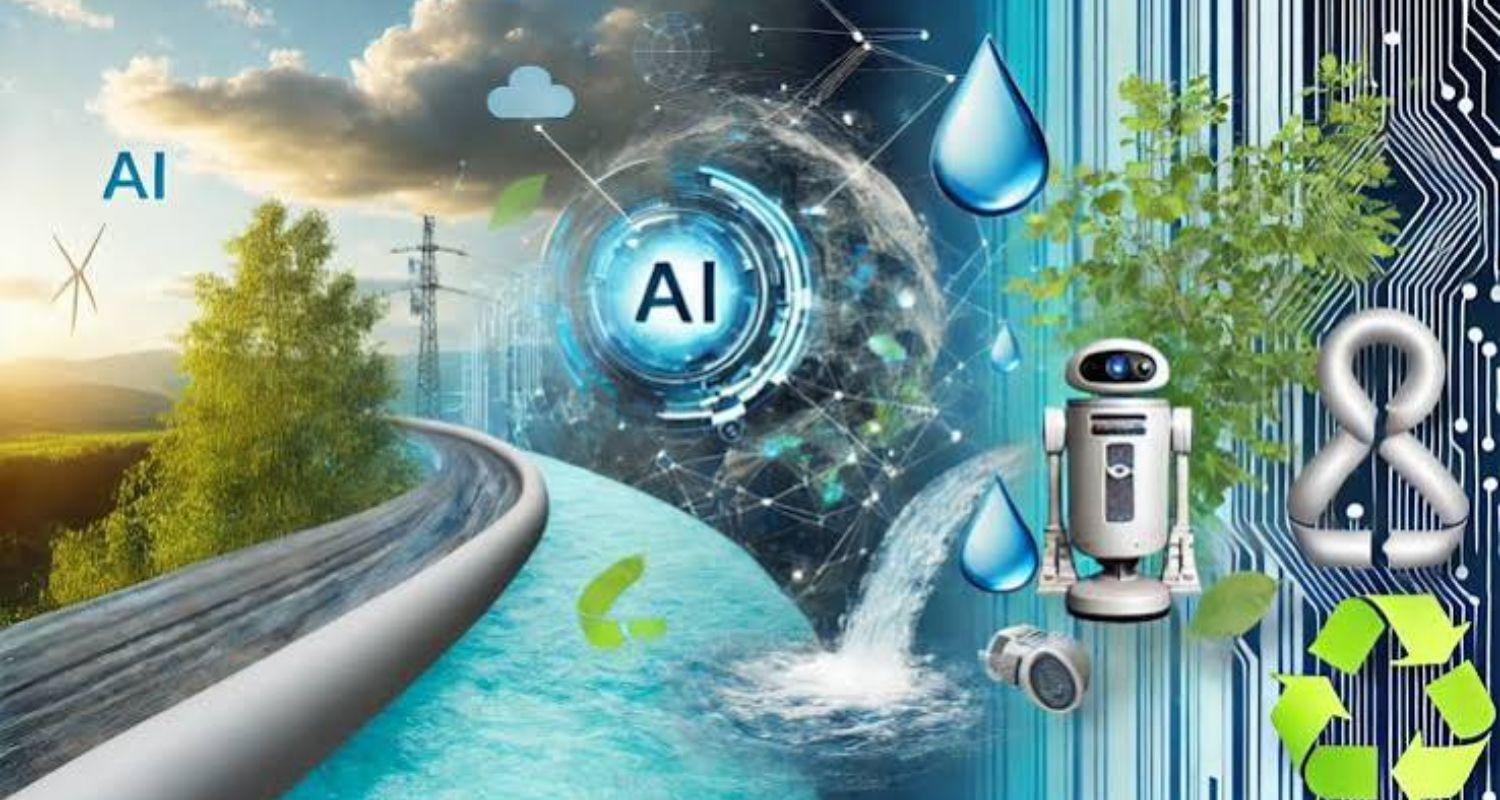
Every single time you run an AI for a witty response, an error-free mail or even worse, your picture against the backdrop of a private jet, roughly a bottle or two of drinking water goes down the black hole of AI servers. Claude, Gemini, ChatGPT, pick your poison. Whether for curiosity, content or career needs, artificial Intelligence is costing humans their jobs. The human brain, their critical thinking skills. As for the planet, it’s costing its single largest natural resource—water.
In 2023, researchers at University of California, Riverside estimated the water footprint from running artificial intelligence queries relying on cloud computations. The findings suggested a 20-30 word AI prompt can indirectly consume 500 ml to 1 litre of water. Reports also suggest that over a billion people use standalone AI tools each month. The math is not simple, it is scary; especially if calculated against the backdrop of already drying up fresh water reservoirs.
How much water are we talking about?
But there is no single number for how much water is exactly consumed by AI. The viral figure largely differs from Google’s official figure. While Google claims that median Gemini text prompt uses about 0.26 ml of water, roughly five drops, the viral figure claims that as much as 519 ml of water gets used by to write a 100-word email with GPT-4. While the former only cites direct water consumption from on-site cooling, the latter also factors in indirect water usage and electricity supply chain.
But large training AI models, those doing the complex calculations, that’s where the numbers get jaw-dropping and frightening. A 2026 report, by the United Nations University Institute for Water, Environment and Health, warns of the consequences. Last year, AI accounted for one fifth of the electricity consumed globally by data centres. Reportedly, data centres around the world consumed 448 terawatt-hours of electricity. To put things into perspective, that is more than the electricity consumed by the whole of Saudi Arabia. “The public debate still often treats AI as software, but AI is also physical infrastructure: data centres, electricity generation, cooling systems, transmission network, chips, minerals, land and water,” said Professor Kaveh Madani, institute’s director and report’s lead author.
Last year, global data centres generated 189 million tons of carbon dioxide emissions, while consuming 4.5 trillion litres of water. That’s enough to meet the needs of more than 600 million people in Sub-Saharan Africa. While some may find the numbers overwhelming, the climate organisations think they are ominous. The UN researchers predict that data centres are expected to consume twice as much power and water by 2030.
The stark findings also quantify the carbon, water and land footprints of AI’s electricity use across the globe by highlighting the world’s 20 largest data centre hubs. The researchers argue that the environmental costs of AI cannot be understood through carbon emissions alone. Most existing assessment models systematically mis-measure the environmental cost of AI as they focus solely on the carbon emissions while excluding the electricity used to train or run an AI system.
Is anyone concerned?
Unless the governments heed the rising environmental costs of AI, just a few decades from now could actually look like a dystopian movie scene. With no amount of intelligence—artificial or human, being able to tackle the mountain of electronic waste and replace the depleted water resource. The report proposes a “responsible AI ecosystem” where development of AI infrastructure takes into account sustainability and transparency.
Water, pre and post data centres
By the beginning of 2026, there were reportedly over 12000 AI data centres across the world, with roughly 45 per cent of them concentrated in the US. According to Cloudscene’s comprehensive database, as of November 2025, the US had 5,427 data centres.
Several ground reports from the region with data centres all point to a very strong pattern of water scarcity. Water stress is worst where the data centres are and the communities affected are not necessarily the one being benefited from AI. This asymmetry remains largely ignored. Says Dr Mir Matin, co-author of the report, “Without fixing it, we’ll be repeating older patterns, where some places carry the costs and other places capture the benefits.”
In May of this year, Congresswoman Alexandria Ocasio-Cortez held up two mason jars of brown water at an Environmental Protection Agency hearing in Washington DC. She said the drinking water from Morgan County, Georgia was contaminated due to the ongoing construction of a Meta Data Center. “A few weeks ago, while the Congress was in recess, I visited Morgan County Georgia, where Meta is building a massive data centre campus. They are clear cutting forests and began heavy construction, including explosive blasting and families in the area are starting to see not only their water pressure decrease, but their appliances have all stopped working because it is decimating their water quality.”
Also read: GPS interference is reshaping global navigation
She added while holding the jar, “They now rely on bottled water to drink and prepare meals, and nearby residents' water bills are expected to increase by 33 per cent. In fact, I have a jar right here. This is the current drinking water in Morgan County, Georgia, right after a data centre was constructed, the Meta centre was constructed. The only difference between the clean water and this was the data centre.”
India is no exception to the mismatch and concerns of rising digital global boom and local water crisis in the region housing the data centres. Tusiana village in Greater Noida has been home to a sprawling data centre since 2022. Twenty-acre complex against a fairly well-maintained road with barbed wire fences and police barricades stands amidst a world which is visibly opposite to it starting just a kilometre away.
Potholed roads, open drains and choked air along with rapidly depleting ground water are plaguing the region. Very few of the locals were aware, even when the site was being constructed, what drilling 200 feet down would eventually mean.
The AI users in the meanwhile, spread across a wide repertoire of students, workers and netizens, are happily distracted. Probably contemplating between, “explain like I'm a smart prompt and explain like I’m a five-year-old prompt.”
It doesn’t take an exceedingly large database to figure out the significance of the environment and cost of its damage; it only takes basic human intuition and no amount of artificial intelligence can replace that.
