
Trending:
Bangladesh’s China pivot: What it means for India
New Delhi should not automatically interpret every Chinese investment in Bangladesh as evidence of a Chinese strategic takeover. At the same time, it cannot afford to ignore the possibility that economic engagement could gradually develop into strategic influence. Follow us
News Arena Network - Chandigarh - UPDATED: August 12, 2026, 04:32 PM - 2 min read
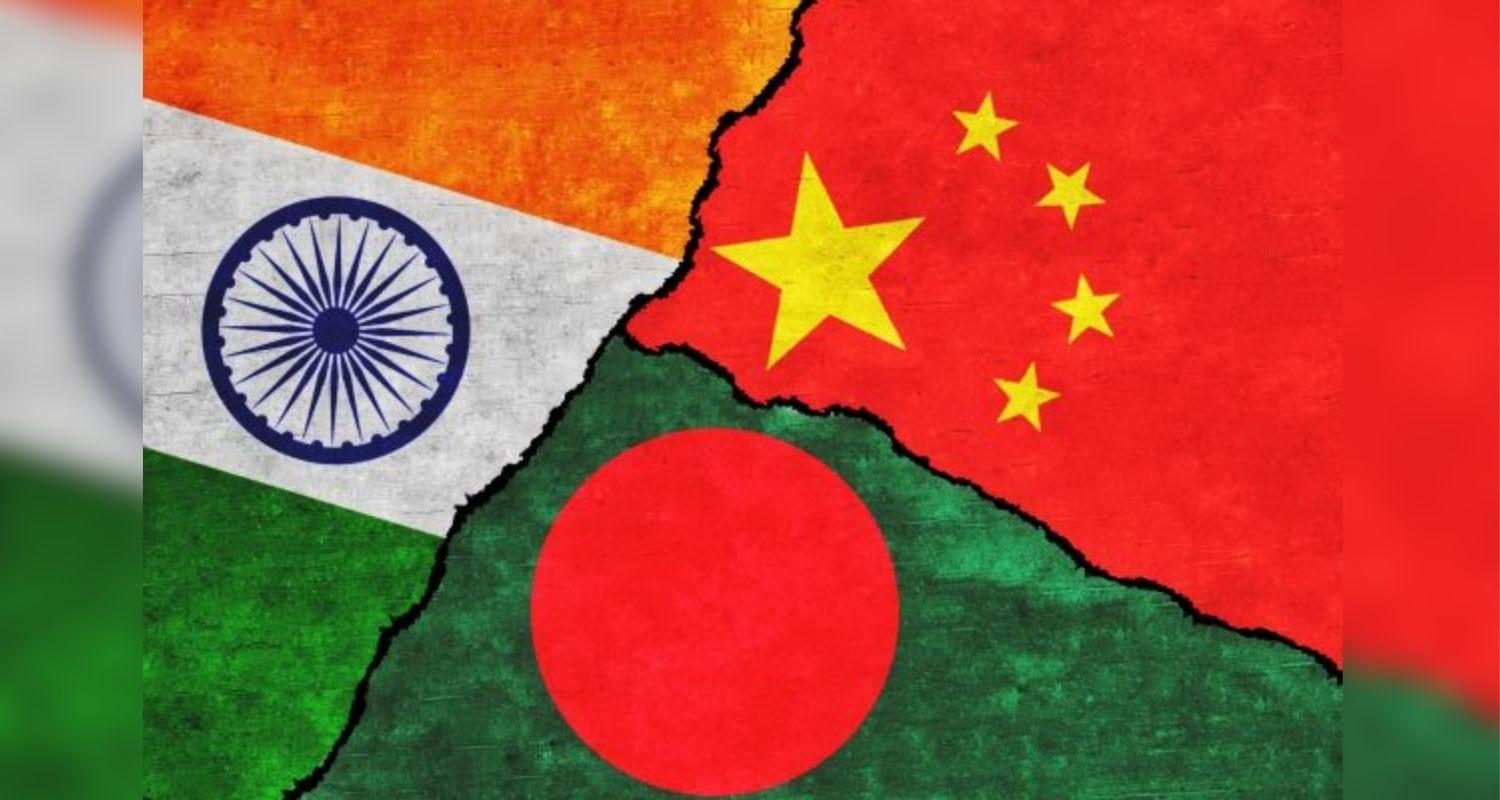
For India, the development warrants close attention—not because Bangladesh is necessarily abandoning New Delhi, but because the strategic environment around India’s eastern neighbourhood may be changing.
Bangladesh Prime Minister Tarique Rahman’s recent visit to China is more than a diplomatic engagement between Dhaka and Beijing. It is an early indication that Bangladesh’s foreign policy under a BNP-led government could be entering a more diversified, and potentially China-leaning, phase.
For India, the development warrants close attention—not because Bangladesh is necessarily abandoning New Delhi, but because the strategic environment around India’s eastern neighbourhood may be changing.
Before the election, there had been expectations that a government led by Rahman would seek to reassure India and acknowledge New Delhi’s historical and political importance to Bangladesh. The early signals, however, point towards a different priority: establishing room for manoeuvre by engaging China early and prominently.
That approach is understandable in Bangladesh’s domestic political context. China’s standing among sections of the Bangladeshi public has strengthened, while anti-India sentiment remains politically significant. A high-profile early visit to New Delhi could therefore have carried greater domestic political risks for the new government than an engagement with Beijing.
The question for India is what comes next.
‘Bangladesh First’ and the test of strategic autonomy
Dhaka’s stated “Bangladesh First” approach can, in principle, be interpreted as strategic non-alignment rather than an outright tilt towards China. The objective would be to maximise Bangladesh’s national interests without becoming excessively dependent on any single power.
For India, this distinction is crucial.
New Delhi should not automatically interpret every Chinese investment in Bangladesh as evidence of a Chinese strategic takeover. At the same time, it cannot afford to ignore the possibility that economic engagement could gradually develop into strategic influence.
The real test will lie in the nature of Chinese involvement in sectors such as ports, telecommunications, energy, infrastructure and regional connectivity.
China has considerable economic advantages to offer Bangladesh. Potential cooperation in Mongla Port, industrial zones in Anwara and Chattogram, agriculture, renewable energy, technology and supply-chain development could generate substantial benefits for Dhaka.
The participation of around 80 major Chinese companies at the “Invest Bangladesh” conference in Beijing further indicates significant commercial interest.
For Bangladesh, Chinese investment could mean capital, infrastructure, technology transfer, employment and export opportunities. For India, however, greater Chinese economic penetration in Bangladesh could create a more complicated strategic landscape, particularly if major infrastructure projects acquire potential dual-use significance.
This does not mean India should oppose Chinese investment in Bangladesh. Such an approach would neither be realistic nor necessarily beneficial to New Delhi.
Instead, India needs to remain economically competitive and offer Bangladesh credible alternatives.
Connectivity could become the bigger issue
The most consequential development may ultimately be connectivity.
There is renewed discussion about regional connectivity involving Bangladesh, China and Myanmar, potentially echoing the earlier Bangladesh-China-India-Myanmar (BCIM) Economic Corridor concept. The original framework lost momentum amid India's security concerns and wider geopolitical competition.
A revived connectivity network could significantly enhance Bangladesh’s importance as a bridge between South and Southeast Asia.
For India, however, geography makes this particularly sensitive.
Potential routes through Bangladesh and Myanmar could have implications for India’s northeastern states, making any China-Bangladesh-Myanmar connectivity initiative a matter not only of trade but also of security.
Myanmar’s continuing internal conflict and instability in Rakhine State further complicate the prospects. Any such project is therefore unlikely to become an overnight geopolitical transformation. But its long-term possibilities deserve careful attention.
India still has advantages
Despite the expanding Chinese footprint, India retains structural advantages in its relationship with Bangladesh that China cannot easily replicate.
Also read: India must accord top priority to engaging with Bangladesh
The two countries share a long land border, extensive economic links, security interests and deep people-to-people connections. Bangladesh’s geography alone makes a stable and functional relationship with India indispensable.
For New Delhi, the strategic objective should therefore not be to force Dhaka into choosing between India and China.
That would be counterproductive.
Instead, India should make itself the partner Bangladesh chooses because cooperation with India delivers tangible benefits.
Greater economic integration, improved connectivity, energy cooperation, cross-border trade and investment can give substance to the relationship beyond historical and cultural ties.
India's biggest risk may not be Bangladesh’s engagement with China itself, but complacency in New Delhi.
If Bangladesh increasingly sees China as the more attractive source of infrastructure, investment and technology while viewing India primarily through the lens of political disagreements, the balance of influence could gradually shift.
The answer cannot be diplomatic pressure. Nor can it be an attempt to limit Dhaka’s sovereign choices.
India needs to compete through delivery.
Faster implementation of bilateral projects, greater market access, reliable energy cooperation and stronger private-sector engagement could make India a more attractive economic partner. At the same time, New Delhi must remain sensitive to Bangladesh’s domestic political realities and avoid actions that could reinforce perceptions of Indian interference.
A wider geopolitical balancing act
The implications extend beyond India.
The United States, Japan and the European Union are also likely to watch Bangladesh’s expanding relationship with Beijing through the broader lens of Indo-Pacific competition. This could create opportunities for Dhaka to diversify its partnerships rather than become dependent on a single power.
For India, this creates an interesting possibility.
A genuinely “Bangladesh First” foreign policy could actually be compatible with strong India-Bangladesh relations if Dhaka maintains strategic autonomy and treats China, India, the US, Japan and Europe as complementary partners rather than choosing one geopolitical camp.
The problem arises only when economic dependence begins to translate into strategic dependence.
The India test
Rahman’s China visit should therefore neither be dismissed as a temporary diplomatic gesture nor exaggerated into proof of a decisive Chinese takeover of Bangladesh.
Its significance lies in the direction it potentially signals.
Bangladesh appears intent on expanding its strategic and economic options. India must recognise that Dhaka is unlikely to accept a foreign policy defined primarily by its relationship with New Delhi.
That reality requires a recalibration of India’s own approach.
The question is no longer whether Bangladesh will engage China. It almost certainly will. The more important question is whether India can ensure that deeper Chinese engagement does not come at the expense of India's legitimate economic and security interests.
Ultimately, Bangladesh’s “Bangladesh First” policy could work in India’s favour if it genuinely means diversification rather than alignment. A Bangladesh that maintains constructive relations with multiple major powers can remain an important partner for India while also serving as a bridge between South and Southeast Asia.
But that outcome cannot be taken for granted.
For New Delhi, the strategic priority should be clear: do not ask Bangladesh to choose India over China; give Bangladesh compelling reasons to keep India at the centre of its regional calculations.
The emerging competition around Bangladesh may therefore be less about winning Dhaka outright and more about ensuring that geopolitical rivalry does not push India to the margins of its own eastern neighbourhood.
By Pranab Mondal
