One of the most significant and concerning developments in Bangladesh is the rise of extremist party Jamaat-e-Islami in recent years. While Sheikh Hasina’s government had put the radical Islamic party under a leash, her deposition and the dawn of new era sans Hasina has provided a fresh lease of life to the party and it has emerged as a strong political force in that country.
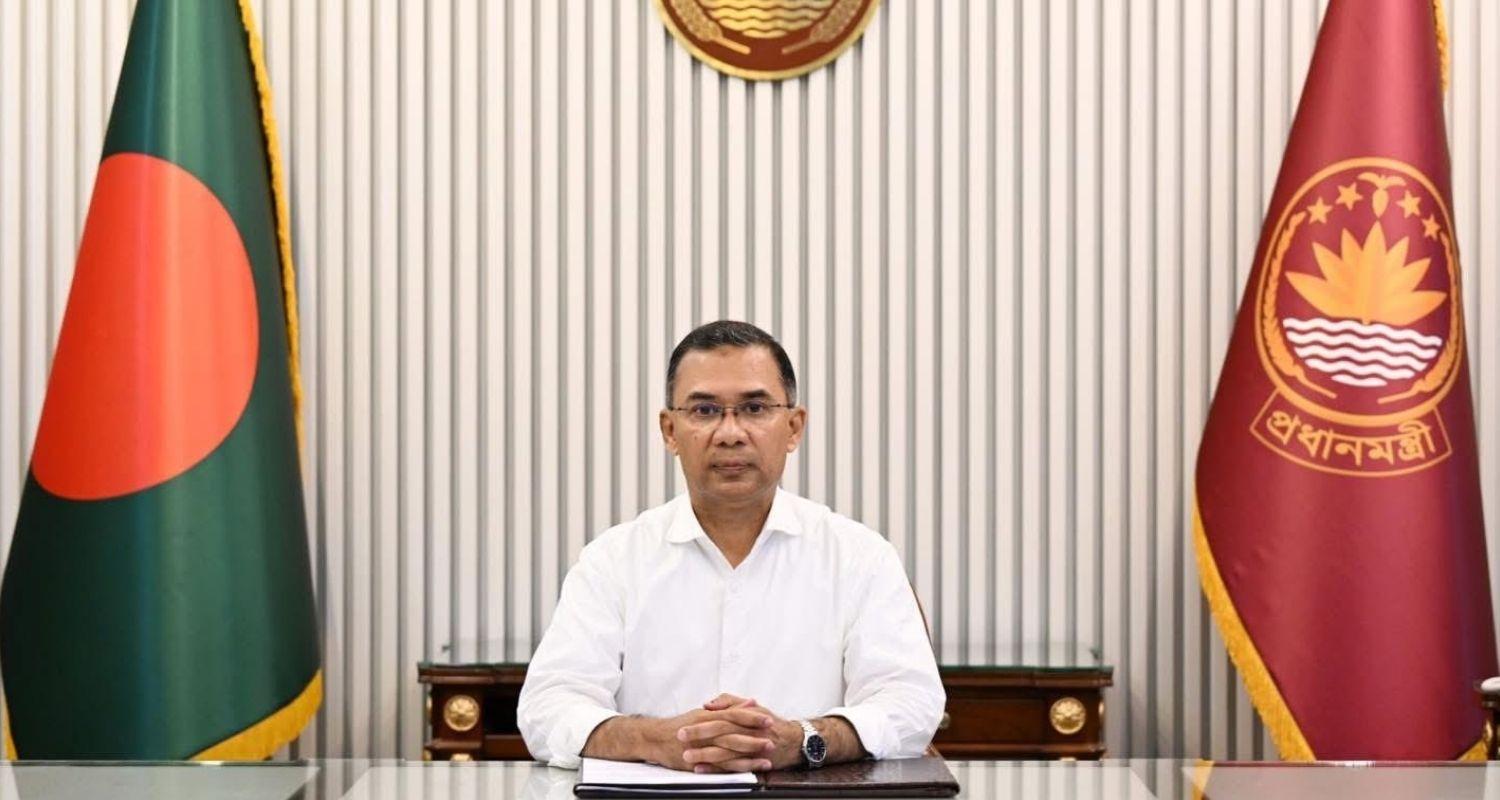
This, indeed, must be quite concerning for India. India’s problem is not which regime is formed in Bangladesh, whether that of the Awami League headed by Hasina or the Bangladesh Nationalist Party, now headed by Tarique Rahman, who recently took over as the Prime Minister of the country with a clear mandate.
There is a misplaced euphoria among certain quarters, which are celebrating and claiming that people of Bangladesh have “rejected” the radical Jamaat-e-Islami there. No, it has not been rejected. The party, for the first time in Bangladesh’s history won 68 of the 300 seats in the parliament. The party got 31.76 per cent vote share, which is phenomenal. This is a party, which had strongly and violently opposed the creation of Bangladesh and aligned with the Pakistan army in committing atrocities on Bangladeshi people.
The BNP, which won the elections, got 209 seats with vote share of about 50 per cent. This indicates that the Jamaat has reached within striking distance of victory in Bangladesh. Right now, the Jamaat may not be in a position to form the government on its own, but it is definitely in a position to destabilise any government in that country.
The 2024 mass uprising was conceived, planned and executed by Jamaat-e-Islami only. While it remained in the background, it projected the young students as the torchbearers of the movement. The protesters, who had formed the National Citizens Party to contest the elections, had aligned with the Jamaat and contested 30 seats. The NCP could win just six seats.
This is a phenomenal stride forward for the Jamaat, which faced severe backlash after the independence of the country. The Jamaat had openly supported the Pakistani army in its brutal and ruthless crackdown against the Bangladesh freedom movement. Several of its leaders were found guilty of war crimes and hanged to death. The last one to be hanged was its former ‘ameer’ (chief) Motiur Rahman Nizami, who was hanged in 2016, for the war crimes committed during Bangladesh's war of independence.
Sheikh Hasina, given her family’s contribution towards the independence of Bangladesh and subsequent killing of her entire family, including her father Sheikh Mujibur Rahman, had made her sworn enemy of the Jamaat to pay for its sins. During her regime she used all the resources to cleanse the country’s polity of the radical elements like the Jamaat. However, the Jamaat seems to be entrenched too deep to be uprooted by any regime now.
Also read: Bangladesh first: Rahman sets assertive India policy
From being a pariah and an outcast for stringently opposing the Bangladesh freedom struggle, to becoming the main opposition party within a span of 55 years is a significant achievement for the party, which has survived the initial mass hostility and government crackdown.
The party managed to capitalise on the deep hostility between the Awami League of Sheikh Hasina and the Bangladesh Nationalist Party (BNP) of late Begum Khaleda Zia. Since it had no chance to build any bridges with Hasina, it managed to win the goodwill of Begum Khaleda as it served her purpose well, eventually getting Hasina ousted not only from the government, but from the country also.
The newly appointed Prime Minister Tarique Rahman has spelt out his “liberal and secular” agenda that the country belongs to everyone. He has also tried to assure about 1.2 crore Hindus of the country about the safety and security. Hindus, since the deposition of Hasina have faced a lot of persecution and several community members have been killed just for their religion.
Jamaat on the other hand is pursuing the rabid and radical agenda which extremist Islamic parties follow everywhere across the globe. It has been propagating Sharia and has been issuing open threats to the minorities, mostly the Hindus. Since the extremist tendencies are rising in Bangladesh, as of now it looks highly unlikely that there can be any credible counter to the radical party.
Given the warm relations the BNP has had with the Jamaat in the past, it is quite unlikely that the newly elected Prime Minister will take any action against its leaders. Also, the two parties may be opposed to each other right now, one being in the government and the other in the opposition, but as long as they have a common enemy in Sheikh Hasina and her Awami League, BNP and the Jamaat are likely to have a workable understanding.
For India, the future course of relations with its eastern neighbour is clear. Reach out to and engage with the new leadership. Prime Minister Modi has already done so. He was the first to congratulate Tarique for his victory in the elections. When his mother Begum Khaleda Zia was seriously ill, before she passed away, Modi made a special offer for providing treatment in India. Tarique in return also invited Prime Minister Modi for the oath taking ceremony. Modi could not attend for his prescheduled engagements. The government of India was represented by Lok Sabha Speaker Om Birla at the oath taking ceremony.
Rise of Jamaat in Bangladesh poses two serious challenges for India. First, victimisation of the members of the Hindu community and second the Jamaat’s proximity with Pakistan. With such a large number of members in the parliament and with a large support base across the country, it is now in a position to influence the country's policy making, also, whether domestic or foreign.
Added to that is the fact that traditionally the BNP government in Bangladesh has not been as warm with India as the Awami League government.
But that necessarily does not mean that Prime Minister Tarique will not engage constructively with its western neighbour. India must accord top priority to engage with the new leadership in Bangladesh.

 Follow us