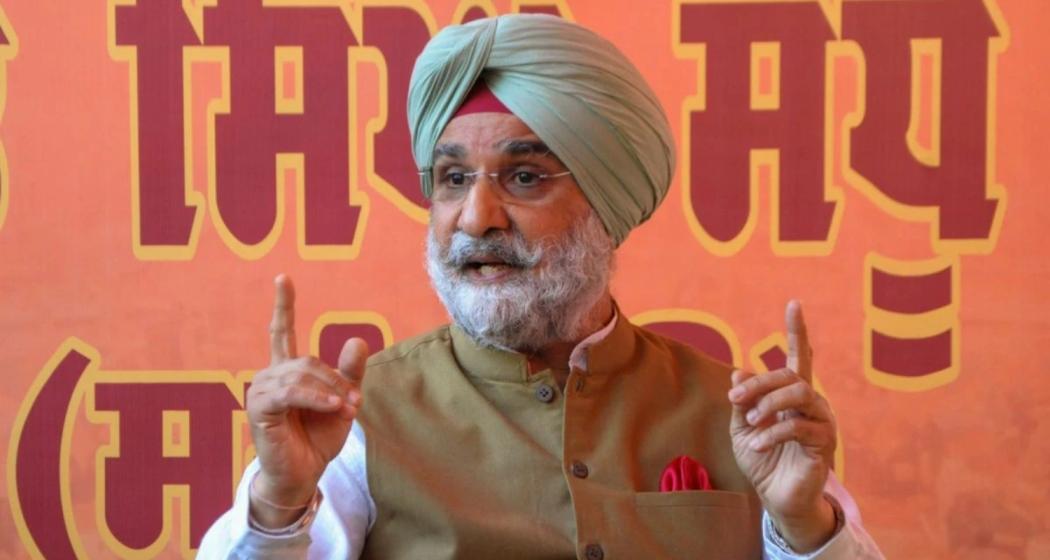
The appointment of former Indian Foreign Service officer and former ambassador to the United States Taranjit Singh Sandhu as the Lieutenant Governor of Delhi has been hailed as a major Sikh outreach gesture by the Bharatiya Janata Party. It certainly makes a good headline. But it does not serve any meaningful purpose for the BJP at the grassroots level in Punjab in general and among Sikhs in particular.
Sandhu indeed inherits a great panthic legacy, being the grandson of Teja Singh Samundri, one of the stalwarts of the panthic movement. That is the only asset he possesses, which may hardly yield any significant returns for the party.
Sandhu is unlike a politician who prefers to remain among the people. One of the major reasons for his defeat from Amritsar in the 2024 elections was his “bureaucratic inaccessibility” even during the campaign. Not many party workers know his phone number, and even local journalists who needed to interact with him often could not reach him. That is the way he works and perhaps the way career diplomats operate. Unlike civil servants or police officers, diplomats often remain detached from the common public. Sandhu’s new role also does not require him to interact with the public.
Hardeep Singh Puri is another prominent Sikh face in the BJP. A former diplomat who served at the United Nations, he may be performing well for the government as a minister and for the party at the national level. However, when it comes to grassroots connections in Punjab, he is no different from Sandhu. He may have individual connections in the state, but he does not command a significant mass base.
Another influential Sikh leader in the BJP is Iqbal Singh Lalpura. A former police officer from Punjab, he too lacks extensive grassroots engagement with party workers. His appointment to an important constitutional body creates a strong “photo-op” impact, but it does little to strengthen the party on the ground.
Similarly, Manjinder Singh Sirsa, one of the BJP’s most vocal Sikh leaders and currently a minister in the Delhi government, is not from Punjab. Though he has lived in Delhi for a long time, he hails from Sirsa in Haryana rather than Punjab. Yet he holds influence over the party’s decision-making process in Punjab.
The BJP has also made several prominent appointments from the Sikh community, such as Gurmit Singh, a retired lieutenant general serving as the Governor of Uttarakhand.
Also read: College in Lahore revives Sikh Kirtan 78 yrs after Partition
These are all powerful and influential positions that the BJP has offered to members of the Sikh community, clearly conveying a political message. The Sikh community is not unaware of this message. However, the BJP is ultimately a political party, and unless a political party receives proportionate political returns from such investments, these strategies may need review.
The BJP once had prominent Sikh faces like Navjot Singh Sidhu, who was sidelined because of the party’s alliance with the Shiromani Akali Dal and eventually left the party.
Harjit Singh Grewal remains among the party’s most prominent and senior Sikh leaders. He stood firm during the anti-farm law protests despite intimidation, even when tractors allegedly damaged his crops during demonstrations. Leaders like Grewal may have limitations compared to former bureaucrats and diplomats, but they maintain a stronger grassroots connection.
In recent years, several prominent Sikh leaders from other parties have also joined the BJP. Leaders like Manpreet Singh Badal and Rana Gurmeet Singh Sodhi come with distinguished electoral records, having won Assembly elections multiple times. Even Amarinder Singh, a two-time chief minister, remains a political asset, though he has maintained a low profile recently.
The BJP also rewarded Ravneet Singh Bittu, who narrowly lost the 2024 election from Ludhiana after joining the party, with a junior ministerial post at the Centre. However, he too is not widely regarded as accessible to the public. His inaccessibility is often cited as exemplary, as he is known for rarely taking phone calls.
The BJP is not a party lacking political craft. It is therefore surprising that a party so well organised and well informed — known for decisions taken with deep insight and foresight — could make such choices.
These positions offered to Sikh leaders are undoubtedly empowering. Yet the BJP does not appear to have made the wisest selections. Such empowerment may end up being merely symbolic, serving little purpose for the party in poll-bound Punjab.
These choices are arguably worse than fielding Sunny Deol from Gurdaspur in 2019. Though he won the election, the party effectively lost representation in the constituency as he rarely appeared either in Parliament or in the constituency itself. The BJP would likely have won Gurdaspur regardless, as it was still allied with the Shiromani Akali Dal at the time.
The BJP must set its priorities right in Punjab and make more strategic choices. Empowering individuals merely because they belong to a particular community will not serve the intended purpose unless they are connected to the grassroots and remain accessible to the people.

 Follow us