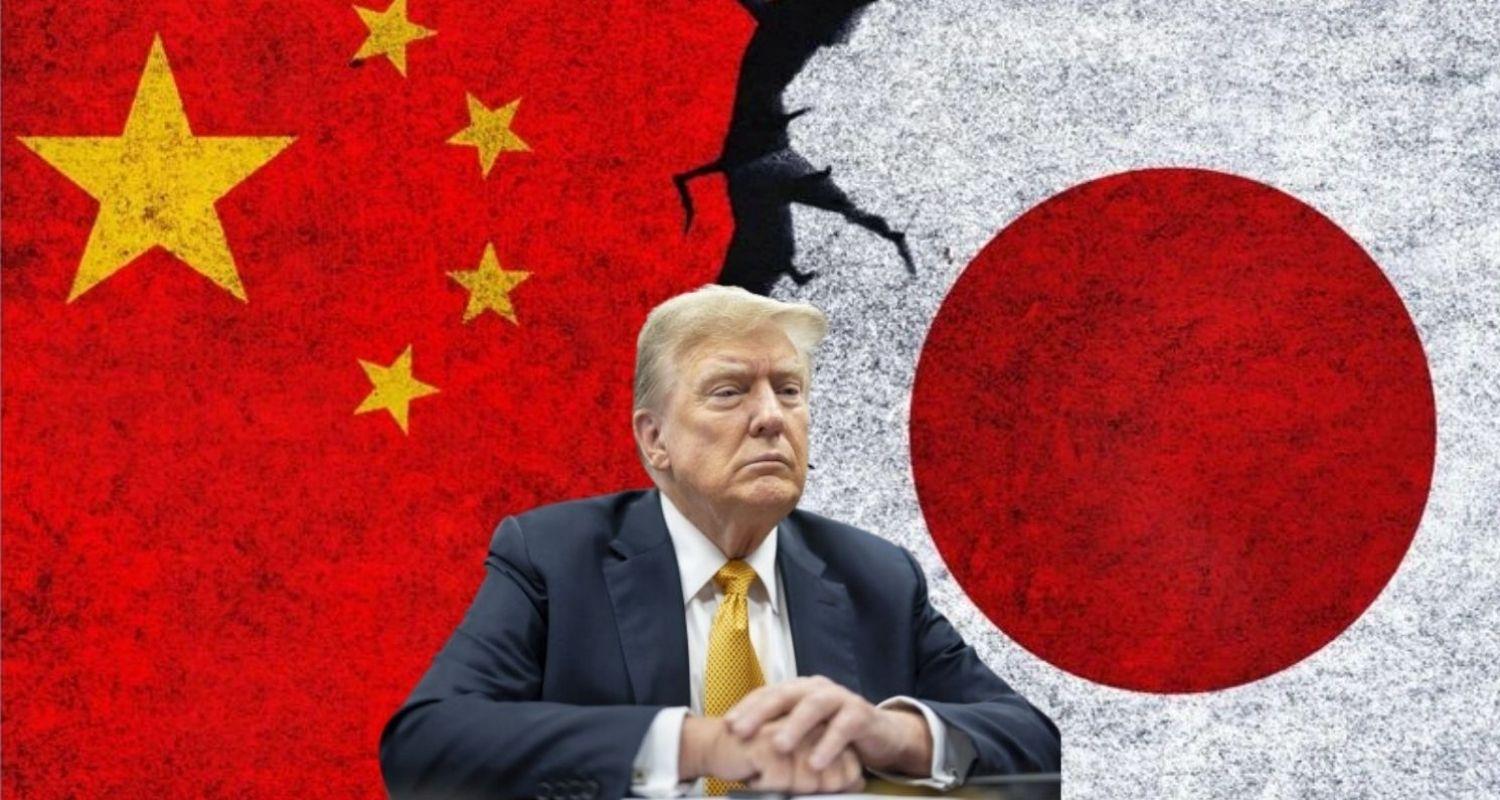
Japan and China sparring over Taiwan is more of a festering issue rather than a progressing one. However, what has been unfolding since a decade, recently restarted as a passing verbal spat, before snowballing into a full-blown diplomatic row in no time.
The latest trigger happened to be a question posed earlier this month to Japan’s PM Sanae Takaichi who suggested that a Chinese military attack on Taiwan could compel Japan to respond militarily. Without letting things slide, Beijing termed the comments as “interference in its internal matter.”
The situation deteriorated further when a Chinese diplomat in Osaka shared a veiled but now-deleted social media post interpreted as a threat to Takaichi. The post spoke about “filthy neck” being cut off if it inserted itself into China’s affairs.
In no time the repercussions took the usual route with China stepping up retaliation through a host of economic and diplomatic reprisals. Japan warned its citizens to stay safe in China, while China urged its citizens to avoid travelling to Japan. Chinese state media reported that some Chinese airlines have even offered refunds for flights to Japan. As both countries’ foreign ministries lodge serious protests with each other, China has stepped up the ante by halting seafood imports from Japan, cancelled concerts in China by Japanese artistes, and postponed films by Japanese actors. Beijing did not stop there. Four days after the comment from the Japan’s PM, three Chinese warships sailed past a Japanese island and four armed coastguard ships sailed close to Japan-administered islands north of Taiwan.
This will not be the first time with Japan at the receiving end of China’s economic wrath. In 2012, a territorial dispute over uninhabited islands made protesters in China attack Japanese businesses.
Animosity runs deep
The animosity between China and Japan touches the long-standing ambiguity over the sovereignty of self-governed Taiwan. Even though most Japanese leaders have managed circumventing such explicit statements for decades now, Sanae Takaichi’s stance in the Parliament reflects growing concerns in Tokyo about regional security and China’s aggression. Takaichi, a nationalist hardliner, has declined to retract her remarks and reasserted that her position aligns with “the government’s traditional position” on the issue. Reportedly, her approval ratings have shot up since the statement and public sentiment in Japan seems to support her position.
This is not the first time that Beijing has been touchy about Taiwan. China has long claimed the self-governed island as a part of its territory and has not ruled out the use of force—military or otherwise, to take Taiwan.
Also read: Will Russia and Ukraine finally choose peace?
Its position and stance have long unsettled Taipei and its regional allies. In 2021, then deputy prime minister Taro Aso had said in the event of an invasion, Japan would need to defend Taiwan alongside the US. Beijing did not let that slide either. Last month it accused Takaichi of violating the ‘one-China’ principle after she posted pictures of herself meeting a Taiwanese official.
Historically, Taiwan’s entity has been a victim of a few geopolitical developments and interpretative complexities. From 1895 to 1945 the island lived under Japanese occupation. After Japan was defeated in the Second World War, it became a separate administrative entity and today has a functioning parliament and democratically elected leaders.
Taiwan: The bone of contention
Trump has offered no public assurance to Taiwan and reportedly urged his Japanese ally to sober down. Experts opine that it is US’ strategic ambiguity that has partly piped things down. Although the US recognises ‘One China’ policy, Beijing often accuses it of reneging on it.
Diplomatically isolating Taiwan remains China’s strongest and most successful policy so far; insisting that countries can either have relations with Beijing or Taipei.
As a result, today only 12 countries (including the Vatican) officially recognise Taiwan. Since 2016, it has lost recognition of 10 countries. But Taiwan is relentless. In context of the latest row, Taiwanese president Lai Ching-te posted pictures of himself eating Japanese sourced sushi in what is being interpreted as his support for Japan in the bitter feud.
This month, the Taiwanese government announced a $40-billion supplementary budget in the face of a rising threat from China. Addressing reporters, President Lai Ching-te said the threat of annexation was “intensifying,” adding that the history is testimony to the fact that seeking compromise in the face of aggression leads to slavery.
Beijing has repeatedly rejected the Taiwanese president’s request for open dialogue as coming from a ‘separatist.’ What China forgets, however, is that the ‘elected separatist’ enjoys the backing of a majority of the 23 million Taiwanese. Hardly any of them back unification with China. What the US forgets is that if two of Asia’s biggest economies Japan and China get into a conflict—military or economic, it could play havoc with regional stability.

 Follow us