As a narrative is being built up to question the credibility and veracity of the recently concluded elections in Assam and West Bengal, one of the arguments being forwarded is that the sitting chief ministers and party leaders were deliberately made to lose to lend credibility to the final results.
Congress leader and party’s chief ministerial face in Assam Gaurav Gogoi, who lost from Jorhat assembly constituency by a huge margin of about 22,000 votes, claimed that it was a carefully crafted plan to get leaders like him defeated to make the party’s defeat look credible and genuine. Gogoi is third term Lok Sabha MP from the Jorhat parliamentary constituency, in which Jorhat assembly segment falls that he lost.
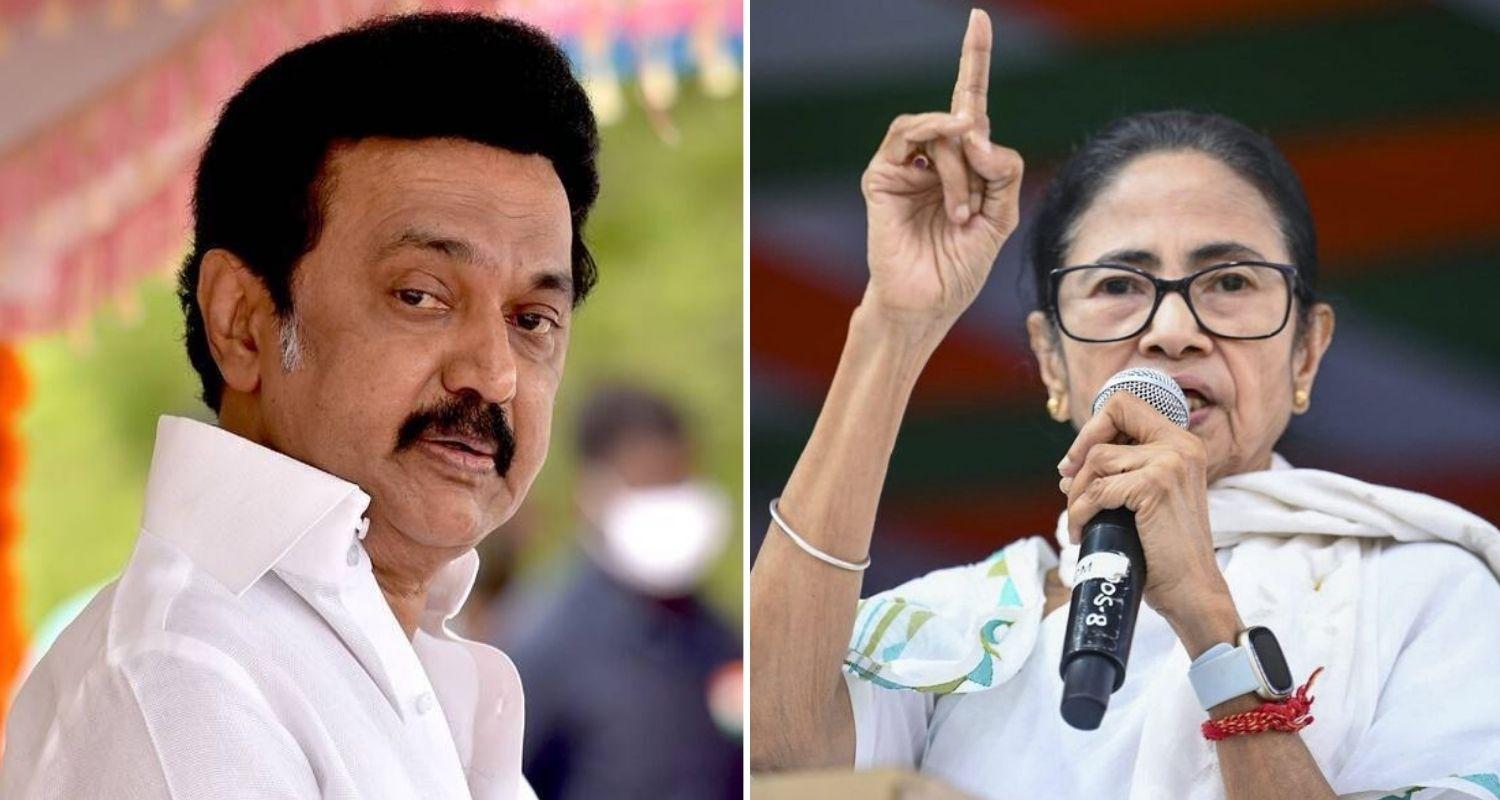
Two sitting chief ministers Mamata Banerjee and MK Stalin not only lost power, both of them lost from their respective constituencies of Bhabanipur in West Bengal and Kolathur in Tamil Nadu. Earlier, Arvind Kejriwal also lost from the New Delhi assembly segment in the assembly elections held in 2025, while the AAP was defeated in the national capital. Although Kejriwal at that time was not the chief minister as he had demitted office some months prior after being jailed, his example is often quoted along with Banerjee and Stalin to suggest that all of them were made to lose deliberately under a proper plan and pattern.
Special Intensive Revision (SIR) of electoral rolls is cited as the reason for their defeat. Even that argument is not correct. While votes were deleted from these constituencies, in Banerjee’s case, her losing margin was actually more than the actual number of votes deleted. This is nothing but part of the bigger game to discredit the Election Commission of India and the entire electoral process and question India’s electoral democratic credentials. India is the largest democracy in the world.
Also read: Politics of disillusionment: Bengal’s ‘change of change’
Actually it is not for the first time that a sitting chief minister has lost. But in those cases the sitting chief ministers were not unseated by the BJP candidates. From the opposition parties’ argument, it is obvious that they believe wherever the BJP has won, it has won fraudulently. In Stalin’s case, it is being argued that he was one of the vocal critics of the BJP at the Centre, hence he was also made to lose the election to a TVK candidate.
In 2022 Punjab assembly elections, sitting chief minister Charanjit Singh Channi lost in both the assembly segments he was contesting from. Three other former chief ministers lost too, including Capt Amarinder Singh, who had demitted office just six months before the elections. Amarinder lost from his family borough of Patiala, which was the seat of the power of his family’s famed Patiala state for over a century.
Parkash Singh Badal, five-time chief minister of Punjab, and a towering political personality respected across the country, lost in the same elections from his long-nourished constituency of Lambi. Another former Punjab chief minister Rajinder Kaur Bhattal lost from Lehragaga.
All of them lost to AAP candidates, who were all first timers. The AAP won a sweeping mandate winning 92 of the 117 assembly segments. While in case of West Bengal, anti-incumbency was visible everywhere; in Punjab that time no anti-incumbency was felt on the ground. Yet there was no question or cry about chief minister or former chief ministers getting defeated under a design.
In 2013 Delhi assembly elections, Kejriwal defeated Sheila Dixit, a three-time chief minister credited with massive development in the national capital like bringing metro trains and building flyovers and elevated roads, by a margin of over 25,000 votes. Nobody that time questioned the credibility of the election as to how Dixit became so unpopular within no time. The AAP had been formed that year itself.
The opposition parties will do well by introspecting and identifying their own failures and shortcomings instead of blaming the BJP’s machinations to win the elections. It is a classic case of an unskilled mechanic fighting with his tools.
Also read: Epic, emphatic, epochal: BJP’s victory in Bengal
Parallels are being drawn about the BJP winning in West Bengal with Sheikh Hasina earlier winning in Bangladesh. There was a massive uprising against her government, which eventually led to her deposition and flight from the country. May be Hasina rigged the elections to stay in power, but drawing comparisons with West Bengal is provocative and unacceptable.
Indian elections are held in the most transparent manner in full view of the global media glare. Moreover, the results in three of the four states, except Tamil Nadu, were quite expected. Mamata’s defeat was written on the wall. Even Rahul Gandhi, who is now alleging that the Bengal election was stolen by the BJP, accused her government during the election campaign of being corrupt and leading to polarisation.
Thankfully, it is impossible to hide anything in India today. A section of the legacy media may be pro-establishment, but the vast social media in India is free. It takes just a few minutes for any incident to spread across the virtual universe.
That is the reason the opposition propaganda against the established institutions is not finding any resonance anywhere. People do not take anything on face value, particularly when they have alternate means and modes to cross check and verify.
During the SIR of the electoral rolls, 92 lakh votes were deleted in West Bengal. Of these, about 64 lakh did not exist. Most of them were dead or had shifted from the addresses mentioned. Of the remaining 28 lakh, only about 2 lakh voters challenged their deletion.
Of the 294 assembly segments, in 49 the number of votes deleted was more than the victory margin. Of these, the BJP won 26 seats, the TMC won 21 and the Congress won two. Even if the BJP had lost these 26 seats, it would still have 181 seats.
Nothing supports a credible case to question the election's legitimacy, despite what opposition parties claim, not even the theory that chief ministers were made to lose intentionally.

 Follow us