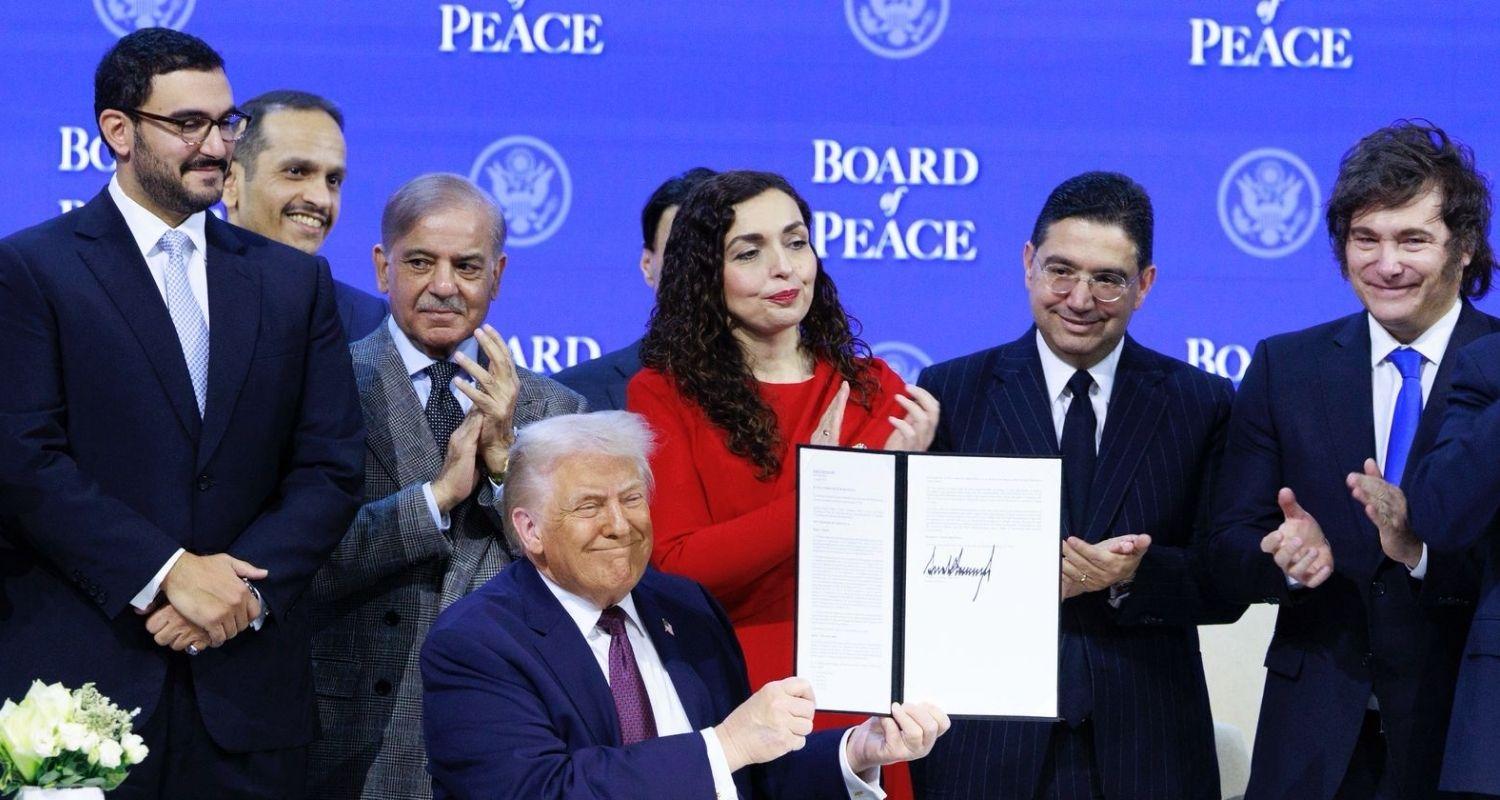
The Board of Peace (BoP) is best understood not as a genuine multilateral initiative, but as a quasi-international body personally engineered by US President Donald Trump. While the United States initially sought UN backing for post-war plans in Gaza, the BoP’s final structure was unilaterally altered, hollowing out any claim to collective legitimacy.
Crucially, the Board does not even explicitly mention Gaza, the very crisis it claims to address.
This is not a small omission. Gaza was the moral and political justification for the initiative. Removing it from the formal mandate points toward a shift from humanitarian responsibility.
Organisationally, the BoP departs sharply from accepted international norms. Trump has appointed himself chairman, while the executive board reportedly includes family members and close associates. More troubling is who is not represented: there is no Palestinian political leadership on the Board.
At best, a handful of Palestinian “technical experts” are included without any democratic mandate, and without recognition of the Palestinian people’s right to decide their own future.
Perhaps the most disturbing inclusion is that of Prime Minister of Israel Benjamin Netanyahu, even as he faces serious allegations of committing acts of genocide.
A peace forum that sidelines the victims while offering a seat at the table to those accused of grave crimes sends a clear message that ‘power speaks louder than justice’.
Trump has defended the Board of Peace as an alternative to the United Nations, arguing that the UN is fractured, slow and ineffective. Many would agree that the UN has its flaws, but frustration with multilateralism does not justify abandoning it altogether.
Creating a parallel international structure based on personal authority is not reform, it is replacement by force of influence.
Also read: Well done, India!
This move also fits a broader pattern. The US withdrawal from the World Health Organisation weakened global public health coordination. His great ‘MAGA’ ambitions now seem to undermine public health as well. Additionally, his disregard for the Paris Agreement which jeopardises collective climate action. In each case, institutions were dismissed as unfair or inconvenient.
Well, the Board of Peace follows the same logic; when global rules limit power, build a new table and decide who gets a seat.
For Palestine, this is more than bad diplomacy, it is a betrayal of the very principles meant to protect stateless and occupied people. Decisions about governance, security and reconstruction are being shifted away from international law into a US-controlled forum where accountability at its helm remains absolutely vague.
This brings us to India now, which was among the 22 countries invited to join the Board of Peace, yet New Delhi chose not to attend the launch. That hesitation was not diplomatic indifference, it was prudence.
One immediate red flag is that Pakistan has already joined the Board, complicating India’s strategic position in a forum shaped largely by US preferences.
India, with its diplomatic tradition rooted in strategic autonomy, non-alignment and respect for international law, has little to gain from joining such an ad-hoc and personalised initiative.
A board tied so closely to one political figure’s authority and preferences, lacks durability and credibility. It could easily lose relevance once Trump exists the political stage.
Importantly, staying out does not mean disengagement. India has consistently supported Palestine through humanitarian aid, medical assistance, engagement with the United Nations Relief and Works Agency for Palestine Refugees in the Near East (UNRWA), and quiet diplomacy via its office in Ramallah.
India has previously resisted the US-led unilateral ventures. In 2003, the Vajpayee government declined Washington’s request to send Indian troops to Iraq, reaffirming that peacekeeping must be conducted only under the UN framework.
Supporting Trump’s Board of Peace would weaken India’s moral standing. Rather than endorsing it, New Delhi should press for its integration into the UN Department of Peace Operations ensuring a multilateral oversight, and accountability, in which Gaza is included.
By Shyna Gupta

 Follow us