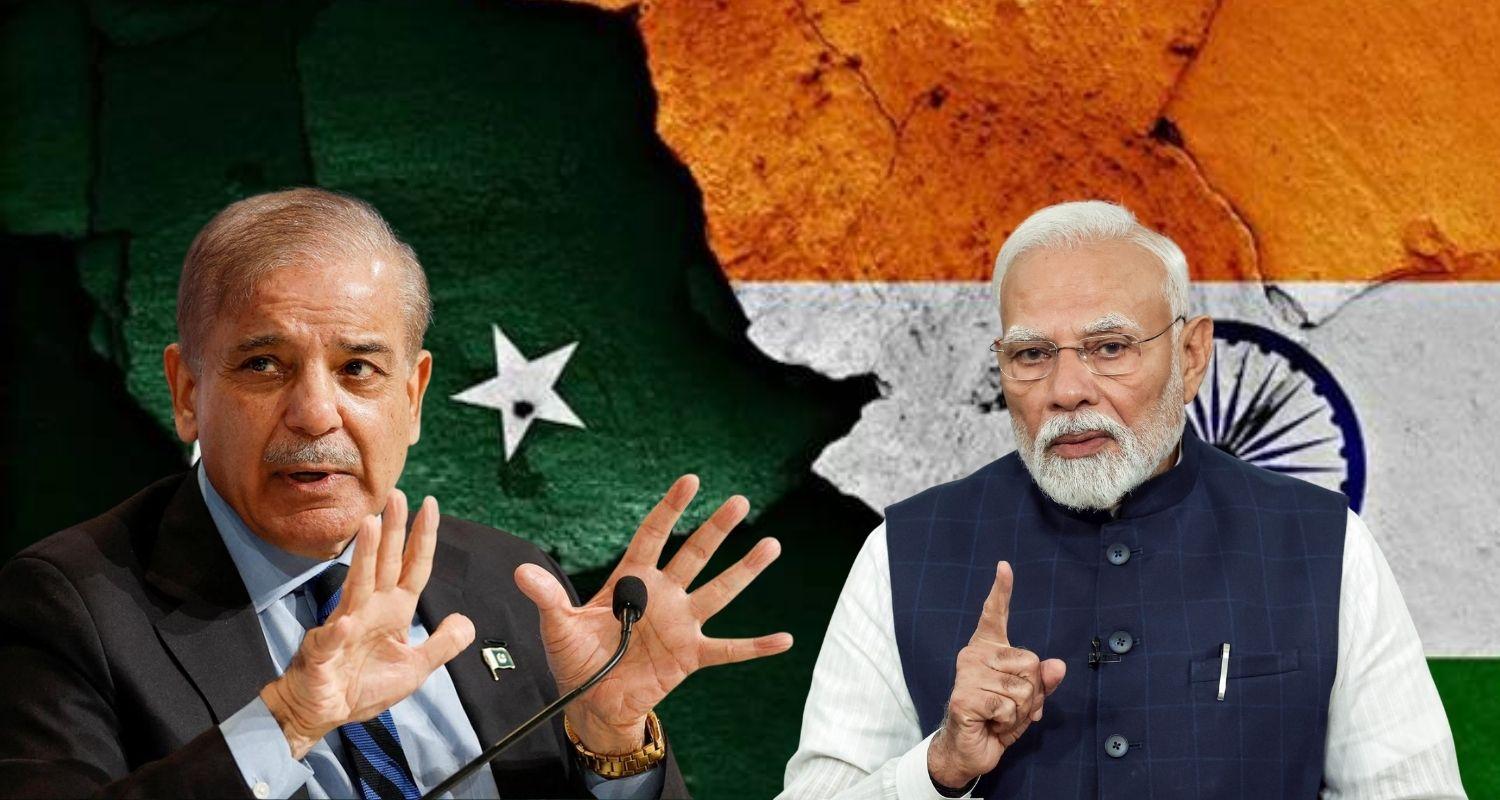
While the geographical location places India right next to Pakistan, the geopolitical equation drags India right in the middle of Afghanistan and Pakistan—former allies and now warring nations. Since the beginning of its operation, Pakistan claims to have hit 46 locations across Afghanistan and killed 415 Afghan soldiers in retaliation for the recent rebel attacks on Pakistan soil. Meanwhile, the spokesperson from Afghanistan claims more than 80 Pakistani soldiers have been killed and 27 military posts captured. The figures remain hotly contested and unverifiable, but what has India got to do with it all?
Should India be wary or worried?
What should have been a purely bilateral development, has concerned India in ways more than just the obvious few. Last year, in October after negotiations between Pakistan and Afghanistan hit a wall after deadly border clashes, Pakistan’s Defence Minister Khwaja Asif dragged a third nation that was neither present, nor a party to any of the failed talks on ceasefire—India.
In a televised interview, Asif claimed that India had “penetrated” Afghan Taliban leadership and alleged that to be the reason for deteriorating relationship between Pakistan and Afghanistan. “People in Kabul pulling the strings and staging a puppet show are being controlled by Delhi. India wants to engage in a low-intensity war with Pakistan. To achieve this, they are using Kabul.”
It wasn’t the only statement targeting India’s intentions and alleging its role in the escalated tensions between the two. A few days prior to this, as Kabul and Islamabad clashed at the border, the defence minister, while resting the other half of the blame on Taliban, said it was “sitting in India’s lap.” The Taliban leadership and also New Delhi were quick to dismiss the comments; however, they portray a constant and deep unease of Pakistan with relations between Kabul and New Delhi.
India has strongly condemned Pakistan’s Operation Ghazab lil-Haq inside Afghanistan, calling it an attempt to distract from its domestic shortcomings and upheavals, while reiterating support for Kabul. In a statement, New Delhi said it “strongly condemns Pakistan’s airstrikes on Afghan territory that have resulted in civilian casualties, including women and children, during the holy month of Ramadan.”
US President Donald Trump sided with Pakistan and in response to a question whether he would intervene, he said, “Well, I would, but I get along with Pakistan, as you know, very well—very, very well.”
Also read: Unease in Pakistan over India’s tilt towards US-Israel
UN Secretary General Antonio Guterres has called for an immediate ceasefire. Rejecting the accusation that India had any role in the crisis, Afghanistan also denied any responsibility in TTP’s attacks on Pakistani soil.
The timeline of accusations has almost always coincided with solidarity between New Delhi and Kabul. Last year, when an earthquake of magnitude 6.3 struck Afghanistan, one of the first countries to reach out was India. Furthermore, the six-day visit by Afghan Foreign Minister Amir Khan Muttaqi to India last year and a joint statement condemning regional terrorism caused a deep unease in Islamabad. A day later, Pakistan summoned the Afghan ambassador to convey its “strong reservations” over the joint statement.
Should India be smug or alert?
A diplomatically-sidelined and distracted Pakistan may translate to immediate or even short-term relief on the border but an unstable Afghanistan does not bode well. Threats to Indian development projects, disruptions in connectivity to Central Asia and not the very least, Pakistan’s narrative of India’s interference in the equation carry the potential of costing India dearly. Islamabad’s frustration is understandable—stemming from losing its leverage over the Taliban, current security blows and future threats.
At one point in time, Pakistan was one of the only three countries, together with Saudi Arabia and the UAE to recognise the Taliban administration. What has been called a seismic shift in relations, in 2001 India supported the US-led invasion of Afghanistan. Even until 2021 when the Taliban returned to power, India closed its embassy in Afghanistan. A year later things began to turn around as relations between Pakistan and the Taliban soured over armed groups which Pakistan accused Afghanistan of harbouring.
It is a consistent but steep overturning of political equations that makes political analysts wary of the Pak-Afghan duo. Last November, a day after the bomb blast in Islamabad, Pakistan was once again quick to blame New Delhi. This year, in the beginning of February, at least 32 people were killed and more than 160 injured in an explosion at a mosque during Friday prayers. Even before the claim by IS, Pakistan’s Defence Minister Khawaja Asif wasted no time in suggesting India and Afghanistan were behind the attack, even going so far as to post on social media that it had been “proven” the attacker travelled from Afghanistan and how a “collusion between India and Afghanistan is being revealed.”
Is it any surprise that Islamabad is pointing fingers at New Delhi even while simultaneously launching airstrikes in Afghanistan?
By Manpriya Singh

 Follow us