
Trending:
Political bonhomie yields rich dividends for Andhra
Despite the financial crunch, Naidu, a four-time Chief Minister who had weathered many a political storm in the past, has been largely successful in striking a balance between welfare and development and mobilising resources to fulfil poll promises and fund the ambitious projects that are integral to his Vision-2047. Follow us
News Arena Network - Chandigarh - UPDATED: January 4, 2026, 02:13 PM - 2 min read
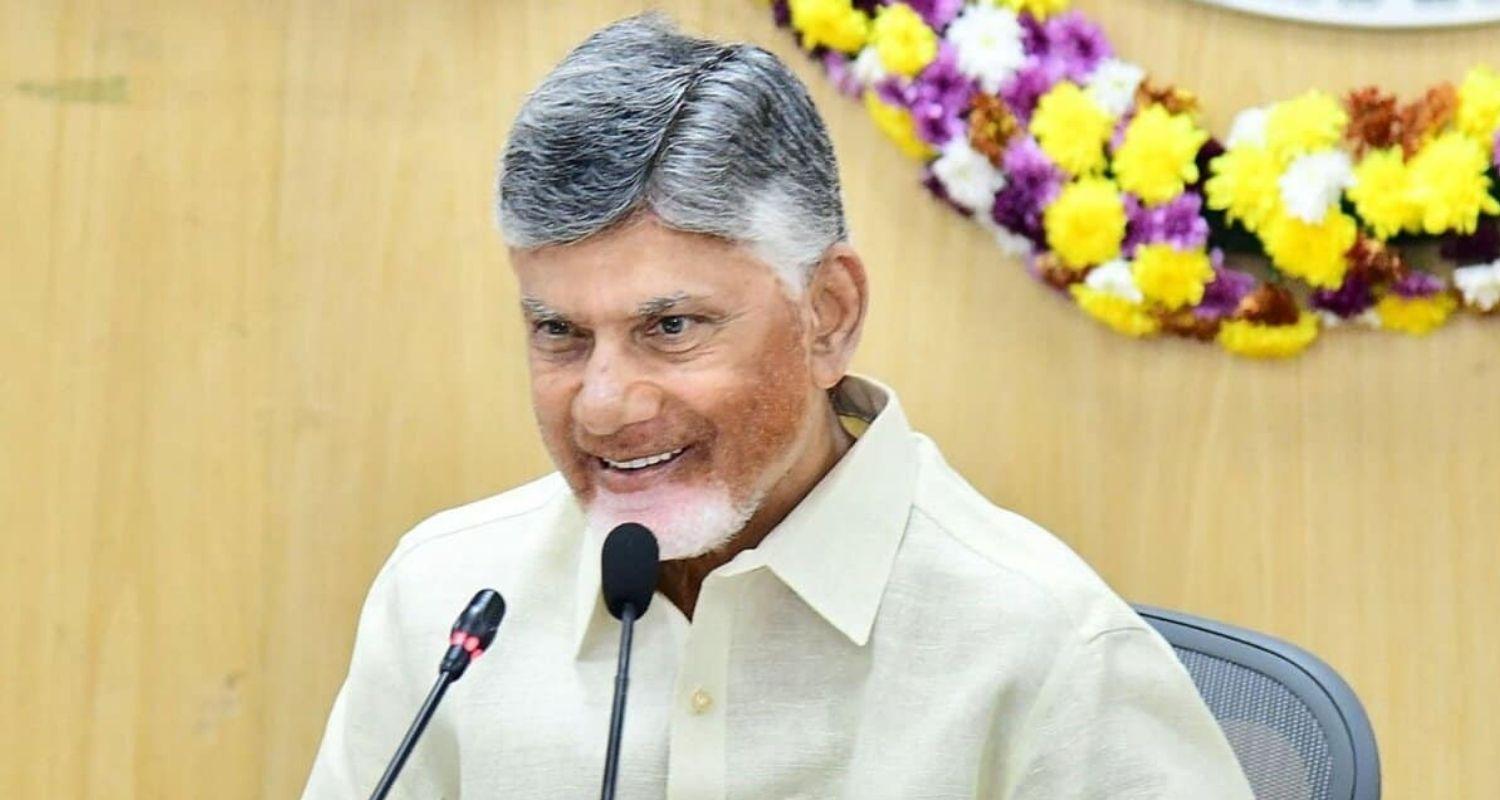
Chief Minister of Andhra Pradesh N Chandrababu Naidu. File photo.
The revival of Amaravati, the dream capital project of Chief Minister N Chandrababu Naidu, was the single most important achievement for the NDA government in Andhra Pradesh in the year just gone by.
Being a crucial constituent of the NDA has proved beneficial for the ruling Telugu Desam Party, led by Naidu whose reformist and pro-industry image has also helped revive investor confidence in the state. The ‘investor-friendly’ image, focused approach on governance and fiscal reforms and tough anti-corruption measures are Naidu’s major strengths.
Despite the financial crunch, Naidu, a four-time Chief Minister who had weathered many a political storm in the past, has been largely successful in striking a balance between welfare and development and mobilising resources to fulfil poll promises and fund the ambitious projects that are integral to his Vision-2047.
Realising the capital dream
Prime Minister Narendra Modi re-launching the works on Amaravati, the ultra-modern capital city in Vijayawada-Guntur region, in May 2025 sent out a strong political message. A brainchild of Naidu, the river-front capital project was abandoned by his bête noir YS Jagan Mohan Reddy who was at the helm from 2019 to 2024.
Soon after coming to power in June 2024, Naidu has been relentlessly working on reviving his dream project and has also secured loans from the World Bank and other financial institutions. He also has solid backing from the Centre in executing the ambitious project.
Phase I of Amaravati, comprising 92 projects, is estimated to cost Rs 64,910 crore. This includes infrastructure, housing, government buildings, and 19 iconic structures such as the Assembly building, a signature bridge, an NTR statue, a riverfront road along the Krishna, and major highway linkages.
In a further boost, the Union Home Ministry recently approved a legislation seeking to declare Amaravati as the only capital city of Andhra Pradesh with effect from June 2, 2024, thereby providing a statutory status to the capital.
Union Home Minister Amit Shah had conveyed to the state government that legal safeguards would be provided to the state capital with effect from June 2, 2024.
Institutional funding
At the beginning of the year, the World Bank released US$ 207 million, nearly half of which has already been utilised for capital works, while another US$ 200 million tranche is expected shortly.
In addition, Germany’s KfW Bank agreed to extend a Rs 5,000-crore loan, HUDCO sanctioned RS 11,000 crore, and the Centre provided Rs 1,560 crore in grants. Naidu set a three-year deadline to complete major government infrastructure projects.
As part of his expanded vision for Amaravati, the Chief Minister initiated the second phase of the Land Pooling Scheme (LPS), targeting 16,666 acres across seven villages, to supplement the existing 54,000 acres already pooled.
Completing Amaravati is also central to Naidu’s Quantum Vision, which seeks to position the capital as a global innovation hub. A key component of this plan is the proposed Quantum Valley, envisioned as one of the world’s top five quantum computing ecosystems.
Meanwhile, the government has set a target of completing the ongoing construction of key government complexes—including the high court, secretariat buildings, and residential complexes for ministers, MLAs, MLCs, All India Services officers and staff—within a two-year timeframe.
Once these projects are completed, the city would offer a conducive environment for people to move in and establish residences.
Fast-tracking Polvaram irrigation project, considered the lifeline of AP, is also credited to Naidu’s pro-active approach and a friendly dispensation at the Centre.
Centre’s helping hand
Being a key alliance partner of the NDA 2.0, Naidu made every effort to get maximum benefits from the Centre using his clout. On January 8, Prime Minister Narendra Modi visited Visakhapatnam and launched development projects worth Rs 2 lakh crore, including India’s first Green Hydrogen Hub at Pudimadaka.
Within a week, on January 17, the Centre announced a Rs 11,440-crore bailout package for the crisis-hit Visakhapatnam Steel Plant—a project with deep emotional significance for the people of Andhra Pradesh.
The move highlighted the Centre’s willingness to go the extra mile to support its regional ally.
Also read: Karnataka poses serious challenge to Congress leadership
AP has secured significant central support, including over Rs 50,000 crore (4 percent of Andhra’s GDP) in the 2024-25 Union Budget, with Rs 15,000 crore for Amaravati and funding for Polavaram.
The Naidu government also moved with speed to attract industrial giants to the state, with support from the Centre.
This year, ArcelorMittal Nippon Steel got the government nod for establishing India’s largest greenfield steel plant in Anakapalli and the Centre approved transport of iron ore from Bailadila mines.
But the biggest achievement for the Naidu government was to attract US$ 15-billion AI Google data centre investment in Visakhapatnam, besides investment pledges exceeding ₹13 lakh crore at the CII Partnership Summit, and the inauguration of Ratan Tata Innovation Hubs (RTIHs).
Together, these reinforced Naidu’s push to transform Andhra Pradesh into a hub for futuristic technologies, green energy and innovation.
The NDA government also obliged Naidu’s recommendation for appointing veteran TDP leader P Ashok Gajapathi Raju as the governor of Goa and another senior leader Kanakamedala Ravindra Kumar as additional solicitor general.
The Prime Minister’s participation in the International Yoga Day at Visakhapatnam was yet another instance of growing influence of Naidu in the Central coalition.
Poll promises
During 2025, the coalition government fulfilled a significant portion of its election promises, with the “Super Six” schemes emerging as flagship initiatives.
Under Talliki Vandanam, Rs 10,090 crore was directly credited to mothers’ accounts, benefiting 6.72 million students.
The Stree Shakti free bus travel scheme, launched on August 15, recorded 32.5 million journeys at a cost of Rs 1,144 crore and was later extended to persons with disabilities.
Farmer welfare remained a priority, with Rs 6,310 crore credited to 4.6 million farmers under Annadata Sukhibhava.
Through Deepam-2, women received three free LPG cylinders annually, involving an expenditure of Rs 2,684 crore and the distribution of nearly two crore cylinders. Social security pension disbursements crossed a historic Rs 50,000 crore, while Rs 250 crore was released under Matsyakara Bharosa to benefit 125,000 fishermen.
Additional welfare initiatives included assistance to auto drivers, honorariums for pastors, imams and muezzins, enhanced salaries for priests and Nayee Brahmins, and a monthly honorarium for junior lawyers.
The revival of Anna Canteens, with 204 canteens reopening, resulted in over 40 million meals being served.
On employment, the government took steps towards its promise of creating 2 million jobs, conducting a mega recruitment drive of 15,491 teachers, completing the recruitment of 5,757 police constables, enhancing stipends for trainee constables, and extending gratuity benefits to Anganwadi workers and ASHAs.
Partnership summit
The CII Partnership Summit alone resulted in 610 MoUs, with investment commitments worth Rs 13.25 lakh crore, carrying the potential to generate over 1.6 million jobs.
However, some promises remain only partially fulfilled. While Talliki Vandanam and Annadata Sukhibhava were implemented, complaints surfaced over pruning of beneficiary lists.
Key poll promises—such as Rs 3,000 monthly unemployment allowance and “Ada Bidda Nidhi” ( Rs 1,500 per month for women aged 19-59)—are yet to be rolled out.
The TDP in 2025 focused heavily on reconnecting with grassroots workers, offering direct access to Naidu and young leader Nara Lokesh. The party’s core strength lay in its leadership synergy—a father-son duo combining experience and new-age energy.
While expectations were high for Lokesh’s elevation as TDP working president at the Mahanadu conclave in May, Naidu adopted a cautious approach.
To address dissatisfaction among leaders overlooked for nominated posts, the TDP moved swiftly to fill organisational roles from the village to the state level, with a clear eye on replicating its 2024 electoral success in 2029.
