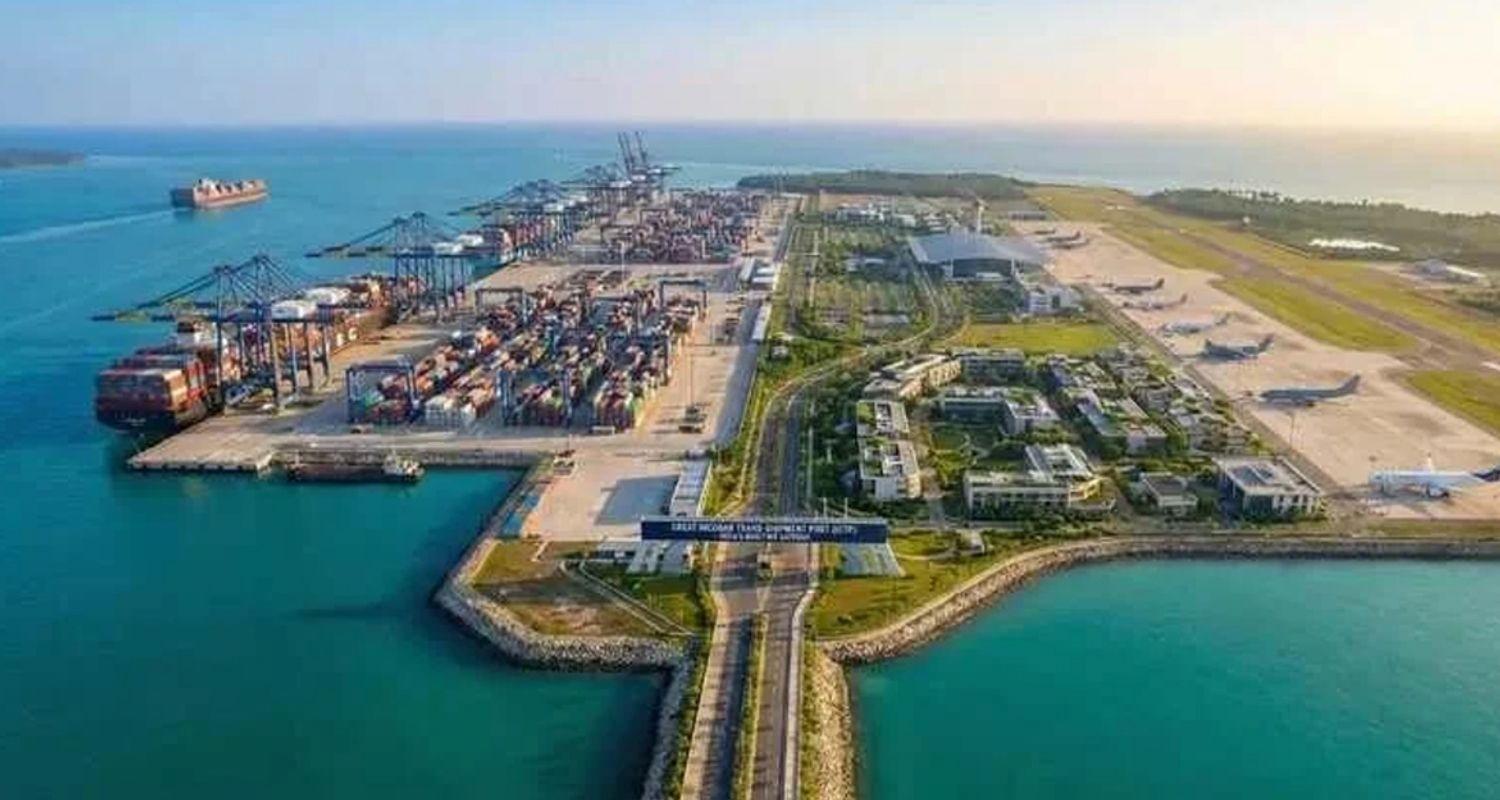
Alarmist rhetoric, packaged as environmental activism, often results in obstructing ambitious projects in India. In the lexicon of political correctness, big projects are equated with ecological disasters and doomsday fears are routinely invoked to stall them.
Unfortunately, even those projects that involve national security are held hostage to the unfounded fears fuelled by environmental activism.
The Great Nicobar Island Project (GNIP), a mega infrastructure and strategic connectivity initiative, is the latest to be caught in the row. However, we must acknowledge the fact that the Rs 90,000 crore GNIP is not merely an infrastructure initiative. It is India’s declaration that it intends to be a consequential power in the maritime century, not just a spectator to it.
Decisive strategic move
Great Nicobar Island, India’s southernmost territory, lies at the precise intersection of the East-West maritime highway, the Six Degree Channel, and the Bay of Bengal. It is about 45 km from the Six Degree Channel, which connects the Malacca Strait with routes leading towards Africa, the Middle East and Europe. Every year, more than one lakh merchant ships pass through the Malacca Strait-Six Degree Channel route carrying roughly 30 per cent of global trade and 80 per cent of China’s crude oil imports.
For decades, India sat on this geographical jackpot and did almost nothing. Things would now change with the implementation of the Great Nicobar project, encompassing an International Container Transhipment Port (ICTP) at Galathea Bay, a greenfield international airport with a naval air station, a 450 MVA gas-and-solar power plant, and a modern township.
Environmental groups have raised concerns over threat to indigenous tribal communities, forest cover and biodiversity.
These concerns deserve honest engagement. But they must be weighed against the geostrategic realities of an Indo-Pacific in transformation—and against the staggering cost of continued inaction.
Role in global maritime economy
At the core of the debate lies an essential national security intervention aimed at securing Indian interests in the evolving geopolitical architecture in the Indo-Pacific.
The project is of extraordinary strategic, defence, and national importance because the area is seen as a vital location to counter the growing presence of foreign powers in the Indian Ocean.
By establishing a major cargo transshipment hub, India can participate more fully in the global maritime economy and save significant costs on cargo that is currently transshipped through foreign ports. A permanent, robust presence on the island is expected to curb the poaching of marine resources by foreign entities.
In the light of conflict in the Strait of Hormuz, disrupting the global oil supply route, India is one of many countries that are looking to secure their own supply lines. The Great Nicobar project is a great opportunity to do that because it sits along such a major international shipping route.
At present, nearly 75 per cent of India's maritime cargo is handled at ports outside India. With a new project, Indian ports can save at least $230 million each year on transshipment cargo and grab a share of the regional goods traffic.
NGT clearance
In February this year, a six-member bench of the National Green Tribunal (NGT) gave clearance to the project. It is a clear vindication of the strategic importance of the initiative.
The NGT has concluded that all environmental safeguards are in place. The project requires diverting 130.75 square kilometres of forest land—roughly 18 per cent of the total area of the Great Nicobar Island. It is projected to generate over 1.28 lakh jobs by the time it is fully implemented in 2052.
Also read: Centre clears ₹13,000-crore Great Nicobar Airport Project
The NGT noted that the Expert Appraisal Committee (EAC), which advises the Centre on environmental clearances, found the project is designed not to disturb or displace any tribal habitation.
The tribunal stated that the habitat rights of the tribes would be protected under the Forest Rights Act. The tribunal upheld the environmental clearance, adopting a “balanced approach” that weighed environmental safeguards against national security.
The NGT ruled that while the Environment Impact Assessment (EIA) procedures were mandatory, they should not be used to adopt a “hyper-technical approach” that ignores ground realities and national security. It accepted the Zoological Survey of India’s (ZSI) finding that no major coral reef exists in the direct work area of Galathea Bay, only “scattered” colonies. It ruled that translocation would effectively protect the colonies.
Besides, a dedicated conservation package worth Rs 2,220 crore over 30 years has been planned to protect wildlife, including leatherback turtles, Nicobar megapodes and crocodiles, as well as coral reefs and mangrove ecosystems.
Enhancing national security
The project is designed to enhance India’s national security, strategic and defence presence, strengthen the islands’ economic position, and accelerate holistic development in the region.
In the past few decades, China has steadily built a network of ports and logistics nodes across the Indian Ocean from Gwadar in Pakistan to Hambantota in Sri Lanka, Kyaukpyu in Myanmar and an overseas military base in Djibouti. This network represents China’s “String of Pearls” strategy, an effort to protect vital energy sea lines and expand its geopolitical influence in the Indian Ocean Region.
While these projects are formally presented as commercial infrastructure under the Belt and Road Initiative (BRI), many carry clear dual-use potential, enabling logistical support for naval deployments when required.
For India, China’s expanding footprint in Myanmar is particularly consequential. Chinese presence on Myanmar’s Great Coco Islands, only about 55 km away from the Andaman and Nicobar Islands, has also increased. There has been airstrip expansion, construction of hangars and installation of communication towers. Considering the proximity to India’s most critical maritime command, even modest infrastructure on these islands can translate into a significant advantage in surveillance, extending strategic reach across the Bay of Bengal.
Maritime India Vision 2030
The Great Nicobar project is the eastern pillar of India’s Maritime India Vision 2030 and the Sagarmala programme. Under Sagarmala, 839 projects worth $70 billion have been identified; 272 worth $17 billion are already complete. The Great Nicobar port is the crown jewel of this architecture—the facility that transforms India from a passive participant in Indo-Pacific commerce to a commanding hub of it.

 Follow us