
Trending:
Sudan's brutal war grinds on
Sudan’s brutal civil war has killed over 150,000 people, split the country between rival forces and displaced millions, leaving civilians trapped in one of the world’s worst conflicts. Follow us
News Arena Network - Chandigarh - UPDATED: December 26, 2025, 06:27 PM - 2 min read
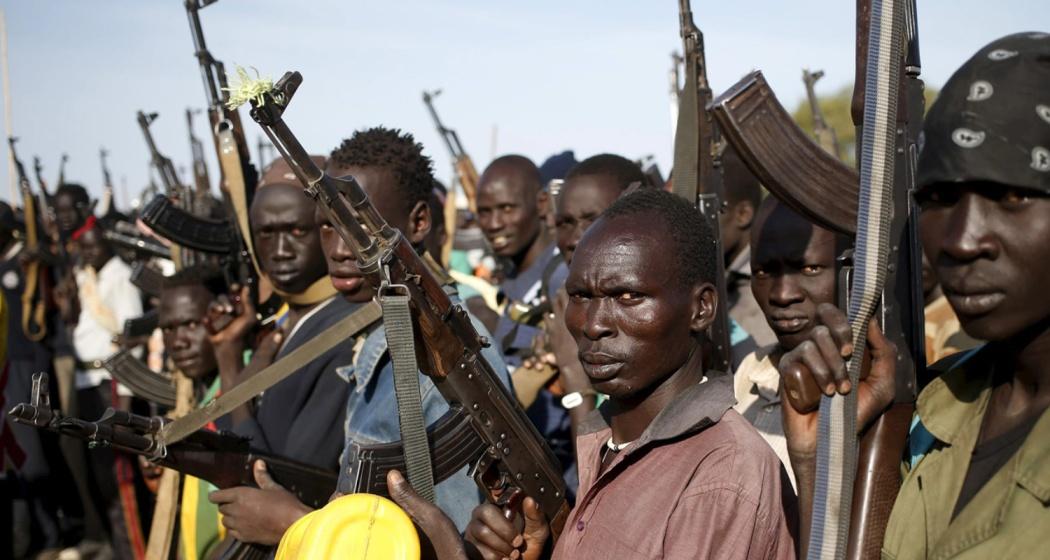
Representative image.
Sudan’s civil war, now stretching beyond two and a half years, has evolved into one of the deadliest conflicts in the world, claiming more than 150,000 lives and displacing millions. What began as a power struggle between rival military factions has fractured the country, leaving civilians trapped in a protracted humanitarian catastrophe.
As of December 2025, the paramilitary Rapid Support Forces (RSF) appear to have gained momentum on several fronts. The group has seized a key oil field in central Sudan and forced the retreat of the Sudanese Armed Forces (SAF) from important urban centres in the west. Yet the conflict has remained fluid, with territory repeatedly changing hands, underscoring the instability gripping the country.
Rival forces at war
The conflict pits Sudan’s official military, the SAF, against the RSF, a powerful paramilitary organisation. Prior to the war, the SAF was responsible for border security, internal stability and defending the state against external threats. When fighting erupted in April 2023, it was estimated to have up to 200,000 personnel.
The RSF, by contrast, was formed in 2013 as a semi-autonomous force to counter insurgent groups. Its roots lie in the Janjaweed militias, infamous for atrocities committed in Darfur between 2003 and 2005. Over time, the RSF transformed into a central pillar of power under former president Omar al-Bashir, serving as his personal security force until his overthrow in 2019. By the start of the civil war, the RSF had amassed around 100,000 fighters.
Although the two forces jointly led a military coup in 2021 that toppled the civilian-led government of Prime Minister Abdalla Hamdok, tensions soon emerged. Disagreements over the future of Sudan’s political transition and the integration of the RSF into the regular army eventually ignited open warfare.
Several armed groups have aligned themselves with one side or the other. Rebel factions such as the Sudan People’s Liberation Movement–North have backed the RSF, while the Justice and Equality Movement has sided with the army, further complicating the conflict.
The men at the helm
The SAF is led by General Abdel Fattah al-Burhan, Sudan’s de facto head of state. A career soldier, Burhan rose through the ranks to become army chief of staff and later chaired the Transitional Military Council following Bashir’s fall. His leadership, however, has been overshadowed by allegations of civilian abuses and reliance on Islamist allies.
Opposing him is Mohamed Hamdan Dagalo, widely known as Hemedti, the RSF’s commander and Burhan’s former deputy. Emerging from the Janjaweed militias in Darfur, Hemedti built the RSF into a formidable force and accumulated immense economic and political influence. His leadership has been marked by accusations of brutality and systematic violence against civilians.
Also read: Sudan fighting creates epicenter of crises: UN
Foreign arms and funding
Although the fighting is largely confined within Sudan, the war has been sustained by external support. Despite a long-standing United Nations arms embargo, newly manufactured weapons from China, Russia, Turkey and the United Arab Emirates have been documented in use by both sides.
The Sudanese government has accused the UAE of backing the RSF militarily and economically, including through illicit gold trafficking networks. In January 2025, the United States sanctioned several UAE-based companies accused of financing Hemedti.
Saudi Arabia, viewing Sudan as a strategic ally against Iranian influence, has provided substantial financial backing to the SAF. In late 2025, the army-aligned government announced plans for further Saudi investment amounting to $50 billion. Egypt, aligned with Burhan amid regional disputes with Ethiopia, has reportedly supplied aircraft and pilots to the SAF, while Iran and Russia have also extended varying degrees of military and diplomatic support.
A divided country
By late 2025, Sudan had effectively split along a rough north–south axis. The SAF controls slightly more than half of the country, including Khartoum, Port Sudan on the Red Sea, and much of the northern border with Egypt. These territories offer strategic advantages, providing access to vital maritime trade routes and key administrative and demographic centres.
The RSF dominates Darfur, a resource-rich region central to gold mining and smuggling routes, and controls much of western and central Sudan. The fall of el-Fasher in October 2025 marked the loss of the army’s final stronghold in Darfur, consolidating RSF authority in the west. The group also holds most oil fields and significant grazing lands, sharing control in some regions with the SAF.
A devastating human toll
The war’s most harrowing cost has been borne by civilians. Both sides have been accused of war crimes, including attacks on residential areas, hospitals and food supplies. Mass killings have been reported across Khartoum, Darfur, Kordofan, Gezira and White Nile states.
In some areas, violence has taken on an ethnic dimension. In West Darfur, systematic attacks against the Masalit community were reported during the early months of the war. In October 2025, satellite imagery from el-Fasher revealed scenes consistent with mass killings, prompting an emergency meeting of the UN Security Council after nearly 500 civilians were killed at a maternity hospital.
More than 9.5 million people have been internally displaced, with Darfur states hosting the largest numbers. Over four million others have fled to neighbouring countries, including Egypt, Chad and South Sudan, as Sudan’s war grinds on with no clear end in sight.
