By Vimal Sumbly
The Bankipur assembly by-election result in Bihar is not just politically shocking, but electorally surreal. It defies all political and electoral logic that how a mighty Bharatiya Janata Party could lose the constituency that it had been winning for 31 years and that too in a by-election with both the state and Central governments being that of the BJP only. Also, for the first time the state has a BJP Chief Minister.
The BJP had been winning the Bankipur assembly segment since 1995, the heydays of the Rashtriya Janta Dal and its former supremo Lalu Prasad Yadav. In 1995, it was Nabin Kishore Prasad Sinha, father of current BJP president Nitin Nabin who won it. That time the constituency was named as Patna West. It was rechristened as Bankipur after the 2009 delimitation. After Nabin Kishore passed away in 2006, his son Nitin Nabin was elected from here continuously till 2025. The father-son duo has been representing the constituency without a break till 2026, when by-election was necessitated. Nitin Nabin after being appointed the BJP national president, in a surprising development, was shifted to the Rajya Sabha.
Now imagine the odds of Bankipur by-election. A traditional stronghold of the BJP, which won it even during the dominance of Lalu Prasad Yadav. In the general assembly elections, just a little more than a year ago, the BJP’s Nitin Nabin had won the seat by a huge margin of 51,936 votes, polling 98,922 votes. The state government is that of the BJP. So is the Central government. It was the BJP national president who had vacated the seat after going to the Rajya Sabha.
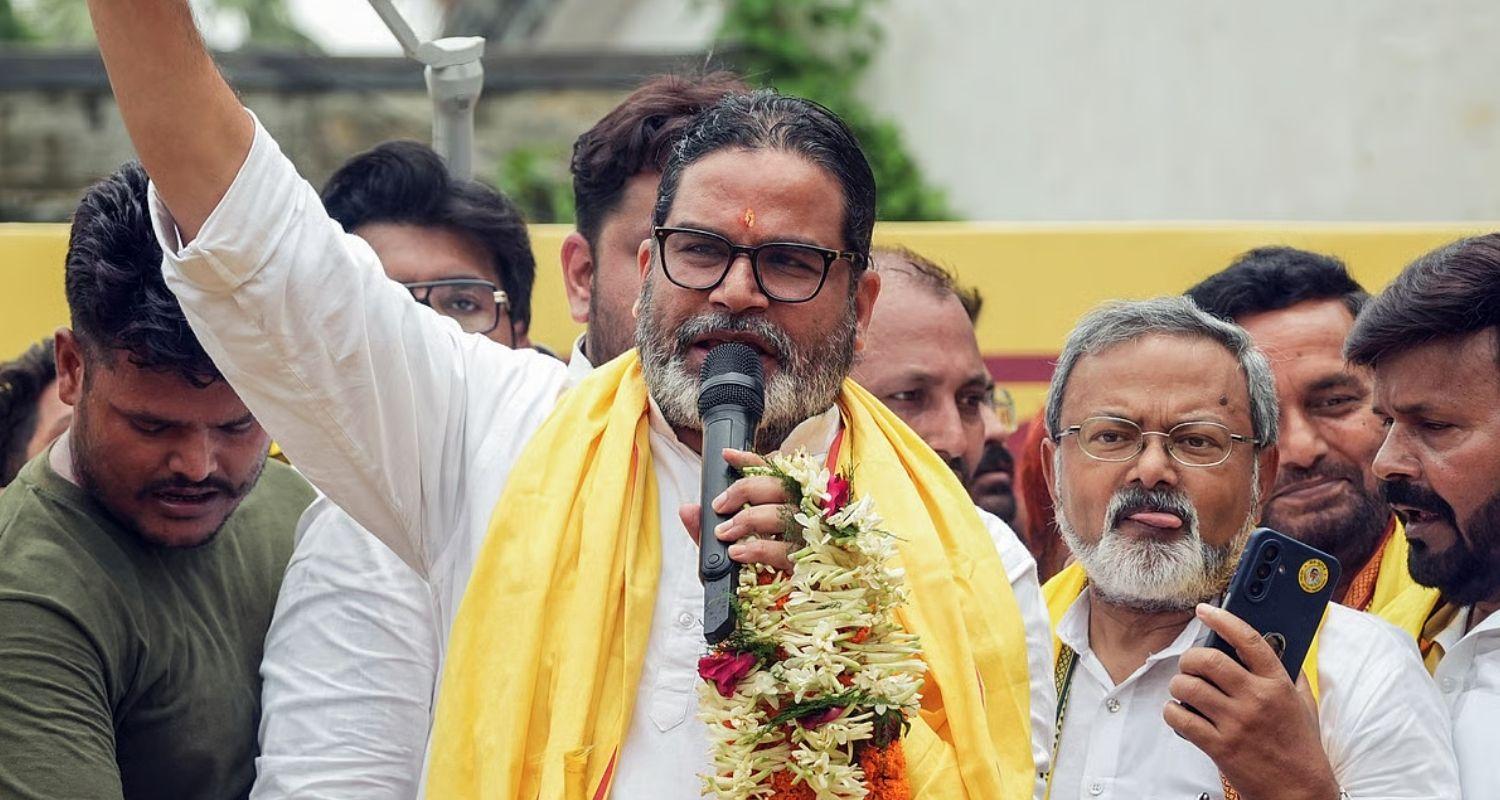
Traditionally the by-election results are a foregone conclusion in favour of the ruling parties. Odds are very low for the ruling party losing a byelection and that too when the ruling party is the BJP, known for election management and massive resources at its disposal. And imagine the contender who won—Prashant Kishor, whose Jan Suraj party had drawn a complete blank in the assembly elections in April last.
Kishor defeated Neeraj Kumar of the BJP by a margin of 19,324 votes, which is quite huge in a by-election against the ruling party. In fact, the BJP candidate polled less votes than the victory margin of its candidate Nitin Nabin in 2025 general assembly elections. Prashant Kishor got 64,151 votes while Sinha of the BJP polled 44,827 votes only. The BJP’s victory margin in April 2025 was 51,936.
So, what went wrong that the BJP suffered such a “humiliating defeat” in one of its strongest bastions and safest seats? There was no anti-incumbency sentiment visible anywhere against the Bihar government with a BJP Chief Minister for the first time. Also, one year is too short a time period for anti-incumbency to crop in and dominate the by-election results. By-elections are conducted by the state machinery only, which knows nothing is going to change after the elections, hence its inclination is always pro-ruling party.
Also read: Bankipur bypoll: The disruption Bihar didn’t see coming
Kishor is a brilliant poll strategist who can manage the elections well, but he is not a charismatic and popular leader who can beat so many odds in a by-election. Still, he won by a handsome margin of about 20,000 votes.
It is highly impossible that Kishor could have won without the “assent” of the “powers that be” within the BJP, which is known to play politics like a game of chess. Quite possibly, the BJP wanted to beat a strategic retreat, like in the game of chess.
There can be multiple reasons for this “strategic retreat”. The Bankipur by-election defeat gives the “opposition” a “cathartic” feeling that the sentiment is actually against the BJP. It eases the pressure not only on the opposition but also on the ruling party as well. The opposition obviously is having the great feeling of having “defeated” the BJP.
The results also reinforce the perception that the BJP mostly wins elections in the name of the Prime Minister Narendra Modi and with the ace strategy of Amit Shah. This time none of them was in the picture.
Another important factor that suggests to “strategic retreat” is about 7 percent less polling in Bankiupr this time as compared to the April 2025 elections. While then polling percentage was about 42, this time it was about 35 percent.
It will be politically naïve to believe that the by-election result is an overall referendum on the BJP. It is not even a referendum on the Bihar government. Opposition parties are mistakenly trying to link it with the Gen Z protests that saw the BJP on retreat, and the Prime Minister dropping the Education Minister Dharmendra Pradhan.
There is one more takeaway from the Bankipur election result. Presuming that the election result was the natural outcome and was not influenced by any other factors like “strategy” than the people’s will, it is a serious lesson for both the BJP as well as the opposition, the Congress in particular. That people are prepared to experiment and give a chance to “alternatives” if they seem better than the BJP. So far, the Congress has been the only credible alternative to the BJP nationally. In Bihar it was the Rashtriya Janta Dal, which is already on its death bed.
BJP has been feeling “safe and secure” in the belief that people of India do not see any credible alternative in any party to it (the BJP) and in any leader to Prime Minister Narendra Modi. That perception must change. Alternatives seem to have started emerging, for both the BJP as well as the Congress.

 Follow us