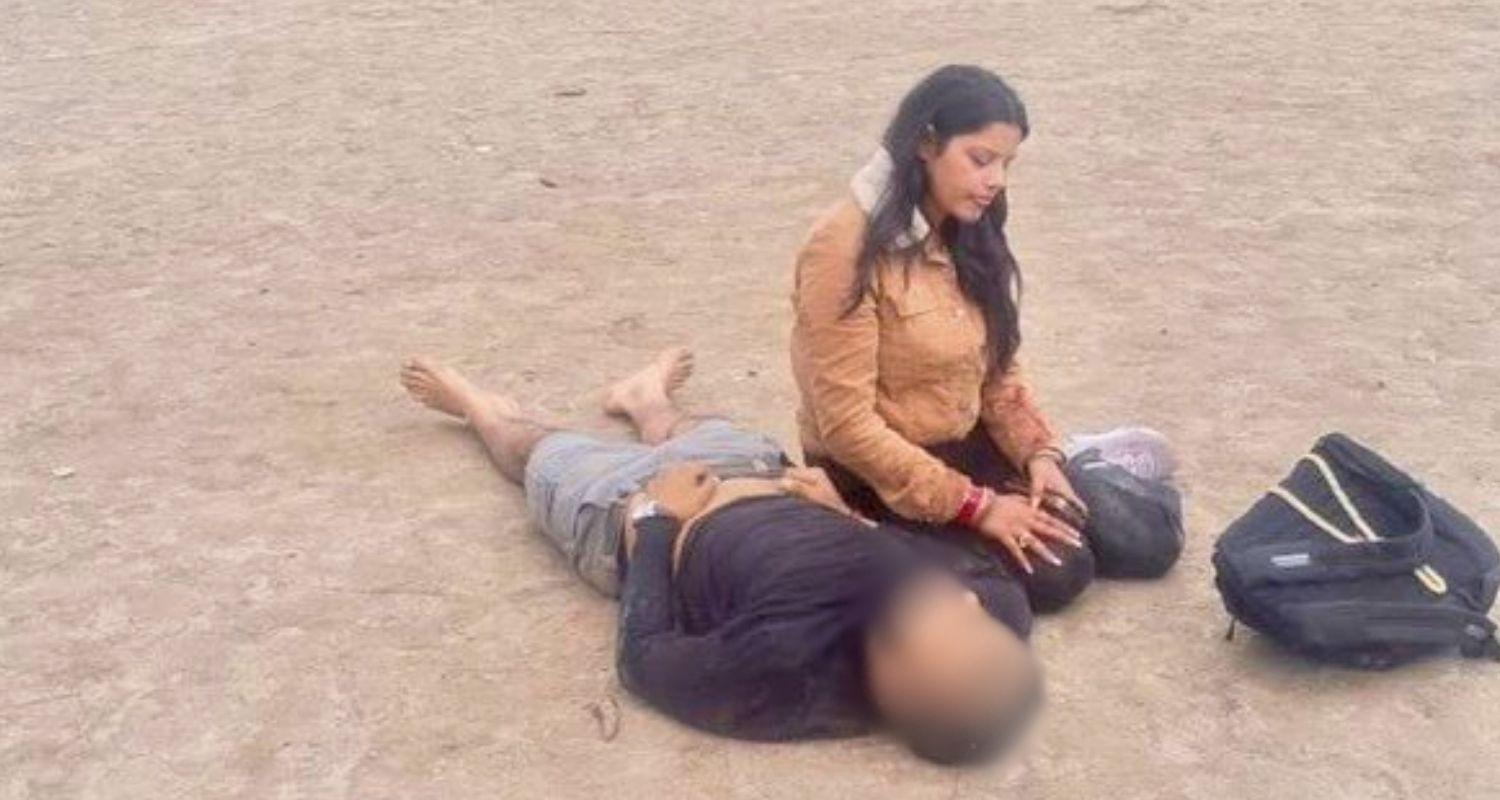
One year ago, dozens of helpless tourists from across India were caught like sitting ducks in the Baisaran valley near Pahalgam by several heavily armed terrorists. Twenty-six of them lost their lives just because they could not recite ‘kalima’ as they were asked to by terrorists to confirm their faith before they were killed with showers of bullet. The terrorists apparently wanted to ensure that they did not harm any Muslims among the tourists. This was a deliberate provocative act apparently aimed at provoking communal reactions in the rest of the country.
Of course there was no communal reaction anywhere in India. Yes, there was retaliation and retribution of epic proportions as India launched Operation Sindoor and smashed off the terrorist hideouts and training camps deep inside Pakistan. It was indeed not for the first time that India went deep inside Pakistan territory to target terror camps. But it was the reaffirmation of India’s now stated policy that there will be zero tolerance to any act of terror and the perpetrators will be made to bear the heavy cost and be chased anyway, no matter where they hide.
In the precision strikes, India armed forces killed a substantial number of terrorists belonging to the Jaish-e-Mohammad, including several family members of its founder-head Azhar Masood. The intended target was achieved perfectly. India had started retaliating and hitting back at Pakistan for terror attacks that emanated from its soil since the Uri attack, followed by the Pulwama attack and then the Pahalgam attack. India made it repeatedly clear that any act of terror sponsored by Pakistan will come at a heavy cost for that country.
There was indeed no doubt that not only did the terror attack emanate from Pakistani soil, but it had the “blessings” of its radical army chief, who has since assumed the title of Field Marshal. Just a week before the Pahalgam terror attack he had delivered a highly provocative anti-India speech in front of non-resident Pakistanis who had come from different parts of the world. The Pahalgam terror attack came within a week of his speech. The two cannot be delinked from each other. After a year, the Pakistan establishment has started describing the Pahalgam terror attack as “strategic and diplomatic masterstroke” as it ended it years-long diplomatic isolation.
In fact, Munir saw his stars rising since the Pahalgam terror attack. Given the massive disparity between India and Pakistan and the massive military edge India has over Pakistan, Munir had nothing to lose. He tried to engage with India with attacks on civilian areas in Poonch district causing loss of civilian lives. Pakistan propaganda, supported by some western media outlets traditionally hostile towards India, notwithstanding, it (Pakistan) could not endure India’s retaliation even for 48 hours and desperately wanted an exit.
It pleaded with the US to help in the ceasefire. When the US did not relent initially, as Vice President JD Vance said the US does not want to get into it, Pakistan tried to use “nuclear” blackmail. Eventually, the US asked Pakistan to make direct contact with India for the ceasefire. By that time Pakistan had suffered heavy losses with several airbases, including famous Noor Khan airbase suffering heavy damages.
As India suspended Operation Sindoor, US President Donald Trump, with his obsessive desperation for Nobel Peace Prize, jumped the gun to announce a ceasefire between India and Pakistan. He claimed that he prevailed upon both the countries and offered them trade, if they stopped war. Otherwise, he claimed, he threatened them with tariffs. He made this claim about ending Indo-Pak war several times.
Also read: Pahalgam: A geopolitical message in gunfire
While Pakistan gave credit to the US President for ending the war, India rejected his claims. This was obviously not to the liking of Trump, who then started imposing heavy punitive tariffs on India.
The fact that he imposed tariffs on India even after the war ended, vindicates India’s position that he had no role in the ceasefire. Going by his claims that he had offered trade or tariffs, Trump should not have imposed tariffs on India when, according to him, India had agreed to ceasefire at his behest. The fact is that he imposed punitive tariffs on India, which means that India had not accepted his terms and conditions.
How frustrated he was about India’s refusal to do his bidding can be judged from his “special invitation” to Gen Munir for luncheon in the White House in the immediate aftermath of the ceasefire. He was further irritated when Prime Minister Narendra Modi refused his invitation to join the lunch at White House along with Munir. Modi was in Canada in connection with the G-7 Meet. Trump invited him for a stopover apparently to make him meet Munir. Modi declined decently citing his pre-scheduled visit to Croatia.
Since that day, Trump, despite his claims that Prime Minister Modi is his “good friend”, remains annoyed and upset with India. Besides, unlike Pakistan, India did not endorse his claims for the Nobel Peace Prize.
Not only did India reaffirm and reiterate that each and every act of terror will be responded to and retaliated hard and fast, it also conveyed a strong message that no matter which country stands by or against us, there will be no going back on the policy of zero tolerance. “Retributory retaliation” is the new doctrine and new normal that India has adopted and followed strictly and it will continue to do so.
Interestingly, though not surprisingly, the Pakistani establishment believes that the Pahlagam terror attack has proved to be a watershed moment for the country's diplomacy as it eventually led to ending Pakistan’s long diplomatic isolation. A powerful narrative is being built up in Pakistan that had the Pahalgam terror attack not taken place, India would not have attacked Pakistan and the latter would not have got a chance to get closer again to the US. Pakistan counts the Pahlagam terror attack as its “strategic and diplomatic” success and achievement, thus reaffirming the already prevailing perception that terrorism continues to be the state policy of Pakistan.

 Follow us