In the history of nations, there will come a time when moments of triumph appear more like a challenge than a celebration. The transformative shift in Nepal’s political landscape illustrates this delicate paradox.
The tiny Himalayan nation of 30 million people has just delivered an unmistakable mandate, rejecting the old guard and reposing faith in the new brand of politics. The outcome of the national election reflects a yearning for a new dawn and a new path for a country that has become synonymous with political instability and fragile coalitions.
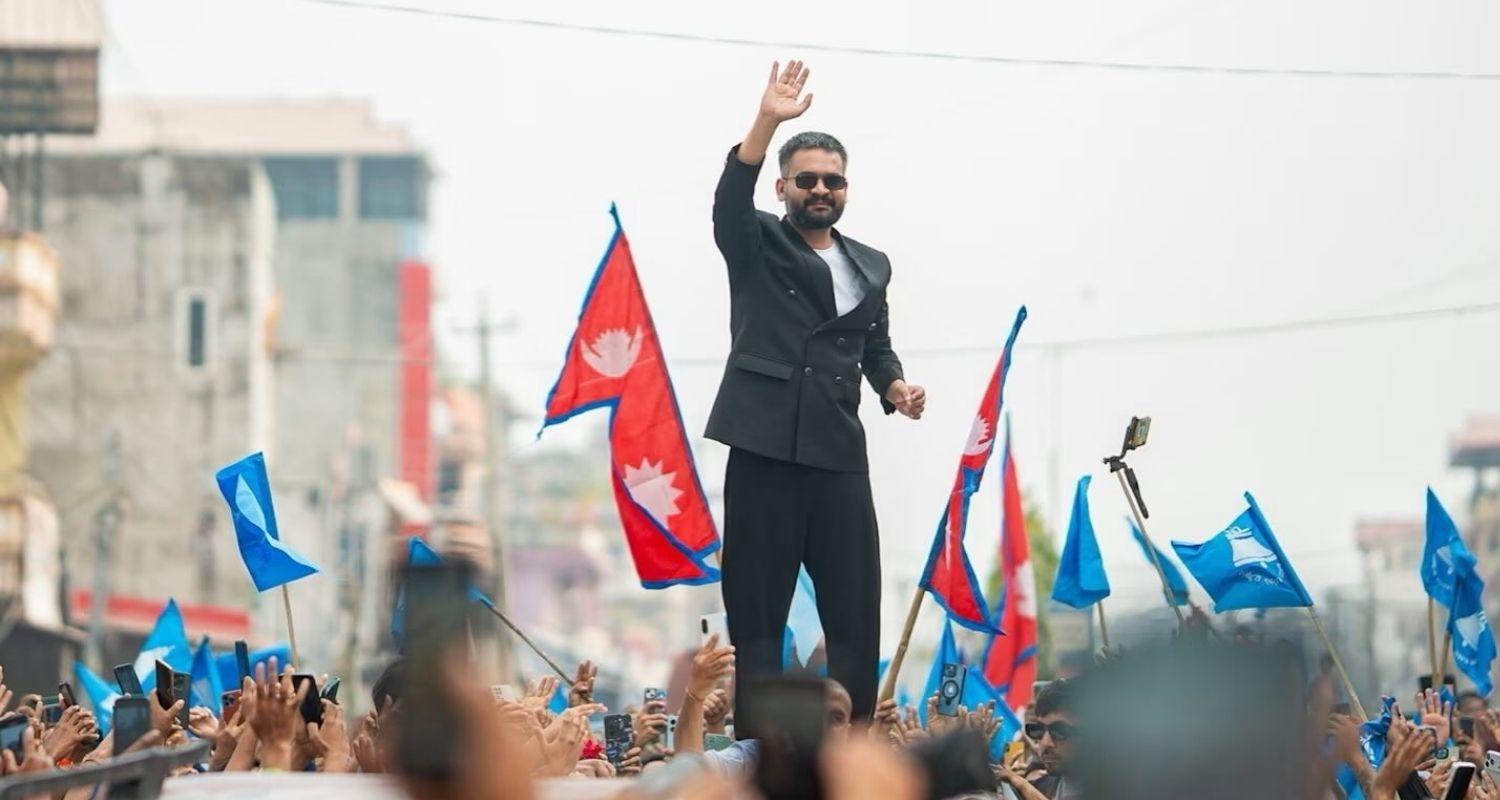
The rise of 35-year-old rapper-turned-politician Balendra Shah, popularly known as Balen, symbolises the changing aspirations of a society wrestling with multiple social and economic challenges. Balen has been catapulted to power in a dramatic turn of events.
His Rashtriya Swatantra Party (RSP) has emerged as the decisive political force nearly six months after the violent Gen Z-led protests forced the collapse of the coalition government and the resignation of Prime Minister KP Sharma Oli’s resignation. This prompted the conduct of early national elections.
Riding high on support from the youth, who constitute over 43 per cent of the country’s population, the RSP is all set to secure two-third majority in the 275-member House of Representatives, the lower house of Parliament.
Rise of a rapper
The rise of Balen, a popular rapper and powerful orator, has been dramatic in a country whose politics was traditionally dominated by old guards.
He first captured national attention after winning the Kathmandu mayoral election in 2022 as an independent candidate. Later, he joined the RSP led by Rabi Lamichhane, former television presenter, after the two sides agreed on a seven-point understanding outlining a shared political agenda. The agreement cantered around tackling corruption to improve governance as well as addressing the expectations of the country’s Gen Z.
His entry into the party and his projection as the Prime Ministerial candidate was widely viewed as an effort to capitalise on his popularity among younger voters and expand the RSP’s reach beyond its existing support base.
The scale of his victory stunned the political circles. He defeated former Prime Minister KP Oli in his own parliamentary constituency, bringing him a step closer to becoming Nepal’s next Prime Minister
The outcome signals a major transformation in Nepal’s political landscape, reflecting widespread public support for a new generation of leadership and a clear shift away from a dominant political establishment. Balen has succeeded in channelling the Gen Z frustration into a national political movement.
Also read: Balendra Shah’s RSP leads on 101 seats, Oli’s CPN trails
His victory embodies the aspirations of Nepal’s youth, who mobilised through street protests and social media to demand an end to corruption, nepotism and misgovernance. He is poised to become Nepal’s youngest Prime Minister and its first Madhesi to occupy the coveted post.
Challenges galore
Success comes with big responsibilities. The challenges before the next regime are quite formidable: tackling corruption and growing unemployment, reviving a struggling economy and ensuring political stability. Years of instability, corruption, economic stagnation, and high unemployment have eroded public trust in traditional parties.
For the RSP, which has positioned itself as a harbinger of change, the first big hurdle will be managing the governance itself. While the party’s rise is fuelled by hopes of reform, turning those hopes into real policies will require a determined approach and teamwork. Nepal’s bureaucratic system is complex and often resistant to change. According to a World Bank report, Nepal’s reliance on remittances, which has been central to the country’s growth, has not translated into quality jobs at home, reinforcing a cycle of lost opportunities. A staggering 82 per cent of Nepal’s workforce is in informal employment, far higher than global and regional averages.
Overhauling government institutions, improving public services, and fighting corruption will need continuous reforms.
The new government needs to draw up a credible economic plan focused on job creation, attracting investments, and infrastructure. If progress is not visible in the near future, the initial enthusiasm for change could fade fast.
Old guard out
The sweeping victory of the fledgling RSP signals a dramatic rejection of the country’s entrenched political order. It was virtually a revenge voting as the legacy parties such as the Communist Party of Nepal (Unified Marxist–Leninist) (CPN-UML) and the Nepali Congress (NC) fared poorly at the hustings.
Even stalwarts like KP Sharma Oli suffered humiliating defeats, indicating the intensity of voters’ anger against the established political elite. For decades, political instability has been the default mode of the nation of 3 million people with fragile coalitions of disparate groups becoming the norm.
Nepal has seen 14 governments in the past 18 years, with veteran leaders playing musical chairs for the PM’s post.
Youth, the flavour of the season
Traditionally, the old political culture did not give space to young people. This disconnect between the geriatric leadership with bloated egos and the general public.
The turning point in September last year when the country’s youth hit the streets, driven by frustration with government policies. What began as a protest against the government’s ban on social media platforms soon turned into an unprecedented street violence that spiralled out of control.
The uprising shook the very foundations of the country and led to the resignation of Oli and several of his ministers. Protestors went about dismantling the country’s democratic structure, attacking all three arms of the government – the executive, the judiciary and the legislature.
The anti-ban protests were emblematic of a larger churn in Nepal, characterised by frustration and restlessness among the youth over political and administrative corruption and shrinking job opportunities.
For India, the outcome carries significant strategic implications. Bouts of political instability, coupled with pro-China policies of leaders like Oli, have adversely impacted the bilateral projects in the past. If the RSP government pursues pragmatic diplomacy, Nepal stands to gain by strengthening its traditional ties with India.

 Follow us