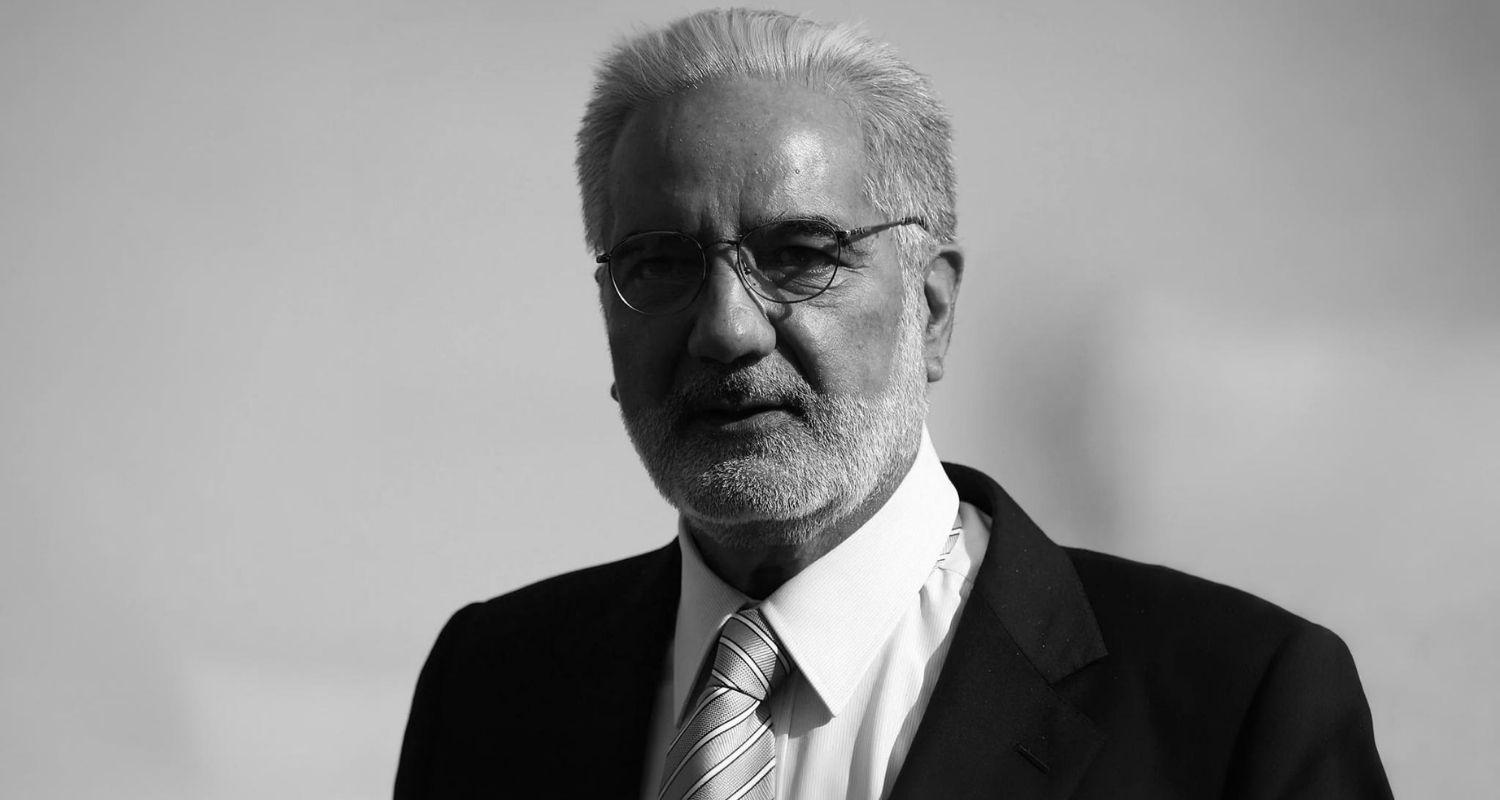
“Cricket is one game that will change sport across the globe,” Inderjit Singh Bindra once told this journalist at the Cricket Club of India in Mumbai in 2004. At the time, it sounded like the assured belief of a man ahead of his time. Two decades later, those words carry the weight of prophecy.
Today, cricket stands among the world’s most powerful sports—commercially dominant, globally followed, and culturally influential. That transformation did not happen by chance. It was shaped by visionaries who dared to think beyond convention, and Bindra was one of the most consequential among them.
With the passing of Inderjit Singh Bindra, Indian cricket has lost more than a former administrator. It has lost a builder of institutions, a challenger of inherited power, and a man who understood where the game needed to go long before others could see it. A former IAS officer and a master strategist, Bindra’s association with cricket spanned more than four decades, but it was his enduring partnership with Jagmohan Dalmiya that came to define a transformative era in Indian cricket history.
Bindra entered cricket administration in 1975 and formally joined the BCCI in 1977, a time when Indian cricket was governed by a tightly held establishment. It was then that he first crossed paths with Jagmohan Dalmiya—affectionately known as Jaggu—already recognised as a sharp financial mind and a pioneer in marketing the game. Their first meeting sparked an immediate connection, rooted in shared conviction and an uncommon willingness to challenge entrenched authority.
Together, Bindra and Dalmiya took on the formidable ruling elite of the BCCI, dominated by towering figures such as M.A. Chidambaram, Fatehsingh Rao Gaekwad, P.M. Rungta, S.K. Wankhede and M. Chinnaswamy. At a time when the status quo appeared unassailable, the duo emerged as a determined counterforce, driven by the belief that Indian cricket’s administration needed reform, representation and renewal.
A defining moment arrived at the BCCI AGM in 1980, when Dalmiya’s sharp eye exposed discrepancies in the board’s accounts. The confrontation that followed—now part of cricketing lore and marked by a legendary exchange involving Dr Farooq Abdullah—signalled the beginning of a prolonged and bruising political battle. Though progress was delayed by procedural manoeuvres and shifting loyalties, the Bindra–Dalmiya alliance had been forged in resolve.
What followed was a partnership that endured until Bindra’s retirement in 1996. Often seated at opposite ends of the BCCI table, they worked in unspoken coordination—planning, provoking debate, and gradually dismantling the grip of the incumbent power bloc. Their relationship extended far beyond administration. They spoke almost every day, sometimes for hours. Bindra would later joke that Dalmiya had become his “second wife,” a remark that revealed both affection and the depth of their bond.
Bindra fondly referred to this period as the “Bindra–Dalmiya era.” It was an alliance built on contrast and complementarity: Bindra the dreamer and visionary; Dalmiya the relentless executor and master of follow-through. Dalmiya’s prowess as a deal-maker was legendary, as was his unmistakable personal style—most memorably, the ever-present safari suit.
Their combined impact on world cricket was nothing short of transformational. Alongside N.K.P. Salve, they played a pivotal role in moving the 1987 Cricket World Cup out of England and into the Indian subcontinent, culminating in the landmark Reliance World Cup. That decision altered the game’s geography and power balance, breaking the English-Australian stranglehold and bringing cricket decisively closer to its South Asian heartland.
Indian cricket’s financial ascent followed swiftly. Bindra’s role in opening up the television market permanently changed the sport’s economic model, while Dalmiya’s negotiating acumen ensured India emerged as cricket’s financial engine. Together, they helped reshape the ICC into a more representative and democratic global body and placed India firmly at the centre of world cricket.
Beyond his partnership with Dalmiya, Bindra’s individual contribution was immense. He served as President of the Punjab Cricket Association from 1978 to 2014 and later as its Chairman, building structures that continue to serve the game. He was Special Secretary to President Giani Zail Singh in the 1980s, President of the BCCI from 1993 to 1996, and a trusted adviser at the ICC during Sharad Pawar’s presidency.
Bindra’s later years were not without controversy, but even his critics concede the scale of his impact. His courage in administration, his fierce loyalty to those he trusted—especially Jagmohan Dalmiya—and his unwavering belief in Indian cricket’s potential defined his journey.
With Inderjit Singh Bindra’s passing, Indian cricket loses a visionary who was unafraid to confront power, reshape institutions, and imagine a future others could not yet see. The modern game—with its wealth, influence and global voice—stands on foundations laid during the Bindra–Dalmiya era.
Cricket will move on, as it always does. But it will do so knowing that one of the men who taught it how to think big, stand tall, and challenge the world is no longer there.
Cricket will remember him.
Also Read: Veteran cricket administrator IS Bindra passes away at 84

 Follow us