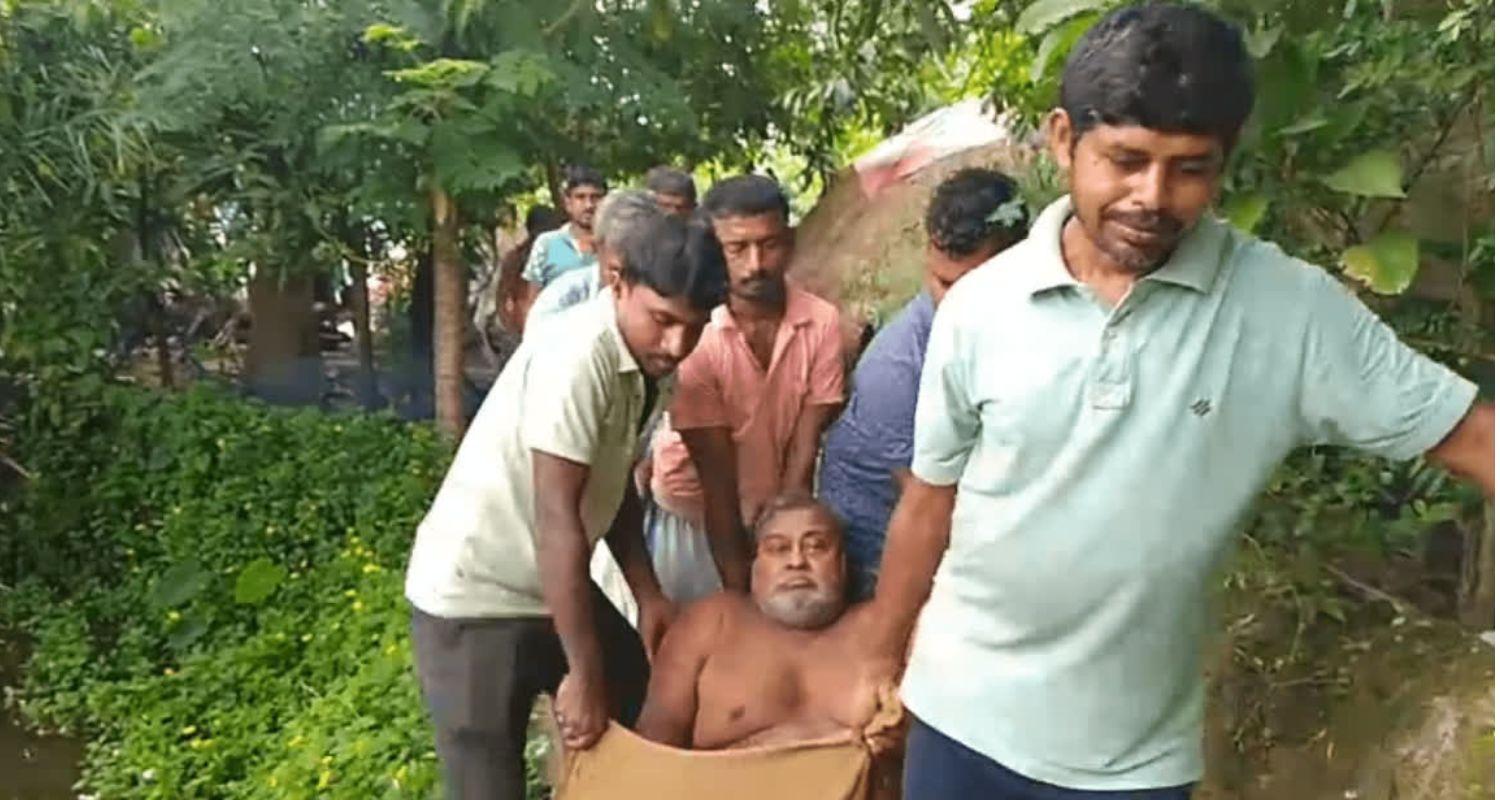
Nearly 17 years after Cyclone Aila tore through large part of coastal Bengal, the scars of the devastating storm continue to shape everyday life in a small corner of Sandeshkhali. Governments have changed, election manifestos have come and gone, and countless promises have been made. Yet, for the residents of Sehara Radhanagar Gram Panchayat, development remains little more than a distant promise.
In Bara Sehara Majherpara, a narrow, crumbling brick-paved track serves as the only lifeline for nearly 30 families. Today, that lifeline has all but collapsed.
Time, neglect, and relentless erosion have reduced the road to a dangerous patchwork of dislodged bricks, gaping potholes, and sinking earth. Villagers say the damage began after Cyclone Aila in 2009 and has steadily worsened as soil erosion from an adjacent pond undermined the road's foundation. With every monsoon, the route slips further into disrepair, becoming virtually impassable.
For outsiders, it may appear to be just another neglected rural road. For the residents, however, it has become a daily struggle that determines whether a patient can reach a hospital, a child can walk safely to school, or an elderly person can receive medical attention in time.
The absence of a motorable road has forced villagers to devise desperate alternatives. In medical emergencies, ambulances cannot reach their homes. Instead, the sick are carried across the broken stretch in makeshift slings fashioned from jute sacks or cloth— a haunting reminder of how fragile access to basic healthcare remains.
"My uncle has been physically challenged since birth and cannot walk," said local resident Anuj Mandal. "When he became seriously ill, four people had to carry him to the hospital using a jute sack tied into a sling. We have been living with this road since Aila. Every election, leaders promise repairs. After the votes are counted, nobody returns."
The road's condition has also become a constant source of anxiety for women and children.
"Walking here with small children is frightening," said homemaker Sandhya Mandal. "Not long ago, my pregnant sister-in-law slipped and fell on this road. We are not asking for anything extraordinary. We simply want a safe road."
For some families, the consequences are even more devastating.
"My father-in-law is physically challenged," said Sulata Mandal. "There is no proper road to take him to a doctor. We even tried carrying him in a makeshift sling, but it became impossible. He is now lying at home in poor health. I request the administration to look at our condition."
Residents say the road is inaccessible to ambulances and four-wheeled vehicles alike, leaving the village effectively isolated during emergencies. They claim that even after a death, transporting a body out of the locality becomes a painful logistical challenge.
The villagers allege that repeated appeals to the Panchayat, the Block Development Office, and other administrative authorities have yielded little beyond assurances. Despite years of complaints, they say no meaningful repair work has been undertaken.
Attempts to obtain a response from the local administration were unsuccessful.
For the people of Bara Sehara Majherpara, the issue transcends politics. It is not merely about a damaged road but about dignity, accessibility, and the right to live without being cut off from essential services.
Seventeen years after Aila, the storm may have faded into history for much of Bengal. But in this forgotten hamlet of Sandeshkhali, its aftermath is still walked every day—one broken brick at a time. The villagers now have just one plea—enough of promises; let the road finally be rebuilt.
Also read: Baruipur minor murder: Mamata alleges ‘house arrest’

 Follow us