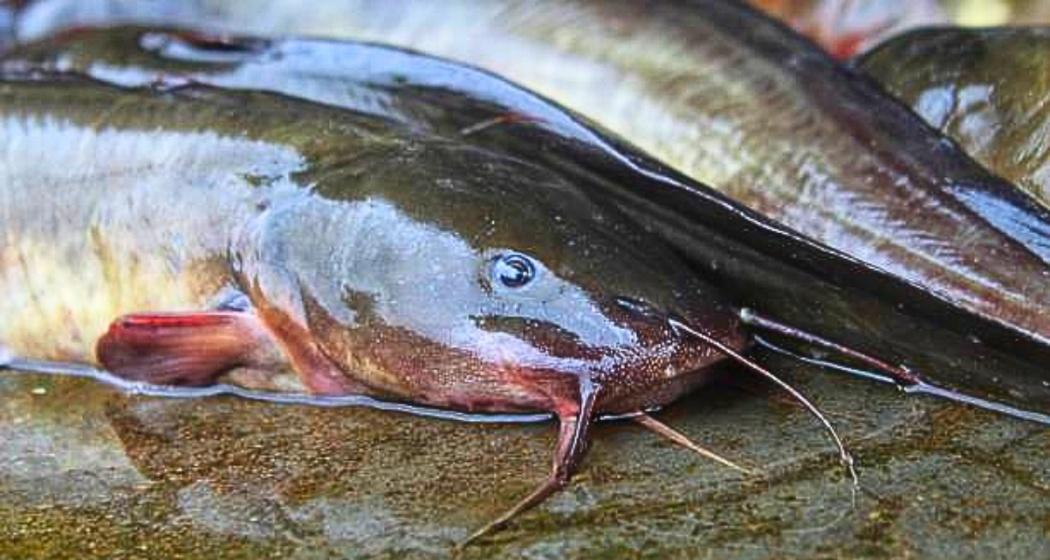
Assam's Fisheries Department has intensified its crackdown on the illegal cultivation of Thai Magur, destroying nearly seven quintals of the banned invasive fish species in Kamrup district amid concerns over its impact on biodiversity and public health.
The operation was carried out at Burahara village under the Bangaon development block in Boko, where officials detected illegal cultivation of the fish over an area of nearly two hectares. The drive was conducted with support from local police, village authorities and residents.
District Fisheries Development Officer, Kamrup, Dr Sanjay Sarma said Thai Magur, scientifically known as Clarias gariepinus, is prohibited in India because of the serious ecological threat it poses. Native to Africa and the Middle East, the species is highly invasive, capable of surviving in extreme conditions and feeding on indigenous fish populations.
"It is an aggressive species that disrupts local aquatic biodiversity and poses health risks due to the conditions in which it is often reared," Sarma said.
Also read: NGT directs action to protect Yamuna’s native fish species
According to officials, the fish grows much faster than local varieties, making it attractive to some farmers despite the ban. While indigenous catfish may reach around 100 grams in six months, Thai Magur can grow to nearly one kilogram during the same period, offering significantly higher returns.
Authorities said illegal cultivators often procure fish seedlings from neighbouring states and rear them clandestinely. Identifying young Thai Magur is challenging as it closely resembles native varieties.
The latest drive forms part of a wider enforcement effort following directions issued by the National Green Tribunal (NGT), which ordered states and Union Territories to identify and destroy stocks of the invasive species.
Officials warned that the threat becomes particularly serious during the monsoon season, when floodwaters can allow the fish to escape into natural water bodies and threaten native aquatic ecosystems.
The Fisheries Department has also launched awareness campaigns and constituted task teams to curb the spread of the species and prevent its entry into Assam's rivers, wetlands and ponds.

 Follow us