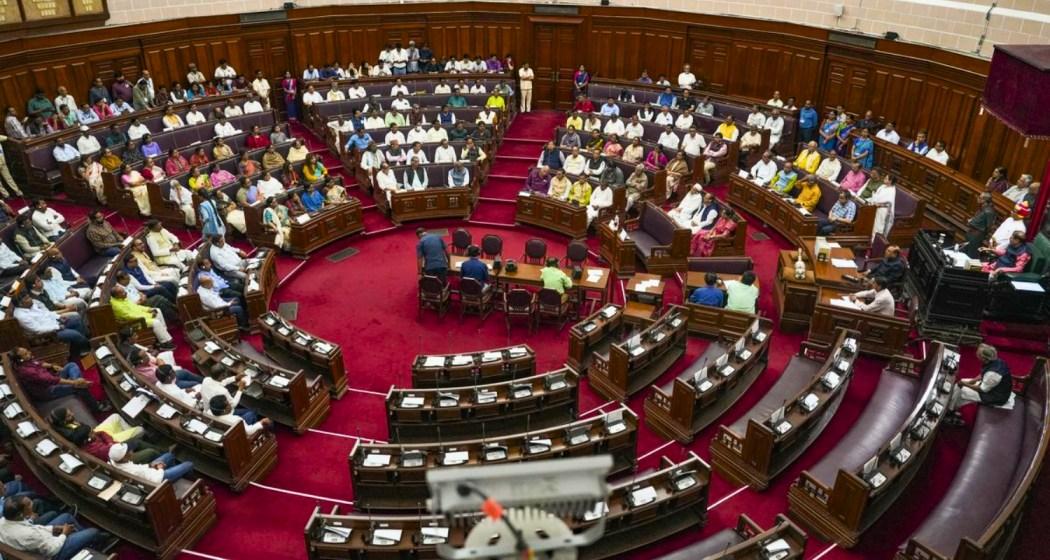
Ahead of the 2026 West Bengal Assembly elections, the Mamata Banerjee-led government on Thursday unveiled a new allowance scheme for unemployed youth and announced enhanced social security benefits in its vote-on-account budget, sharpening the Trinamool Congress’s welfare pitch months before the polls.
At the centre of the announcements is the ‘Banglar Yuva Sathi’ scheme, under which unemployed youth aged between 21 and 40 years who have passed the secondary examination will receive a monthly allowance of Rs 1,500. The scheme is scheduled to be launched on August 15.
The move comes amid political speculation over fresh welfare initiatives beyond existing flagship schemes such as Lakshmi Bhandar and measures linked to Dearness Allowance. Political observers see the youth allowance as a calibrated attempt to consolidate young voters ahead of the elections.
In the 2021 Assembly polls, Lakshmi Bhandar had been one of the TMC’s key electoral promises. Since its launch in September that year, the scheme has transferred around Rs 74,000 crore to women beneficiaries across the state. The current budget increases the monthly Lakshmi Bhandar allowance by Rs 500.
The youth scheme, however, drew sharp opposition criticism. Leader of the Opposition Suvendu Adhikari alleged that after “stealing” government jobs and “selling” them to undeserving candidates, the state government was now offering a Rs 1,500 “bribe” to educated unemployed youth, asserting that voters would respond to this in the elections.
The budget also announced relief for frontline workers. Finance Minister Chandrima Bhattacharya said the monthly honorarium for Anganwadi workers and helpers would be increased by Rs 1,000 from April 2026. ASHA workers will also receive a Rs 1,000 hike, raising their monthly honorarium from Rs 5,250 to Rs 6,250.
Also read: Bengal budget session: Governor’s address comes amid sloganeering
The announcement follows recent protests by ASHA workers in the state, which had gained political traction ahead of the polls.
With the government’s term ending in mid-May, the finance minister presented a vote-on-account instead of a full budget. Addressing a post-budget press conference, the Chief Minister criticised the Centre over alleged financial deprivation.
“Despite numerous instances of deprivation, we have not compromised on fiscal discipline. We are running the state while adhering to all FRBM rules. Yet, the central government itself does not follow these rules,” she said.
Highlighting socio-economic indicators, Mamata claimed unemployment in the state had fallen by 45.65 per cent during her tenure and that around 1.72 crore people had been lifted out of poverty.
Responding to criticism over election-year announcements, she said, “We don’t make promises just because elections are approaching and then fail to deliver. We keep our promises. We have fulfilled the promises we made before the elections in the past.”
Meanwhile, the Supreme Court on Thursday delivered its verdict in the Dearness Allowance case involving state government employees, recognising DA as a fundamental right and directing that 25 per cent of the arrears be paid by March and the remaining 75 per cent by May.
Reacting to the ruling, the Chief Minister said she would not comment in detail until the judgment was examined thoroughly.

 Follow us