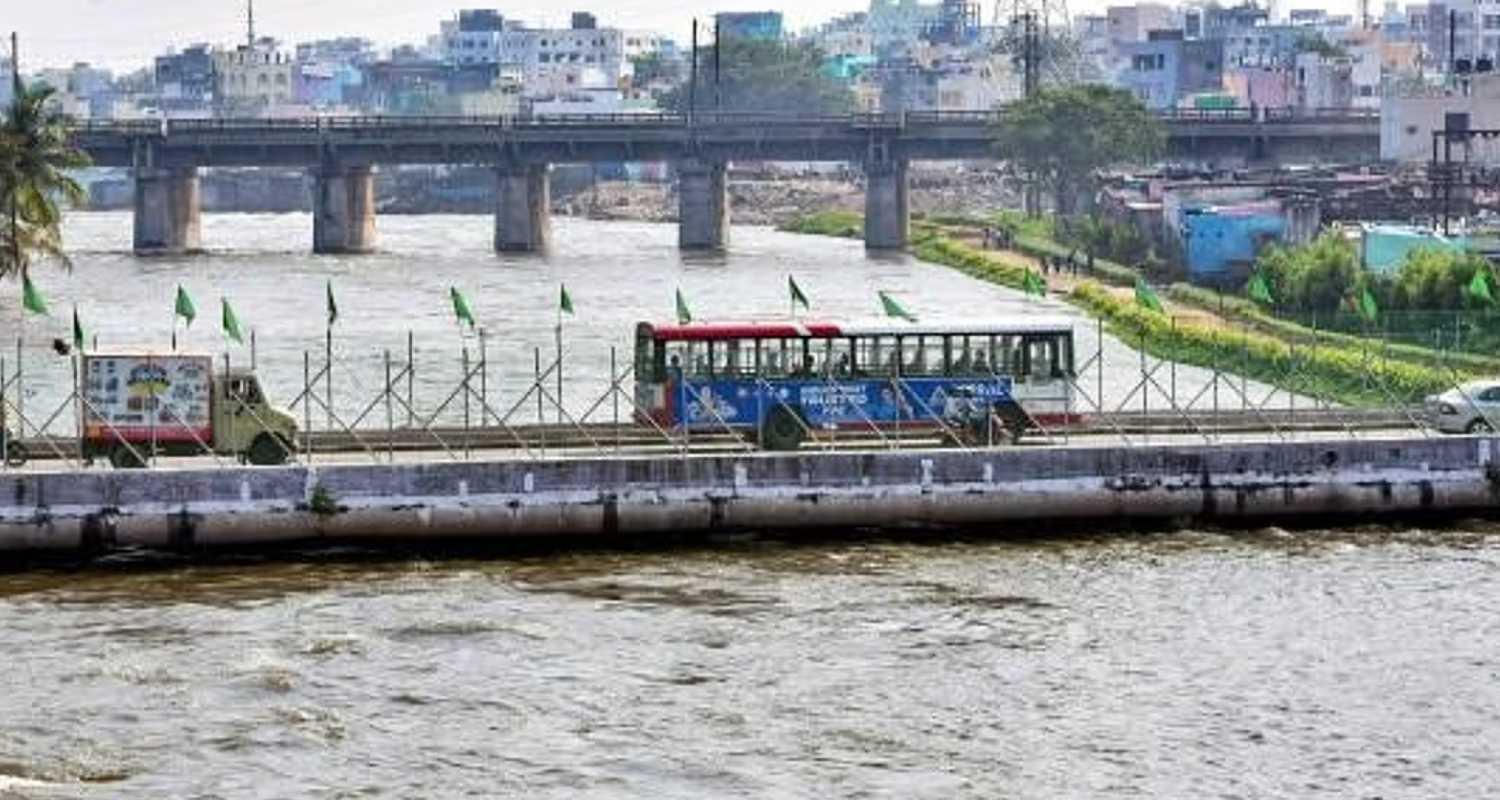
The Chennai bench of the National Green Tribunal (NGT) on Friday refused to intervene in the Telangana government’s Musi River development project, observing that the initiative is still in its preliminary stage.
Dismissing a petition filed by a leader of the Bharat Rashtra Samithi (BRS), the tribunal stated that it cannot interfere at this point. However, it clarified that it remains open to examining the matter if any violations of environmental norms or procedures are found during the course of the project.
The petition was filed by BRS leader Pattolla Karthik Reddy, who alleged that the Musi River development—also referred to as the Gandhi Sarovar Project—was being undertaken without obtaining mandatory environmental clearances.
A bench comprising judicial member Pushpa Satyanarayana and technical member Dr. Prashanth Gargava heard the matter.
Appearing for the petitioner, Advocate G. Rajagopalan argued that work had commenced without approval from the central environmental authorities. He contended that under the Wildlife Protection Act, projects within a 10-kilometre radius of protected areas require an environmental impact assessment. He further alleged that no public consultation had been conducted and that the project lacked a detailed report, raising concerns over potential ecological damage to birds, insects, and biodiversity in the Musi catchment area.
Opposing the plea, Additional Advocate General Tera Rajinikanth Reddy, representing the Telangana government, argued that the petition was politically motivated. He maintained that the objections raised fall within the jurisdiction of the State Environmental Assessment Authority and do not require immediate clearance from the central government. He also informed the tribunal that the necessary permissions from the Ministry of Environment, Forest, and Climate Change had already been applied for.
Following the arguments, the tribunal noted that the Musi Riverfront Development Corporation has initiated the process of obtaining environmental approvals. In view of this, the bench held that the petition could not be entertained at this stage and dismissed the plea.
The ruling leaves the door open for future legal scrutiny if any procedural or environmental violations are alleged once the project progresses further.

 Follow us